Skip to main content Skip to footer
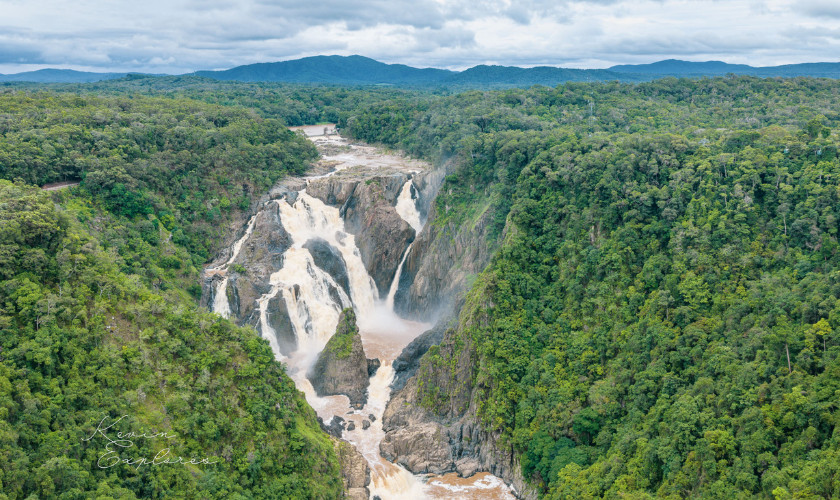
Cairns sits in the wet tropics, which means two things: it’s warm year-round, and the rain arrives with purpose. Understanding the rhythm of Cairns’ weather helps you pack the right gear, plan the right activities, and set realistic expectations for your trip. Some months are brilliant for reef visibility and hiking, while other months bring afternoon downpours that clear within the hour, leaving everything green and dripping.
The rain isn’t incidental to what makes this region remarkable, it’s what built it.
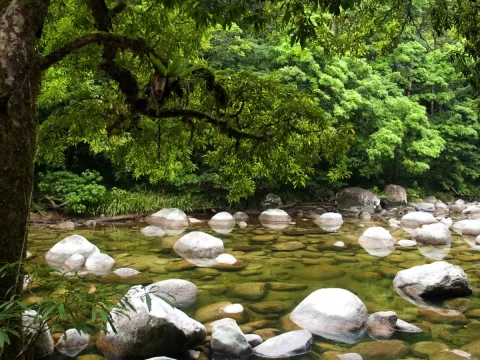
The Daintree Rainforest and the rest of the Wet Tropics rainforest depend on that year-round moisture to stay rainforest at all — it’s what keeps the canopy dense, the waterfalls running, and the ecosystem functioning as one of the oldest continuously surviving rainforests on Earth. Without the wet season, this wouldn’t be rainforest. It would be dry scrub.
The reef’s connection is a little less obvious but just as real. Freshwater runoff from these rainforest catchments carries nutrients and sediment down rivers and out onto the reef system, feeding the marine food chain that supports everything from coral polyps to the fish that snorkellers come to see. The wet season is also cyclone season, and while that’s disruptive for tourism, periodic disturbance is part of what keeps a reef system healthy and cycling over the long term. Reefs are shaped by variation, not permanently calm water.
So the wet season does double duty – it sustains the rainforest directly, and it feeds the reef offshore. Visitors get the payoff: clear water in the dry season and dense green rainforest year-round, without necessarily seeing the wet-season engine that makes both possible.
This guide breaks down what to expect from Cairns weather month by month, including temperatures, rainfall patterns, and how the seasons affect your time on the reef, in the rainforest, and around town.
Before you pack your bags
- Two seasons, one temperature: Cairns stays warm year-round, but the real difference between seasons is rainfall, not heat. Expect 23°C to 31°C no matter when you visit.
- Dry season (May to October): Clear skies, low humidity, and the best reef visibility of the year. Peak tourist season, so book ahead, especially for July and August.
- Wet season (November to April): Afternoon storms that clear within an hour, lush green landscapes, and waterfalls running at full force on the Atherton Tablelands. Quieter, cheaper, and still excellent on the outer reef.
- Stinger season runs from November to May: Stinger suits are required for beach swimming during this period. The Esplanade Lagoon is stinger-free year-round, and reef trips are unaffected entirely.
- Shoulder months are worth considering: April and October sit between the seasons, offering decent weather, fewer crowds, and better value than peak dry season pricing.
Cairns climate overview
Cairns has a tropical climate with two distinct seasons – the dry season (May to October) and the wet season (November to April). Temperatures stay warm throughout the year, typically ranging from 23°C to 31°C. The difference between seasons isn’t about temperature. It’s about rainfall.
The dry season brings clear skies, lower humidity, and calm conditions ideal for reef trips and rainforest walks. The wet season delivers afternoon storms, higher humidity, and lush landscapes. Both seasons have their advantages, depending on what you’re hoping to experience.
One constant across all months is warmth. Cairns doesn’t do winter in the southern sense. Even in July, daytime temperatures sit comfortably in the mid-20s.
Cairns weather at a glance
To give you a quick comparison of what each month brings, here’s a summary of average temperatures, rainfall, and key conditions throughout the year. This table makes it easy to see the dry season’s clear advantage for reef trips and how the wet season delivers the waterfalls and lush greenery the Atherton Tablelands are known for.
| Month | Avg High (°C) | Avg Low (°C) | Rainfall (mm) | Season | Notes |
| January | 31 | 24 | 400 | Wet | Wettest month, high humidity, stinger season |
| February | 31 | 24 | 450 | Wet | Peak waterfalls, cyclone season, stinger season |
| March | 30 | 23 | 430 | Wet | Late wet season, stinger season |
| April | 29 | 22 | 190 | Transition | Easing rain, stinger season ends late April |
| May | 27 | 20 | 100 | Dry | Stinger season ends, reef visibility improves |
| June | 26 | 18 | 50 | Dry | Peak season, excellent reef conditions |
| July | 25 | 17 | 30 | Dry | Coolest month, peak tourism, whale season |
| August | 26 | 18 | 30 | Dry | Continued excellent conditions, whale season |
| September | 28 | 20 | 35 | Dry | Warm, dry, peak whale watching |
| October | 29 | 22 | 60 | Transition | Pre-wet storms, stinger season begins |
| November | 30 | 23 | 100 | Wet | Early wet season, stinger season |
| December | 31 | 24 | 180 | Wet | Building wet season, stinger season |
Wet season weather – November to April
The wet season in Cairns runs from November through April and brings the region’s heaviest rainfall. Afternoon thunderstorms are common, humidity sits high, and the landscape responds with rapid growth. This is when the Atherton Tablelands waterfalls run at their most dramatic and the Daintree Rainforest earns its name.
January – peak wet season
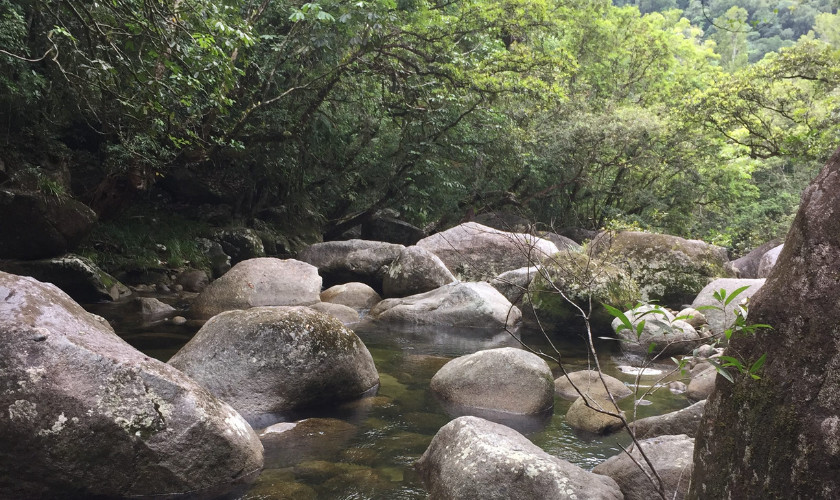
January is the wettest month in Cairns, with average rainfall of around 400mm spread across 19 days. Daytime temperatures reach 31°C, with overnight lows around 24°C. Expect afternoon thunderstorms that roll in with drama, dump heavy rain, and clear within an hour or two.
Humidity sits high, often above 75%, which makes the heat feel more intense. The rainforest is at its most vibrant – waterfalls run full force, and the greenery is almost overwhelming.
Reef conditions can be variable due to runoff affecting water clarity near the coast, though outer reef sites remain excellent for snorkelling and diving. Marine stingers are present in coastal waters from November through May, so stinger suits are essential for beach swimming.
February – wet season continues
February continues the wet season pattern with around 450mm of rainfall. Daytime temperatures hold steady at 31°C, with warm nights around 24°C. Afternoon storms are the norm, and cyclone activity is possible during this month, though direct hits on Cairns are rare.
This is peak waterfalls season on the Atherton Tablelands. Millaa Millaa Falls, Josephine Falls, and the entire waterfall circuit run at full capacity. If you’re planning a tablelands day trip, February offers the most dramatic water flows.
Reef visibility near the coast can be reduced after heavy rain, but outer reef pontoons and dive sites remain clear. Tour operators adjust itineraries based on conditions, so flexibility is key.
March – late wet season
March sees rainfall ease slightly to around 430mm over 18 days, though conditions remain humid and wet. Daytime temperatures reach 30°C, with overnight lows around 23°C.
The intensity of afternoon storms begins to taper, and cyclone risk decreases as the month progresses. The rainforest is still lush and green, and waterfalls remain impressive.
Beach conditions improve slightly compared to January and February, though stinger suits are still required for swimming. Tour availability is generally good throughout March, with reef and rainforest operators running full schedules. Visitor numbers are lower than peak dry season, which means smaller group sizes and quieter experiences.
April – transition month
April marks the beginning of Cairns’ transition from wet to dry. Rainfall drops to around 190mm over 14 days, with noticeably fewer afternoon storms. Daytime temperatures reach 29°C, with overnight lows around 22°C. Humidity begins to ease, making outdoor activities more comfortable.
This is one of the best months for visiting the Atherton Tablelands – waterfalls are still flowing well from the wet season rains, but walking tracks are drier and more accessible. Reef visibility improves significantly as coastal runoff decreases.
Marine stingers are still present in April, so stinger suits remain necessary for beach swimming. The Esplanade Lagoon offers stinger-free swimming year-round.
Related reading: 4 must-see waterfalls on the Atherton Tablelands | 5 best Daintree Rainforest walks
Dry season weather – May to October
The dry season is Cairns at its most reliable. Clear skies, low humidity, and calm seas make this the peak period for Great Barrier Reef tours, rainforest walks, and outdoor activities. This is also peak tourist season, which means higher prices and the need to book ahead.
May – early dry season
May is the start of Cairns’ dry season, with rainfall dropping to around 100mm over 11 days. Daytime temperatures sit at 27°C, with cooler nights around 20°C. Humidity decreases noticeably, and clear skies become more common.
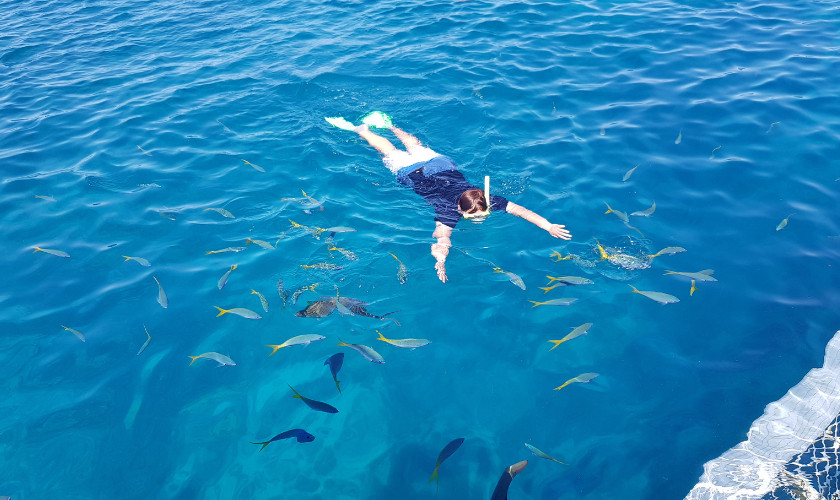
Reef conditions are excellent in May. Water clarity improves, visibility often reaches 20 metres or more on the outer reef, and marine life is active. This is one of the best months for snorkelling and diving.
Stinger season officially ends in May, making beach swimming safer without full-body suits. The Northern Beaches, including Palm Cove, Trinity Beach, and Clifton Beach, become more appealing for a swim or beach day.
June – mid dry season
June brings classic Cairns dry season weather: warm days around 26°C, cool nights around 18°C, and minimal rainfall (around 50mm over 7 days). Humidity is low, skies are clear, and outdoor conditions are near perfect.
This is peak season for reef trips. Water temperatures remain comfortable at 23-24°C, and visibility on the outer reef regularly hits 20-25 metres. Marine life is abundant, and calm conditions make snorkelling accessible for beginners.
Rainforest walks are comfortable in June, with dry tracks and cooler temperatures ideal for hiking. The Daintree, Kuranda, and Atherton Tablelands all see high visitor numbers during this month.
July – peak dry season
July is Cairns’ coolest month, though “cool” is relative, with daytime temperatures reaching 25°C and nights dropping to 17°C. Rainfall is minimal, averaging around 30mm over 5 days. Humidity sits at its lowest, making this one of the most comfortable months to visit.
Reef conditions remain excellent, with clear water, calm seas, and active marine life. Whale season begins in June and continues through September, so reef tours occasionally spot humpback whales migrating along the coast.
July is peak tourist season in Cairns, which means tours book out early and accommodation prices are at their highest. If you’re planning a trip in July, book reef tours, Kuranda experiences, and rainforest trips well in advance.
August – continued dry season
August mirrors July with warm days around 26°C, cool nights around 18°C, and minimal rainfall (around 30mm over 5 days). Conditions remain dry, sunny, and ideal for outdoor activities.
Reef visibility stays excellent throughout August, and whale sightings become more common as humpback whales continue their northern migration. Some reef operators include whale watching as part of their tours during this period.
Tourist numbers remain high in August, so early bookings are essential. The dry season weather makes this one of the most reliable months for reef trips – tour cancellations due to weather are rare.
September – late dry season
September brings slightly warmer temperatures, reaching 28°C during the day and 20°C at night, with rainfall still low at around 35mm over 6 days. Humidity begins to creep up slightly, but conditions remain predominantly dry and clear.
Reef conditions continue to be excellent, and whale watching season peaks in September before the humpbacks begin their southern migration. This is the last reliable month for calm seas and consistently clear skies.
Spring wildflowers begin to appear on the Atherton Tablelands, and the rainforest starts to show signs of the approaching wet season with increased bird activity and flowering trees.
October – pre-wet season
October marks the transition from dry to wet. Daytime temperatures rise to 29°C, with nights around 22°C. Rainfall increases to around 60mm over 9 days, with afternoon storms becoming more frequent towards the end of the month.
Humidity climbs noticeably in October, and the air feels heavier. Reef conditions remain good, though occasional afternoon storms can affect tour schedules. Stinger season begins in October, so protective suits are required for beach swimming.
This is the shoulder season in Cairns, when visitor numbers start to drop, tour prices ease slightly, and accommodation becomes more affordable. If you’re flexible with the weather and don’t mind the occasional afternoon storm, October offers good value.
Wet season vs dry season in Cairns
Cairns’ two seasons offer distinctly different experiences, each with advantages depending on what you’re hoping to see and do. Understanding the trade-offs helps you pick the right time for your priorities.
The dry season (May to October) brings clear skies, low humidity, and calm conditions. Reef visibility is at its best, hiking tracks are dry, and outdoor activities are consistently comfortable. This is peak tourist season, which means higher prices, busier tours, and the need to book in advance. If your priority is reliable weather and optimal reef conditions, the dry season delivers.
The wet season (November to April) brings afternoon storms, high humidity, and lush landscapes. Waterfalls run at full force, the rainforest is vibrant green, and visitor numbers are lower. Reef conditions can be variable near the coast, though outer reef sites remain excellent. Tour prices drop, accommodation is more affordable, and group sizes are smaller. If you’re flexible with weather and value a greener, quieter experience, the wet season has its appeal.
Both seasons are warm. The difference comes down to rainfall, not temperature.
You may also like: Best time to travel to Cairns
Stinger season in Cairns
Marine stingers, primarily box jellyfish and irukandji are present in Cairns coastal waters from November through May. These jellyfish can deliver painful and potentially dangerous stings, so protective measures are essential during this period.
Stinger nets are installed at popular beaches like Palm Cove and Trinity Beach during stinger season, providing a safe swimming area within the netted zone. Outside these nets, full-body stinger suits are required for ocean swimming. Tour operators provide stinger suits free of charge during this period.
The Esplanade Lagoon in central Cairns offers year-round, stinger-free swimming in a large saltwater pool. This is the safest option for swimming during stinger season without protective gear.
Reef trips are unaffected by stingers – the outer reef is not a stinger habitat, and snorkelling or diving at reef sites requires no special precautions beyond the usual sun protection.
Best time to visit Cairns
The best time to visit Cairns depends on your priorities – weather reliability, reef conditions, waterfalls, crowds, or budget.
For most visitors, the dry season (May to October) offers the most consistent experience. Clear skies, excellent reef visibility, and comfortable conditions make this the peak period for good reason. June through September are the most reliable months, though July and August see the highest visitor numbers and prices.
If you’re after waterfalls at their most dramatic and don’t mind afternoon storms, the wet season (November to April) delivers. February and March are peak waterfall months on the Atherton Tablelands, with cascades running at full force. Reef conditions remain good on outer reef sites, and lower visitor numbers mean smaller tour groups.
April and October sit in the transition zones between seasons – April sees fewer storms and still-impressive waterfalls, while October offers dry season weather with shoulder season pricing.

Explore Cairns
Cairns City Tours
Discover the best of Cairns with sightseeing tours, sunset river cruises and wildlife encounters. From cultural attractions to hot air balloon flights, there is something for every traveller.
See city toursWhat to pack for Cairns weather
What you pack for Cairns depends on when you’re visiting, though a few items are essential year-round. Here’s what actually matters based on the season you’re travelling in.
Year-round essentials:
- Reef-safe sunscreen (Cairns sits in the tropics – UV levels are high even on cloudy days)
- Wide-brimmed hat and sunglasses
- Lightweight, breathable clothing (natural fabrics like cotton and linen work best in humidity)
- Refillable water bottle
- Insect repellent
Wet season additions (November to April):
- Light rain jacket or packable poncho (afternoon storms pass quickly)
- Quick-dry clothing
- Closed-toe shoes with grip for muddy rainforest tracks
Dry season additions (May to October):
- Light jumper or cardigan for cooler evenings (particularly June-August)
- Long sleeves for sun protection during full-day reef trips
For reef trips (any season):
- Rashguards or long-sleeved swim shirts for sun protection
- Dry bag for electronics
- Underwater camera (most operators also offer GoPro for hire)
Tour operators provide stinger suits during stinger season and snorkelling equipment year-round, so you don’t need to pack these yourself.
How Cairns weather affects your activities
Cairns weather directly influences what you can do and when. Here’s how the seasons shape the most popular experiences in Tropical North Queensland.
Reef trips
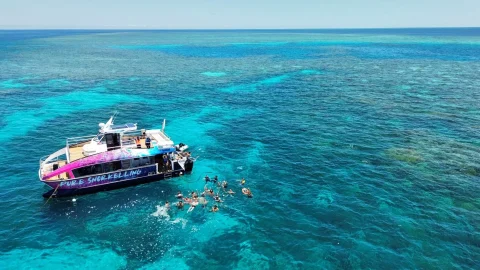
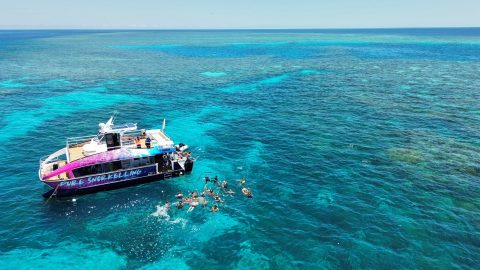
The dry season (May to October) offers the calmest seas, clearest water, and the most reliable visibility on Great Barrier Reef tours, often 20 metres or more on the outer reef.
The wet season can bring variable visibility near the coast due to runoff, though outer reef sites generally remain clear. Afternoon storms are more common, which occasionally affects tour schedules, but morning departures usually operate in calm conditions.
Explore Cairns
Great Barrier Reef
Explore one of the world’s greatest natural wonders with daily reef tours from Cairns. Snorkel, dive or cruise the coral with options to suit every age and ability.
See reef toursRainforest walks
Rainforest walks are accessible year-round, but track conditions change with rainfall. The dry season offers dry, well-maintained tracks ideal for hiking. The wet season brings muddy paths and occasional closures after heavy rain, though the trade-off is lush greenery and flowing waterfalls.
The Daintree, Kuranda, and Atherton Tablelands all operate tours in both seasons, with guides adjusting routes based on current track conditions.
Kuranda experiences
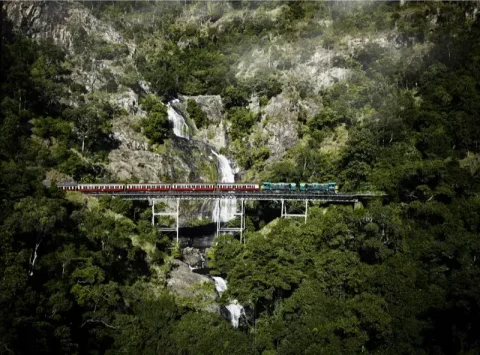
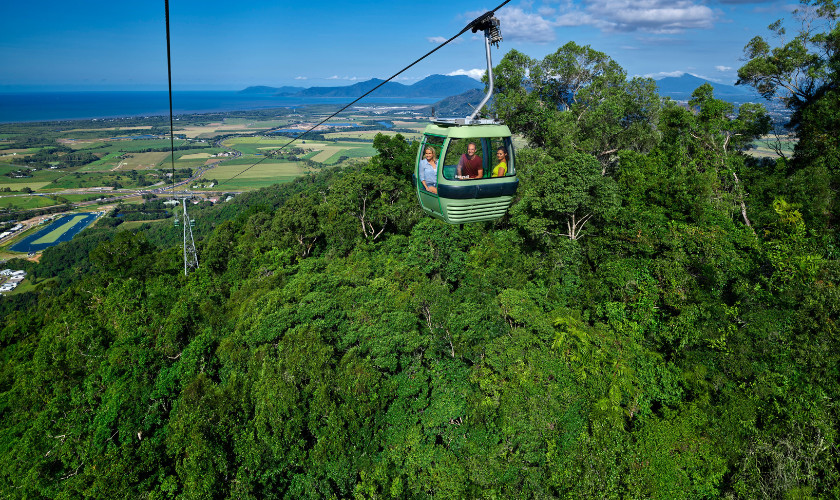
Kuranda experiences, including the Skyrail Rainforest Cableway and Kuranda Scenic Railway, operate in most weather conditions. Heavy rain can affect visibility from the cableway gondolas, but the experience remains impressive. Tours adjust schedules if needed, and operators prioritise passenger safety above all else.
Shore excursions for cruise passengers
For cruise ship passengers with fixed docking dates, Cairns tour operators design shore excursions to work around weather variables. If your ship docks in February and afternoon storms are forecast, reef trips typically depart early to maximise calm conditions.
The team at Cairns Discovery Tours builds flexibility into every booking to ensure you get the best experience possible, regardless of season.

Explore Cairns
Cruise Ship Passengers
Cairns Discovery Tours offers perfectly timed shore excursions from the Cairns Cruise Liner Terminal and Yorkeys Knob port, covering reef snorkelling, island trips and rainforest adventures.
See shore excursionsFrequently asked questions
What is the best month to visit Cairns?
June through September offer the most reliable weather, with clear skies, low humidity, and excellent reef conditions. July and August are peak tourist season, so early bookings are essential.
Does Cairns have a wet season?
Yes. Cairns’ wet season runs from November through April, bringing afternoon thunderstorms, higher humidity, and lush rainforest landscapes. The wettest months are January, February, and March.
When is stinger season in Cairns?
Marine stingers are present in coastal waters from November through May. Stinger suits are required for beach swimming during this period, though the Esplanade Lagoon offers year-round stinger-free swimming.
What is the temperature in Cairns year-round?
Cairns temperatures range from 23°C to 31°C throughout the year. The coolest month is July (17°C to 25°C), and the warmest months are January and February (24°C to 31°C).
Does it rain every day in the Cairns wet season?
Not every day, but frequent afternoon storms are common from November through April. Rain typically arrives in the afternoon, clears within an hour or two, and doesn’t usually affect morning activities.
Is Cairns worth visiting in the wet season?
Yes, particularly if you value lower visitor numbers, greener landscapes, and dramatic waterfalls. Outer reef sites remain excellent for snorkelling, and tour prices are more affordable than peak dry season.
Plan your Cairns trip around the weather
Understanding Cairns weather helps you pack smarter, set realistic expectations, and choose the right activities for your visit. Whether you’re arriving in the dry season for guaranteed sunshine or the wet season for lush waterfalls, Tropical North Queensland delivers year-round warmth and access to the Great Barrier Reef, Daintree Rainforest, and Atherton Tablelands.
The team at Cairns Discovery Tours knows Tropical North Queensland inside out, and has spent decades navigating Cairns’ seasonal shifts and matching visitors with tours that work in every weather window. They know which reef sites hold up best after rain, when waterfalls are at their peak, and how to make the most of your time in Cairns regardless of the forecast.
Browse Great Barrier Reef tours, Kuranda day tours, and Daintree experiences to see what’s available. You can also call us on (07) 4028 3567 and we’ll help you plan the perfect Cairns adventure.