Skip to main content Skip to footer
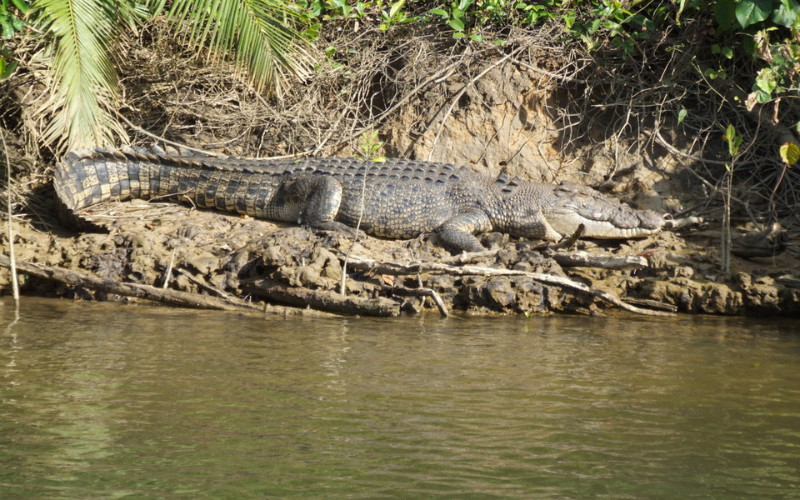
There’s something about seeing a wild crocodile that no zoo visit can replicate. One minute you’re watching mangroves drift past, the next your guide is pointing silently toward the bank – and there it is. A three-metre estuarine crocodile basking on the mud, perfectly still, watching everything.
That’s the draw of a Daintree River cruise. It’s one of the best places in the world to see saltwater crocodiles in their natural habitat, and the hour or so on the water is often the standout moment of a Daintree day trip. Here’s what to expect and what you’ll see on a Daintree day tour from Cairns.
What the cruise is actually like
Most Daintree River cruises run for 60 to 90 minutes on flat-bottomed, open-sided boats that hold between 10 and 30 passengers, depending on the operator. The boats move slowly, the commentary is continuous, and the pace is set by whatever the guide spots along the way.
You’ll cruise through narrow tributaries and mangrove-lined sections where the canopy closes in overhead. The guides know the river intimately – which bends the crocs favour, which trees the snakes like, and which stretch of bank the kingfishers are working on any given day.
It’s not a thrill ride. It’s a quiet, unhurried exploration of one of the most biologically rich river systems on the planet, and the wildlife does most of the talking.
What you’ll see on a Daintree River cruise
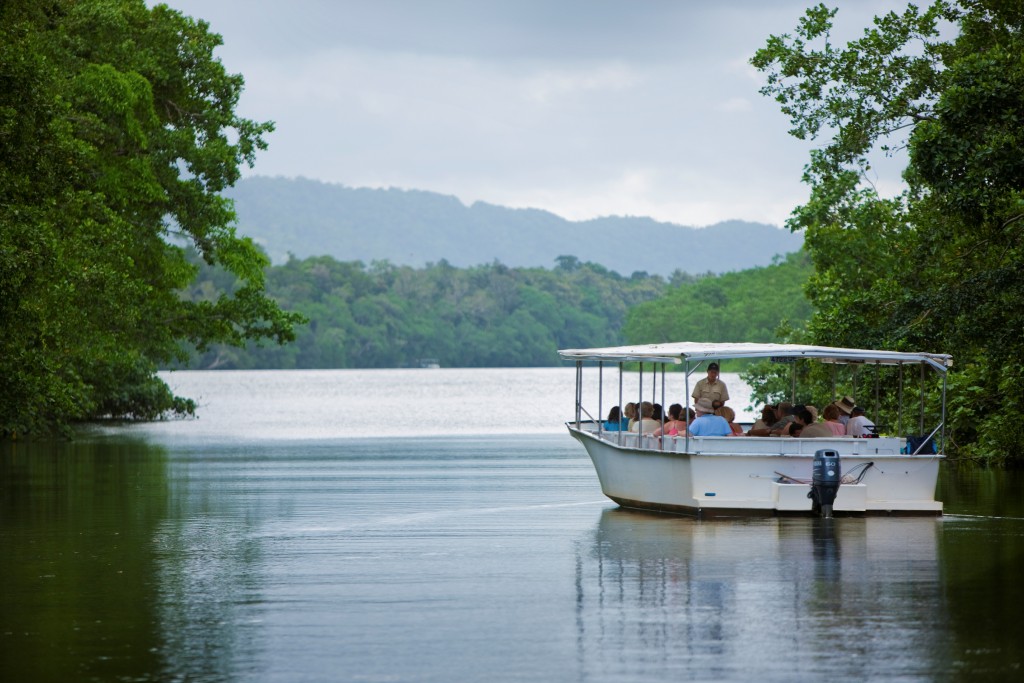
The Daintree River is a living ecosystem, so what you see changes with the season, the tide, and the time of day. But some species show up with enough regularity that you can reasonably expect to encounter them.
Saltwater crocodiles
The star attraction and the reason most people book a cruise. The Daintree is one of the most reliable places in Australia to see wild estuarine crocodiles – also known as salties – in their natural habitat. These are the largest reptiles on the planet, with adult males exceeding 5 metres.
You’re most likely to see them basking on the mud banks at low tide, particularly during the cooler months (June to September) when they spend more time out of the water regulating their body temperature. Reputable operators report spotting success rates of 98 to 99% during the dry season.
In warmer months, crocs spend more time submerged and are harder to spot. Morning cruises tend to have better luck in summer.
Birdlife
The Daintree is a bucket-list destination for birdwatchers, and the river is one of the best places to see species that are hard to find anywhere else. Commonly spotted include:
- Azure Kingfisher – Brilliant blue and orange, seen on nearly every cruise
- Little Kingfisher – One of the smallest kingfishers in the world at just 13 cm, more common on low tides during the dry season
- Great-billed Heron – Australia’s largest and most secretive heron, spotted on around 90% of cruises at low tide
- Papuan Frogmouth – A nocturnal hunter that roosts motionless in the canopy during the day
- Black Bittern – A migrant that arrives from Southeast Asia in October for the breeding season
- Wompoo Fruit-Dove – Often seen raiding fruiting trees in winter
- Shining Flycatcher – A striking glossy-black-and-white bird common along the creek lines
An average cruise spots around 40 wildlife species per trip, with birds making up the bulk of that list.
Other wildlife
Beyond crocs and birds, keep an eye out for:
- Green Tree Snakes and Pythons – Often coiled in overhanging branches, surprisingly easy to miss until your guide points them out
- Eastern Water Dragons – Common along the banks, males are larger and more colourful than females
- Spectacled Fruit Bats – Sometimes visible roosting during the day, more often emerging at dusk
- Butterflies – The Daintree is home to 65% of Australia’s butterfly species, and many are visible from the water
Why the Daintree River stands out
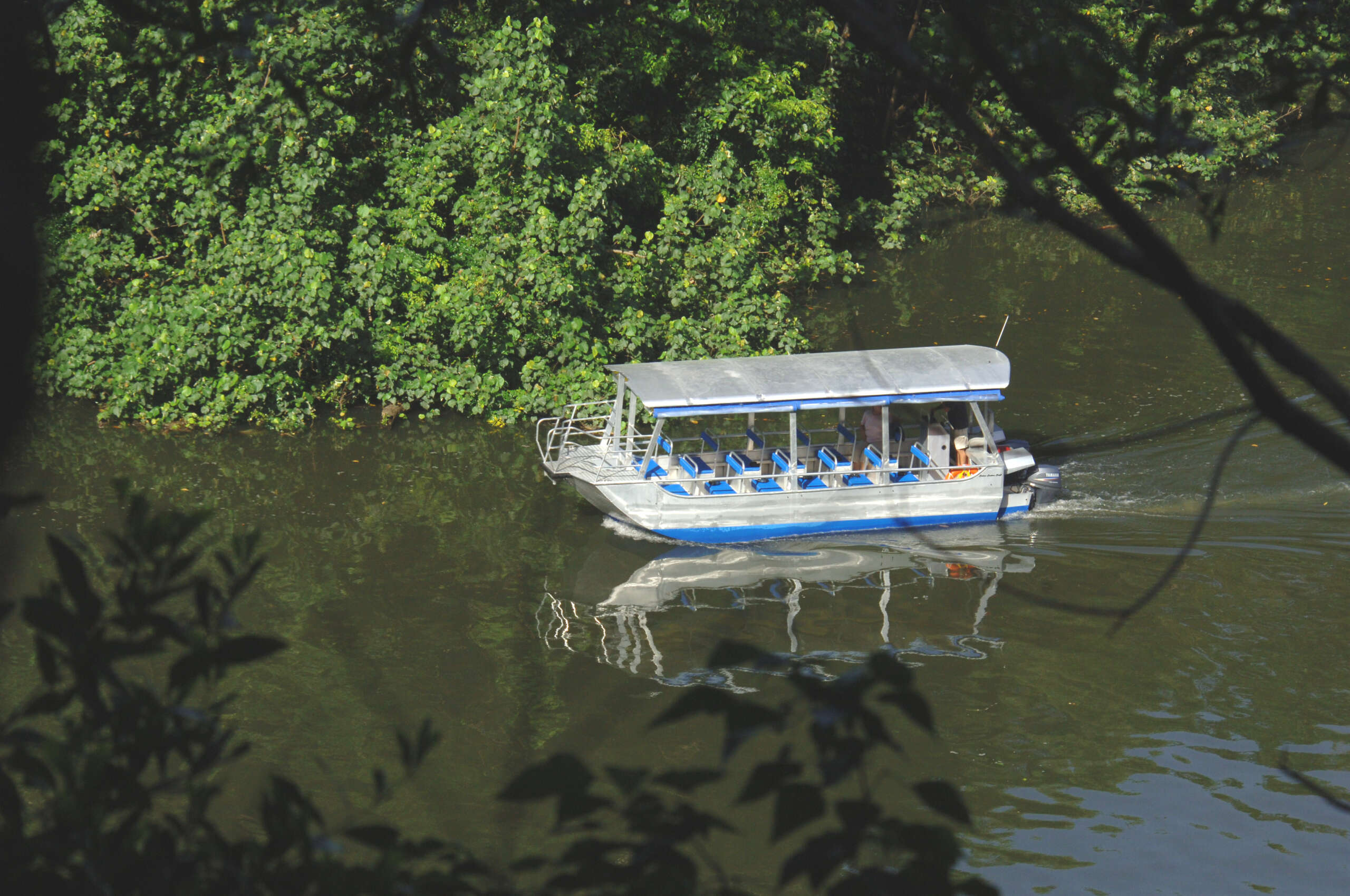
You might wonder what makes this particular river so special. The answer sits in the mangroves.
The Daintree River estuary holds 30 species of mangroves in a single system. That’s the most species-rich mangrove estuary in Australia, and one of the most diverse in the world. For perspective, Australia has 38 mangrove species across the entire continent – so finding 30 of them concentrated in one river is extraordinary.
Those mangroves do the heavy lifting for the whole ecosystem. They stabilise the banks, filter the water, provide nursery habitat for fish, and support the food chain that sustains crocs, birds, and everything else that lives here. When you’re cruising through them, you’re not just looking at scenery – you’re moving through the engine room of the Daintree.
Upper Daintree vs Lower Daintree
Cruises on the Daintree operate from two different areas of the river, and each offers a noticeably different experience. If you’re trying to decide which suits your group, here’s a quick side-by-side.
| Feature | Lower Daintree (ferry area) | Upper Daintree (Daintree village) |
| Departure point | Near the Daintree River ferry crossing | Daintree Village, further inland |
| Main wildlife focus | Crocodiles, mangroves | Birdlife, crocodiles |
| Scenery | Wide tidal river, extensive mangrove systems | Freshwater stretches, Thornton Peak views |
| Best for | First-time visitors, croc spotting | Birdwatchers, quieter experience |
| Access from Cairns | About 1 hour and 45 minutes | About 2 hours |
Most guided Daintree day tours include a Lower Daintree cruise because of its proximity to the ferry and its reliability for crocodile sightings. If you’re a keen birdwatcher or spending multiple days in the region, the Upper Daintree cruise is well worth adding.
Related reading: Daintree Discovery Centre: Rainforest Canopy Experience
Best time of day for a cruise
When you head out on the river makes a real difference to what you see.
Early morning (before 9 am): Generally, the most active period for wildlife. Birds are vocal and visible, crocs are often still out of the water from overnight cooling, and the light is at its softest for photography.
Mid-morning to early afternoon: Still productive, particularly at low tide when crocodiles bask on exposed banks, and wading birds feed in the shallows.
Late afternoon: Cooler and quieter, with lovely light for photos. Birds become active again as the day cools down, and you may see flying foxes leaving their roosts as the sun drops.
The tide matters more than the clock. Low tide exposes the mud banks where crocs bask, and wading birds feed. If you can time your cruise for an hour or two either side of low tide, you’ll generally have the best wildlife sightings.
Best time of year
The Daintree is a year-round destination, but the wildlife viewing shifts noticeably between seasons.
Dry season (May to October): The best time for croc spotting. Cooler water temperatures bring the reptiles out to bask, with sighting success rates around 98%. Clearer weather, more comfortable humidity, and easier driving conditions. This is peak season, so it pays to book ahead.
Wet season (November to April): Crocodile spotting is more hit-and-miss in the warmer months, as they spend more time underwater. The upside? The rainforest is at its most spectacular, bird activity picks up with the breeding season, and migratory species like the Black Bittern arrive from Asia. Tours still run – just bring a light rain jacket.
Is the cruise safe?
Completely. You’re on a stable, guide-operated boat with an experienced crew who’ve been running this river for years – in some cases, decades. The boats are designed so you can stand up and move around for photos, and guides keep a safe and respectful distance from the wildlife at all times.
This is genuinely wild croc country, though, so listen to your guide’s instructions. Keep your hands inside the boat, don’t lean over the sides, and appreciate that these animals are the real deal – the largest living reptiles on Earth, right at home in their own river.
Tips for getting the most out of your cruise
A few things that can make the difference between a good cruise and one you’ll be talking about for months:
- Bring binoculars if you have them. The boats get close to wildlife, but binoculars open up the canopy and make the birds much easier to identify.
- Pack a decent camera. A zoom lens (200mm or longer) is ideal for wildlife shots. Phone cameras work fine for scenery and closer croc sightings.
- Wear flat, closed shoes. The boats are stable, but boarding points can be wet and slippery.
- Bring insect repellent and a light jacket. Mosquitoes near the mangroves are persistent, and the open boats can feel breezy on cooler mornings.
- Don’t skip the commentary. The guides know this river like their own backyard. Their stories about individual crocodiles, breeding behaviour, and river ecology are half the experience.
- Be patient and stay quiet. Wildlife doesn’t work to a schedule. The still, slow moments between sightings are part of what makes the Daintree feel so different from anything else.

Explore Cairns
Daintree Rainforest
Journey into the world’s oldest tropical rainforest on a guided Daintree tour. Visit Mossman Gorge, cruise the Daintree River and see where the rainforest meets the sea at Cape Tribulation.
See Daintree toursFrequently asked questions
How long is a Daintree River cruise?
Most cruises run for 60 to 90 minutes, depending on the operator. Full-day guided Daintree tours from Cairns typically include a 1-hour river cruise as part of the itinerary.
Are you guaranteed to see crocodiles?
No wildlife encounter comes with a guarantee, but reputable operators report sighting success rates of 98 to 99% during the dry season (June to September). In the warmer wet season, sightings are less reliable as crocs spend more time underwater. Some operators offer a complimentary return cruise if no crocs are spotted.
When is the best time to take a Daintree River cruise?
For crocodile spotting, the dry season (May to October) gives you the best odds, with cooler water bringing the reptiles out to bask on the banks. Year-round, early morning cruises at low tide generally produce the best all-round wildlife sightings.
Can you swim in the Daintree River?
No – and this one isn’t negotiable. The Daintree River is a prime estuarine crocodile habitat throughout its length. Swimming in any part of it is extremely dangerous. Stay on the boat and enjoy the wildlife from a safe distance.
Is the cruise suitable for kids?
Yes. Most operators welcome families, and kids tend to love the excitement of spotting a wild croc from the boat. Children under 4 may find the slower pace and the long sit-down harder to manage, but older kids are usually captivated.
How far is the Daintree River from Cairns?
The Daintree ferry crossing is about 140 kilometres north of Cairns – roughly 1 hour 45 minutes to 2 hours by car. Most guided Daintree day tours include the river cruise as part of a full-day itinerary with hotel pickup from Cairns.
Do I need to book in advance?
If you’re joining a guided day tour, the cruise is included and booked as part of the package. If you’re self-driving and booking a standalone cruise directly, it’s smart to book ahead – especially during the dry season (June to September) when demand is highest.
You may also like: The best day trips from Cairns – a guide for first-timers
Get out on the Daintree River
A Daintree River cruise is one of those experiences that sticks with you. The quiet of the mangroves, the thrill when someone spots movement on the bank, and that moment when you’re face-to-face with a wild crocodile from the safety of the boat – it’s the kind of encounter you can only have in a handful of places on Earth.
Every Daintree day tour available through Cairns Discovery Tours includes a river cruise, alongside Cape Tribulation, guided rainforest walks, and lunch – all with local guides who’ve spent years on this river and know exactly where to look.
Browse our Daintree day tours to find the right fit for your group, or give us a call on (07) 4028 3567. You can also send us an email, and we’ll help you lock in a Daintree day you won’t forget.