Skip to main content Skip to footer
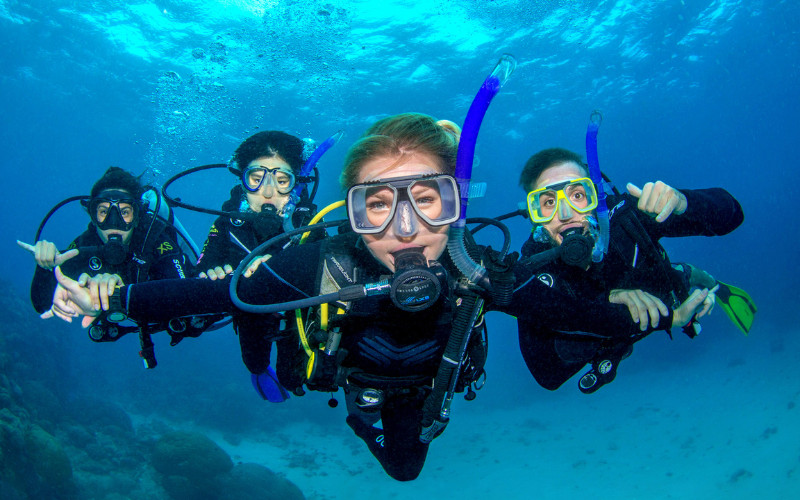
Snorkelling the Great Barrier Reef is one thing. Dropping below the surface on scuba, leaving the world above behind and breathing through a regulator while coral formations rise around you, is something else entirely.
An introductory dive, sometimes called a resort dive or discover scuba dive, lets you do exactly that with no prior experience, no certification, and no preparation beyond a 30-minute briefing on the boat. It’s one of the most popular additions to a Cairns reef day tour, and for most people who try it, it’s the part they talk about longest afterwards. Cairns Discovery Tours books visitors onto intro dives every week – this guide covers how it works, who can do it, what to expect, and what separates a good experience from an average one.
What is an introductory dive?
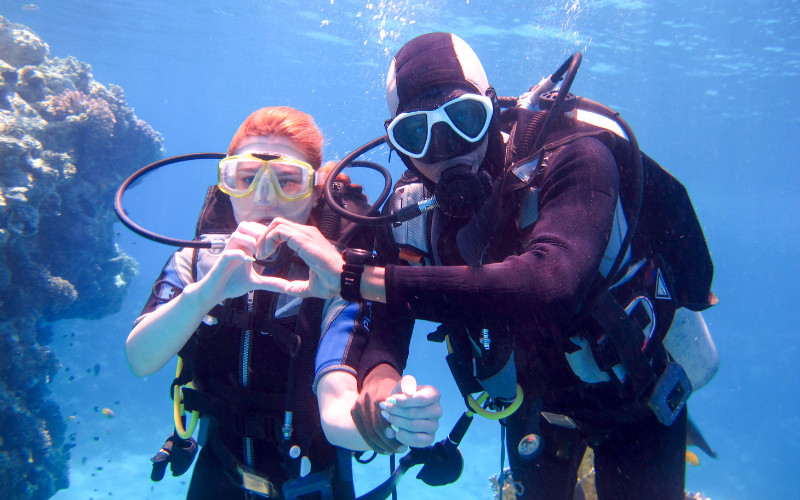
An introductory dive is a supervised scuba diving experience for people with no prior training or certification. A qualified instructor stays with you the entire time – from the briefing on the boat, through the water entry, for the full duration of the dive, and back to the surface. You are never left alone underwater.
Intro dives are available as an optional add-on on most outer reef day tours from Cairns. They typically cost $80 to $205 per dive on top of the base tour price and are usually booked at check-in or paid onboard on the day. One exception is the Great Barrier Reef Day Tour with Reef Experience from Cairns, which includes a free introductory dive in the tour fare.
Note: Prices are a guide only and can shift with the season and the operator. Always confirm current pricing on the tour page before you book.
What an intro dive is not:
- It’s not scuba certification – you won’t be qualified to dive independently afterwards
- It’s not a full dive course – it’s a taste of diving in a real reef environment
- It doesn’t automatically count towards a future Open Water certification, though some operators can arrange for it to contribute to a formal course if you decide to continue
Who can do an introductory dive?
The requirements are straightforward, and the vast majority of visitors qualify.
| Requirement | Detail |
| Minimum age | 12 years. Minors below 18 need written parental or guardian consent |
| Swimming ability | You don’t need to be a strong swimmer – just comfortable in the water |
| Health | Must complete a medical questionnaire (legal requirement in Australia) |
| Experience | None required |
The medical questionnaire
This is the step people most often underestimate. The questionnaire asks about a range of medical conditions. If you answer yes to any item, you’ll need a medical clearance from a doctor before you can dive – and this must be sorted before your tour day, not on the boat.
Conditions that commonly require clearance or may prevent diving:
- Asthma or respiratory conditions
- Heart conditions or recent cardiac surgery
- Epilepsy or seizure disorders
- Ear, nose, or sinus problems (including recent surgery)
- Insulin-dependent diabetes
- Pregnancy
- Certain medications affecting the nervous system or blood pressure
This isn’t red tape – pressure changes at depth affect the body in specific ways, and some conditions interact with those changes seriously. If any of the above apply to you, see a doctor before your trip. A diving medical in Cairns can be arranged through local clinics – ask our team for guidance.
What happens on the day: step by step
Before you board
If you know you want to dive, mention it at check-in. Some tours have limited spots, particularly on smaller vessels. You may be asked to complete the medical questionnaire at the terminal before boarding.
The onboard briefing
Once underway, a dive instructor gives a group briefing covering the basics – how the mask and regulator work, how to breathe underwater, the hand signals used to communicate during the dive, and what to do if something feels wrong. This typically runs 20 to 30 minutes.
Pay close attention. The hand signals for “I’m okay”, “something is wrong”, “go up”, and “equalise your ears” are your primary communication method underwater. You won’t be able to speak, but the signals are simple and effective.
Getting into the gear
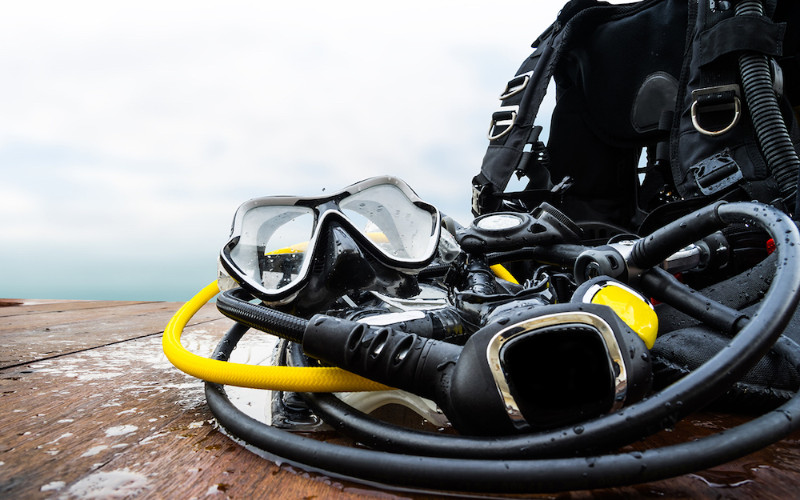
On the dive deck, the crew will fit you with a wetsuit, buoyancy control device (BCD), tank, weight belt, mask, and fins. Everything is provided – you bring your swimwear and nothing else. The crew will check your fit and runs through the regulator with you before you enter the water.
Entering the water
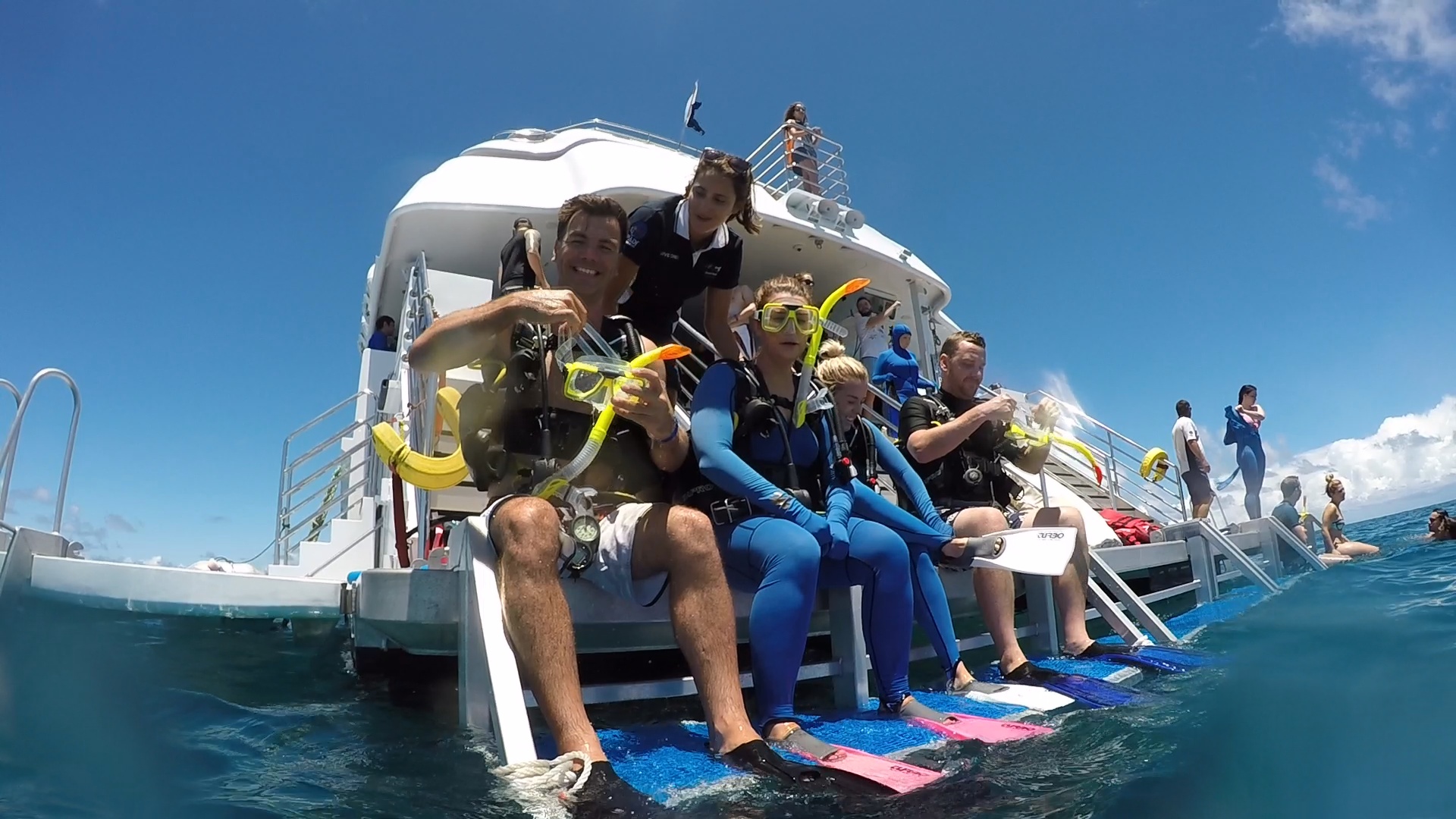
Most vessels have a purpose-built platform or staircase at the stern. You’ll step in or make a giant stride entry depending on the operator. The crew are in the water with you immediately.
Surface skills practice
Before descending, your instructor runs through a few basics at the surface – breathing through the regulator with your face in the water, clearing your mask if it fills, and checking if you’re comfortable with buoyancy. This takes five to ten minutes.
The sensation of breathing underwater is the one thing no briefing fully prepares you for. Your instinct says you shouldn’t be able to. The first breath through the regulator tends to produce one of two reactions: immediate ease, or a moment of adjustment. Either is completely normal. Your instructor will hold your hand – literally, if you need it – and won’t descend until you signal you’re ready.
The dive
Once comfortable, you descend together. Intro dives at the Great Barrier Reef from Cairns typically reach eight to twelve metres – shallow enough for excellent light and colour, deep enough to be genuinely inside the reef.
The dive lasts roughly 20 to 30 minutes, depending on your air use. Relaxed breathing conserves air; nervous, fast breathing uses it more quickly. During that time, your instructor guides you through the reef site – pointing out marine life, helping you adjust buoyancy, and managing the pace to keep you comfortable.
At eight to twelve metres in good conditions, here’s what you can expect to see:
- Coral formations in detail – the texture, structure, and colour of hard and soft coral at close range
- Reef fish at eye level – parrotfish, wrasse, surgeonfish, coral trout, not just viewed from above
- Sea turtles – a regular and unhurried presence on most outer reef sites
- Giant clams open on the sand
- Reef sharks cruising past with complete indifference
The experience of moving through the reef at depth – neutrally buoyant, weightless, breathing slowly – is unlike anything above the surface. Most people describe feeling calmer than expected.
Returning to the boat
Your instructor signals when it’s time to ascend – typically when air supply reaches the safety threshold. You rise slowly together, pause briefly at around five metres, then surface. The crew will help you back onto the platform and take your gear.
Can you do two intro dives in one day?
Yes – and many visitors do. Most outer reef day tours from Cairns visit two reef sites, and operators typically offer an intro dive at each.
The benefit of the second dive is significant. On the first dive, part of your attention goes to the equipment, the breathing, and adjusting to the sensation. By the second dive, that fades. You’ve become more comfortable exploring the reef.
Once you’ve completed the basic in-water skills on your first dive, you don’t repeat them on the second. You go straight in – and it tends to be the better dive.
Snorkelling vs introductory diving: which should you choose?
This is one of the questions our team gets asked most. The honest answer depends on the person.
| Snorkelling | Introductory Dive | |
| Experience needed | None | None |
| Depth | Surface to 1-2m duck dive | 8-12 metres |
| Duration | As long as you want | 20-30 minutes per dive |
| Perspective | Above the reef | Inside the reef, at eye level |
| Physical demands | Very low | Low – but ear pressure adjustment required |
| Cost | Included in most tours | Additional cost on top of the tour |
| Non-swimmers | Yes, with flotation aids | No comfort in water required |
For most first-time reef visitors, snorkelling is the right starting point. It’s included, it’s accessible, and it delivers a genuinely impressive experience. Adding an intro dive on top gives you both perspectives in the same day.
For anyone who has snorkelled the reef before, or who has always wanted to try diving, the intro dive is worth the extra cost without hesitation. Being below rather than above the reef is a completely different experience.
You may also like: Snorkelling vs diving – which is right for you?
Explore Cairns
Great Barrier Reef
Explore one of the world’s greatest natural wonders with daily reef tours from Cairns. Snorkel, dive or cruise the coral with options to suit every age and ability.
See reef toursWhat makes a good intro dive experience?
Not all intro dives are equal. Here’s what to look for when choosing an operator.
| Factor | What to ask |
| Instructor-to-diver ratio | Most operators run 4:1. Boutique operators offer 2:1 or 1:1 – better if you’re nervous |
| Vessel type | Specialist dive boats offer more dive time and smaller groups than large passenger vessels |
| Instructor qualifications | PADI or SSI qualified is standard – worth confirming |
| Dive site suitability | Ask whether the sites are appropriate for first-timers (calm, shallow sections) |
The Great Adventures reef tour runs intro dives from their outer reef pontoon – the platform entry is purpose-built for beginners, and the sheltered conditions suit first-timers well.
The 24-hour no-fly rule
If you do an introductory dive, you can’t fly for 24 hours afterwards. This includes commercial flights, scenic flights, and hot air balloon rides – anything that takes you to altitude.
You should also avoid going above 300 metres in elevation after diving, which means the Atherton Tablelands, a popular local day trip, should be scheduled on a different day.
Plan your reef day with this in mind. If you have a flight the next morning, stick to snorkelling (no restrictions) or move your reef tour earlier in your trip.
Frequently asked questions
Do I need to know how to swim to do an intro dive?
You need to be comfortable in water, but you don’t need to be a strong swimmer. During the dive, you’re neutrally buoyant and accompanied by an instructor at all times. If you’re genuinely unable to swim, snorkelling with a flotation aid is the better option.
Will I be able to breathe normally underwater?
Yes – this is what surprises most first-timers. The regulator delivers air on demand; you breathe in, and the air comes, breathe out, and the bubbles rise. The adjustment is more mental than physical. Most people find it natural within a few breaths.
What if I feel uncomfortable or want to stop?
At any point, you can signal to your instructor that you want to go up. There’s no pressure to continue. Instructors are experienced with nervous first-timers and won’t push anyone beyond their comfort level. Getting out early is always the right call if you’re not comfortable.
Can children do introductory dives at the Great Barrier Reef?
The minimum age is 12 years. Under-18s need written parental or guardian consent. Children who pass the medical questionnaire can complete an intro dive. Some operators may have additional requirements for younger divers – check at booking.
How much does an introductory dive cost?
Intro dives are typically offered as add-ons on top of your reef day tour fare and generally cost between $80 and $250 per dive, depending on the operator. Some tours, like the Great Barrier Reef Day Tour with Reef Experience from Cairns, include a free introductory dive in the base tour price (currently $280 per adult, plus a $10 fuel levy).
Can an intro dive count towards Open Water certification?
With some operators, yes. A formal introductory dive through the PADI Discover Scuba Diving program can be credited towards a full Open Water certification if you decide to continue. This varies by operator and doesn’t reduce the overall course cost, but it may let you complete an additional dive as a certified diver. Ask our team which operators offer this option.
Ready to take the plunge?
An introductory dive at the Great Barrier Reef is one of those experiences that stay with you. The world beneath the surface is quieter, slower, and more vivid than almost anything above it – and Cairns is one of the best places on earth to try it for the first time.
Cairns Discovery Tours books visitors onto intro dives with operators we know and trust – from pontoon-based experiences that suit nervous first-timers to dedicated dive boats for those who want maximum time underwater. Browse our Great Barrier Reef tours from Cairns to find tours that include introductory diving. If you need help picking the right operator for your first dive, call us on (07) 4028 3567 or reach out to us – we’ll match you with the right fit.