Skip to main content Skip to footer
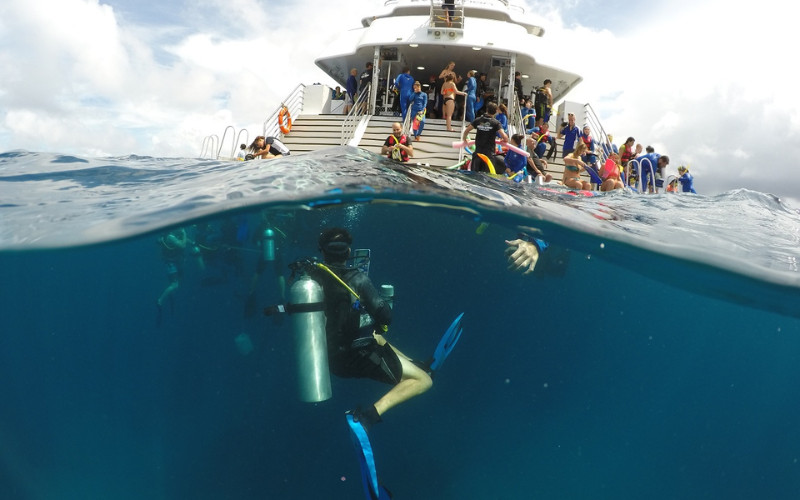
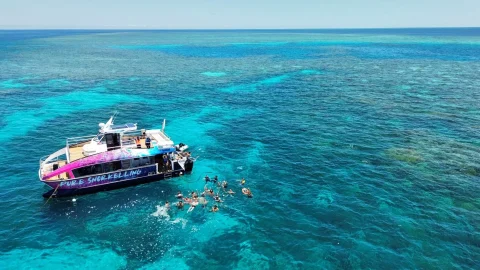
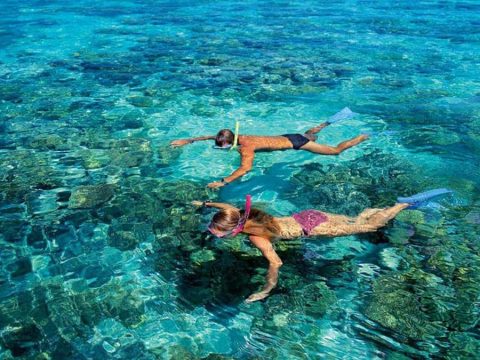
You’re on the boat, the water is that ridiculous shade of blue you only see in photos, and someone hands you a mask. Now comes the question most first-timers wrestle with: do you float along the surface and snorkel, or strap on a tank and drop below?
It’s one of the most common questions Cairns Discovery Tours gets from visitors planning a reef day. The short answer is that both are genuinely spectacular, but they suit different people for different reasons. This guide breaks down what each experience actually involves, what you’ll see, what it costs, and how to decide which is right for you.
Note: Prices are a guide only and can shift with the season and the operator. Always confirm current pricing on the tour page before you book.
What’s the difference between snorkelling and diving?
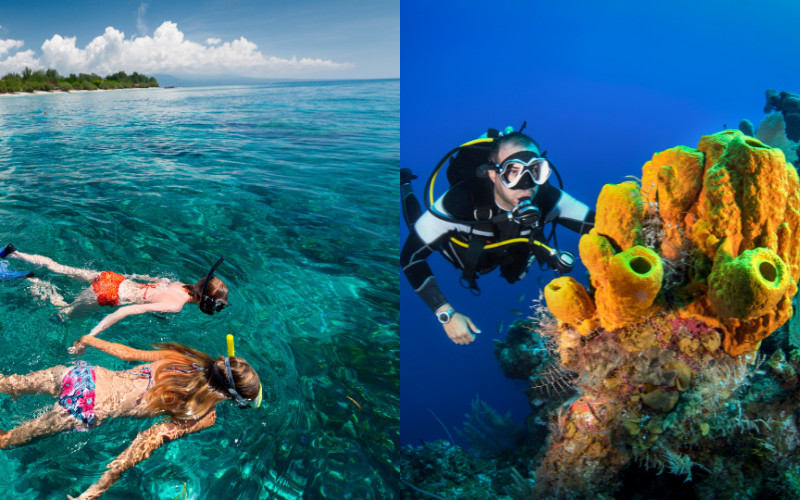
At its simplest, snorkelling keeps you on the surface. You breathe through a tube, look down through your mask, and drift over the reef at your own pace. No training, no equipment beyond a mask, snorkel and fins, and no time limits beyond what your energy allows.
Scuba diving takes you under the surface. You breathe from a tank, control your buoyancy, and move through the reef rather than above it. Certified divers can explore to depths of 18 to 30 metres, depending on their qualification. If you’re not certified, an introductory (intro) dive lets you experience scuba with a qualified instructor guiding you to a maximum depth of around 12 metres.
The difference isn’t just depth – it’s perspective. Snorkelling gives you a wide, sweeping view from above, like watching a living painting. Diving puts you inside that painting, eye-to-eye with the marine life.
Explore Cairns
Great Barrier Reef
Explore one of the world’s greatest natural wonders with daily reef tours from Cairns. Snorkel, dive or cruise the coral with options to suit every age and ability.
See reef toursSnorkelling the Great Barrier Reef – what to expect
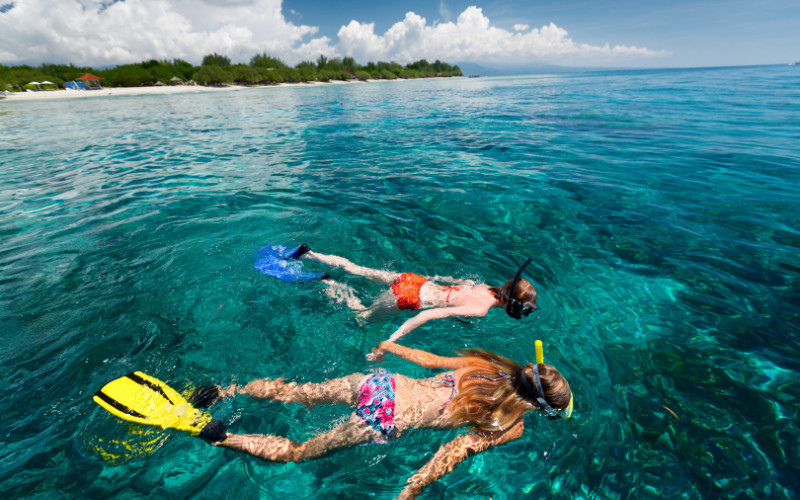
Snorkelling is the most popular way to experience the reef, and for good reason. It’s accessible to almost everyone – you don’t need a certification, you don’t need to be a strong swimmer, and you can be in the water within minutes of arriving at your reef site.
What you’ll see
The Great Barrier Reef’s coral formations are shallow enough in many locations that snorkellers get a brilliant view from the surface. On a clear day – particularly between June and October when visibility on the outer reef can reach 20 metres or more – you can see coral detail, fish, and reef structure from the surface with no trouble at all. Expect to spot:
- Clownfish tucked into anemones (yes, the real-life Nemo)
- Green and hawksbill sea turtles cruising through the shallows
- Giant clams, parrotfish, angelfish, and butterflyfish
- Reef sharks gliding below – usually the harmless whitetip or blacktip variety
- Rays resting on sandy patches between coral bommies
Confident snorkellers who can duck-dive down a few metres get even closer, but it’s not required – floating on the surface with a good mask is enough to see something extraordinary.
One thing to watch: snorkellers spend the entire time floating face-down on the surface, and it’s easy to lose track of how long you’ve been out there. Sunburn across the back, shoulders, and calves is one of the most common issues on reef days. Wear a rash vest or Lycra suit (most operators provide stinger suits during November to May) and apply reef-safe sunscreen before you get in.
Who suits snorkelling best?
- First-time visitors who want a relaxed, no-pressure reef experience
- Families with younger children (most tours welcome kids from around 4-6 years old for snorkelling)
- Anyone short on time – snorkelling requires zero preparation beyond a brief safety talk
- Travellers flying out within 24 hours (diving has a mandatory no-fly window – snorkelling doesn’t)
- Non-swimmers and nervous swimmers.
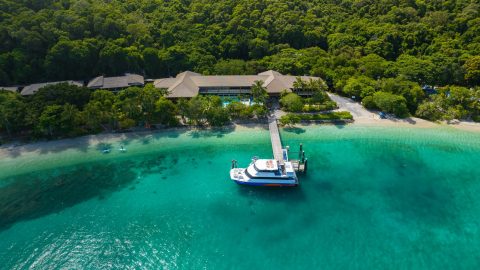
You don’t even need to take a reef boat to snorkel the Great Barrier Reef. Islands like Fitzroy Island have fringing coral reefs that start just metres from the beach. You can walk in from the shore and be snorkelling over live coral almost immediately. The Best of Fitzroy Island Day Tour includes snorkel gear and a glass-bottom boat tour if you’d rather have both options covered in one booking.
Scuba diving the Great Barrier Reef – what to expect
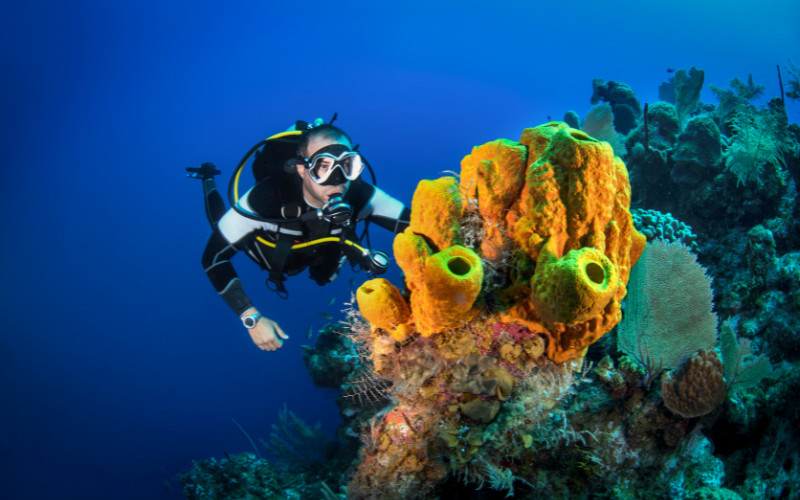
Diving changes the experience entirely. Instead of looking down at the reef, you’re moving through it: hovering over coral gardens, swimming alongside turtles, and watching fish behave in ways you simply can’t observe from the surface.
Intro dives (no certification needed)
If you’ve never dived before, an introductory dive is the way in. No prior experience or certification is required – you just need to be aged 12 or over and meet basic health requirements (you’ll fill out a medical questionnaire before diving).
Here’s what an intro dive typically involves:
- A briefing on the boat covering breathing techniques, hand signals, and how to equalise your ears
- A practice session in shallow water to get comfortable with the equipment
- A guided dive to a maximum depth of around 12 metres, with a qualified instructor by your side the entire time
- The dive itself lasts around 20 to 30 minutes
Intro dives are offered as add-ons on most reef day trips from Cairns. Expect to pay roughly $150 to $205 on top of your tour fare for a single intro dive. It’s a genuine taste of the underwater world, though it’s worth knowing that some of your time goes into briefings and practice rather than reef exploration. If you’re keen to try an intro dive, check the Great Barrier Reef tour with Great Adventures – their outer reef pontoon is purpose-built for first-time divers with easy water entry points.
Certified dives
If you already hold an Open Water certification (or higher), the reef opens up significantly. Certified divers can explore to greater depths, move independently with a buddy, and typically fit two or three dives into a full-day trip. Dive sites on the outer reef range from 10 to 25 metres for most recreational dives, with advanced sites reaching 40 metres on liveaboard trips.
Certified divers also get access to experiences that snorkellers miss entirely – swim-throughs, wall dives, and night diving on overnight liveaboard trips.
Snorkelling vs diving – side-by-side comparison
| Snorkeling | Intro Dive | Certified Dive | |
| Experience needed | None | None | Open Water certification or higher |
| Minimum age | Varies by tour (typically 4-6+) | 12 years | 10 years (with parent/guardian) |
| Typical depth | Surface to 2-3m (duck diving) | Up to 12m | 10-30m+ |
| Time in water | Unlimited during tour stops | 20-30 minutes per dive | 40-60 minutes per dive |
| Equipment | Mask, snorkel, fins (provided) | Full scuba gear (provided) | Full scuba gear (provided or BYO) |
| Preparation time | 5-minute safety talk | 30-45 min briefing + practice | Quick buddy check |
| Freedom to explore | Go at your own pace | Instructor-led, small group | Independent with buddy |
| Cost (add-on) | Usually included in the tour | ~$150-$250 per dive | ~$95-$160 per dive |
| No-fly restriction | None | 24 hours after diving | 24 hours after diving |
| Medical requirements | Minimal | Medical questionnaire | Medical questionnaire |
Can you do both on the same day?
Yes, and many visitors do exactly this. Most full-day reef tours from Cairns visit two or three reef sites over the course of the day, giving you plenty of time to snorkel at one site and try a dive at another.
This is a smart approach if you’re undecided. You can snorkel first to get comfortable in the water and see the reef from above, then add an intro dive later in the day for a completely different perspective.
One thing to keep in mind – if you choose to dive, you’ll need to allow 24 hours before flying. If you’re catching a flight the next morning, stick to snorkelling on your reef day.
What will you actually see – snorkelling vs diving?
Here’s something that surprises a lot of visitors: the reef’s most colourful coral and densest fish life is in the shallows. Coral needs sunlight to thrive, so the top few metres of the reef are often the most vibrant. Snorkellers genuinely see a lot – this isn’t a consolation prize.
That said, diving reveals things the surface can’t. At depth, you’ll notice marine life behaving differently. Turtles rest on the bottom. Moray eels peer out from crevices. Reef sharks patrol the edges of bommies. You also get time – hovering at depth, you can watch a cleaning station or a clownfish defending its anemone for as long as your air allows.
If your main goal is seeing colour and variety, snorkelling delivers. If you want immersion and the feeling of being weightless in another world, diving is the experience that stays with you.
Health and safety considerations
Medical conditions
Scuba diving has stricter medical requirements than snorkelling. Conditions such as asthma, heart disease, epilepsy, and certain medications may prevent you from diving. You’ll need to complete a medical questionnaire before any dive, and in some cases, a doctor’s clearance is required.
Snorkelling has very few restrictions. If you can breathe comfortably through a tube and float in the water, you’re good.
Fitness and swimming ability
You don’t need to be an Olympic swimmer for either activity. Snorkelling requires basic water confidence, and most tours provide flotation devices for anyone who wants extra support. Pontoon-based tours are especially good for nervous swimmers – you can hold onto the platform and still see the reef below you.
Intro dives don’t require strong swimming ability either. Your instructor controls your buoyancy and stays with you throughout. The main requirement is being comfortable breathing through a regulator underwater.
You may also like: Great Barrier Reef Safety Tips
How to choose – a quick decision guide
Choose snorkelling if:
- It’s your first time on the reef, and you want a relaxed experience
- You’re travelling with young children
- You have limited time or are flying within 24 hours
- You want maximum time in the water with total freedom to explore
- You have a medical condition that rules out diving
Choose an intro dive if:
- You’ve always been curious about scuba and want to try it
- You’re comfortable in the water and happy to invest time in a briefing
- You want to get below the surface and see the reef from a diver’s perspective
- You’re not planning to fly for at least 24 hours after your tour
Choose certified diving if:
- You already hold an Open Water certification
- You want the deepest, most immersive reef experience available
- You’re considering a multi-day liveaboard trip to the outer reef
No matter what you choose, the Great Barrier Reef delivers. Snorkelling here is not a lesser experience – it’s one of the most accessible ways to see a World Heritage-listed ecosystem up close. And if you try diving and catch the bug, you can always come back for more.
If you’re still weighing up costs across the board, our guide on How Much Does a Great Barrier Reef Tour Cost breaks down tour fares, add-ons, and where the extra dollars tend to go.
Frequently asked questions
Is snorkelling or diving better for seeing marine life on the Great Barrier Reef?
Both offer excellent marine life encounters. Snorkelling gives you access to the reef’s most colourful shallow zones where coral, fish, and turtles are abundant. Diving lets you get closer to species that live at depth, including moray eels, reef sharks, and resting turtles. For sheer variety of colour and coral, snorkelling holds its own.
Do I need to know how to swim to snorkel the Great Barrier Reef?
You don’t need to be a strong swimmer. Most reef tours provide life jackets, noodles, or flotation vests, and pontoon-based tours let you hold onto the platform while viewing the reef. Basic water confidence is all that’s needed.
How much does an intro dive cost on the Great Barrier Reef?
Intro dives are typically offered as add-ons to reef day trips and generally cost between $150 and $250 per dive, though this varies by operator and season, so it’s worth checking the current rate on the Great Barrier Reef tour with Great Adventures page before booking. This includes all equipment, instruction, and the guided dive itself. Tour fare is separate.
Can I scuba dive if I have asthma?
Asthma and several other medical conditions may affect your ability to dive. You’ll complete a medical questionnaire before any dive, and if you answer yes to any conditions, you’ll need a doctor’s clearance. It’s worth checking with your GP before your trip, so there are no surprises on the day.
Can I snorkel and dive on the same reef trip?
Yes. Most full-day tours from Cairns visit multiple reef sites, giving you time to snorkel at one and dive at another. It’s a popular approach for visitors who want both experiences in a single day.
Ready to experience the reef?
Whether you’re floating on the surface or breathing below it, seeing the Great Barrier Reef up close is one of those experiences that genuinely lives up to the expectation. The Cairns Discovery Tours team has spent 30 years matching visitors with the right reef tour – from gentle snorkelling trips to dive-focused boats and everything in between.
Browse Great Barrier Reef tours from Cairns or call our team on (07) 4028 3567 or drop us a line – we’ll help you find the right experience for your group.