Skip to main content Skip to footer
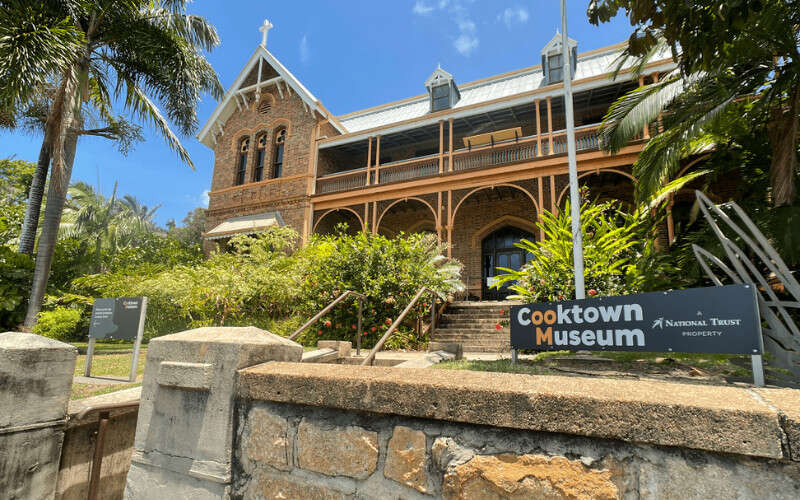
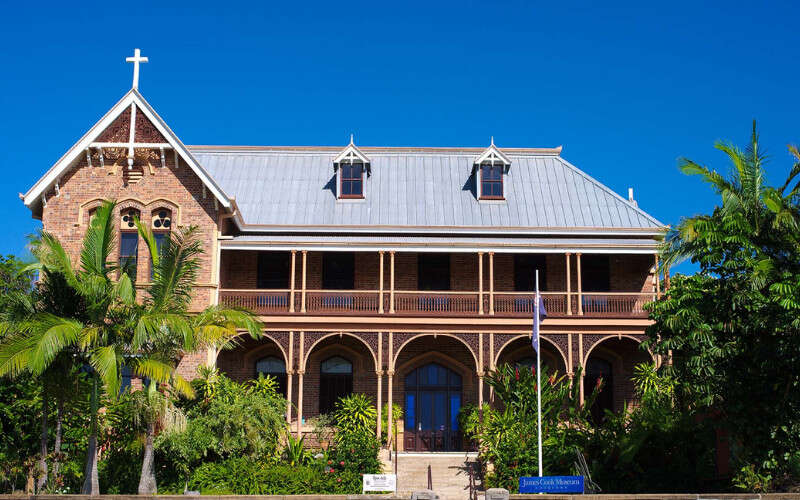
There is a nineteenth-century convent building on the corner of Helen and Furneaux Streets in Cooktown that stops most visitors in their tracks. Wide verandahs, aged brick, shaded gardens running down toward the Endeavour River. It does not announce itself the way a big-city museum might. It just sits there, quietly holding an extraordinary amount of history.
This is the Cooktown Museum, still widely known by its former name, the James Cook Museum, and one of the most compelling regional museums in Queensland. Inside, the story stretches from 1770 and Cook’s seven-week stay on the Endeavour River all the way through the gold rush era, the Chinese community that shaped this town, and the culture of the Guugu Yimithiir people whose country this has always been.
If you are making the trip to Cooktown – whether on a day tour from Cairns or staying longer – this museum belongs on your list. Most people walk out having learned something that genuinely surprises them, and a museum that can do that is worth seeking out.
What is the Cooktown Museum?
The Sisters of Mercy opened their convent school here in 1888, educating local students and boarders from across the Cooktown region for decades. When the Second World War came, the Sisters moved inland to Herberton and did not return. The building sat empty, slowly falling apart, until the community decided that was not how this story was going to end.
It was rescued by the National Trust of Queensland through a community fundraising campaign and restored before being opened as the James Cook Historical Museum by Queen Elizabeth II on 22 April 1970. The Endeavour Gallery, home to the museum’s most significant artefacts, was added in 2001 as part of the Centenary of Federation celebrations.
The museum has since been managed by the National Trust of Queensland and officially renamed the Cooktown Museum, though the James Cook Museum name remains in wide use. Either way, you will know it when you see it.
Related reading: Things to Do in Cooktown
What will you see inside?
The Endeavour Gallery
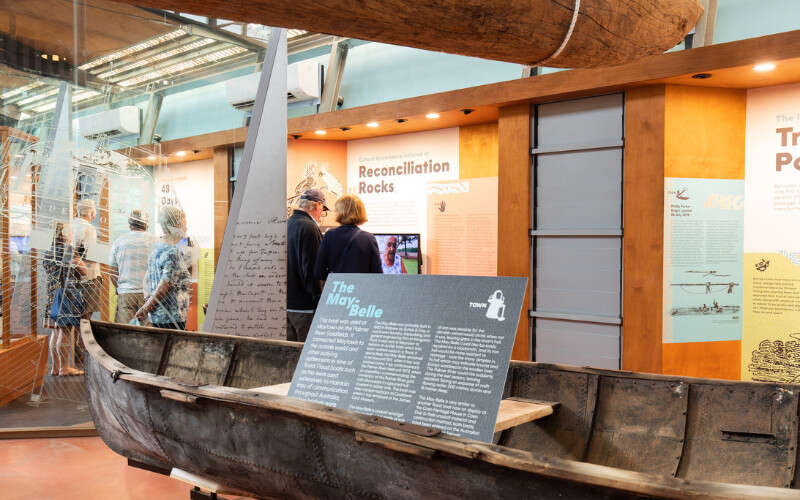
Start here, and give it time. The gallery tells the story of Cook’s enforced seven-week stay at the Endeavour River in 1770, after the Endeavour struck a reef and was brought ashore for emergency repairs. It was less a voyage of discovery at that point than a desperate attempt to keep 94 men alive in an unfamiliar country with a badly damaged ship. The gallery does not gloss over that.
Then there are the artefacts. The original anchor and cannon from HMB Endeavour – thrown overboard in 1770 to lighten the ship as she was dragged free of the reef, sat on the ocean floor for two hundred years before being recovered in the early 1970s. They are displayed here, and standing next to them has a way of making 1770 feel surprisingly close. There is also a detailed ship model from the early 1900s and extensive documentation of the scientific work Cook’s team carried out during the stay, including botanist Joseph Banks identifying and naming 170 plant species in the region.
The gallery also presents Cook’s interactions with the Guugu Yimithiir people, the most extensive contact he had with Aboriginal Australians during the entire voyage, and the encounter from which the word “kangaroo” entered English. Critically, this story is told from both perspectives.
The Indigenous Gallery
Complementing the Endeavour Gallery rather than being subordinate to it, the Indigenous Gallery focuses on the culture, history, and living heritage of the Guugu Yimithiir people, the traditional custodians of the Cooktown region. One of Australia’s first recorded acts of reconciliation took place on the banks of the Endeavour River during Cook’s stay, and this gallery gives that story the space it deserves.
The gold rush and Chinese heritage galleries
Cooktown’s story does not end with Cook. The Palmer River gold rush of the 1870s turned this remote river mouth into one of Australia’s most significant ports almost overnight, at its peak, the third-busiest in Queensland. The first-floor galleries, housed in the former classrooms and school hall, cover the gold rush era and the rich Chinese heritage of the region. Chinese miners came to the Palmer in enormous numbers, and their contribution to Cooktown’s character is woven into the town to this day.
The convent school and maritime galleries
The upper floor – the former nuns’ cells and dormitories – holds exhibits on Cooktown’s maritime history alongside the personal stories of the families who made their lives here. These are the quieter galleries, but do not skip them. Objects, letters, and photographs from people who chose to stay in one of Australia’s most remote communities, raised families, built businesses, and simply got on with it. There is a particular kind of grit in these rooms that the bigger galleries do not quite capture.
The Sir Joseph Banks Garden
The museum spills out into the Sir Joseph Banks Garden, which contains some of the 170 plant species Banks identified and named here in 1770. It is a genuinely lovely spot that is shaded, unhurried, and with views stretching across the Endeavour River to the north shore. After an hour inside absorbing three centuries of history, sitting in a garden where Banks once collected specimens feels like the right place to let it all settle.
Practical information for your visit
Location & getting in
The museum sits on the corner of Helen and Furneaux Streets, Cooktown, with the main entrance on Helen Street. Accessible entry is available via a dedicated footpath on Furneaux Street, with a lift to the first floor and accessible parking nearby. Visitors with specific mobility needs are welcome to contact the museum in advance at 07 4069 5386.
Opening hours
The museum operates on seasonal hours, generally open Tuesday to Saturday during high season (broadly March to October), with reduced hours at other times. It is closed on Wednesdays, Sundays, and all public holidays year-round. Entry fees and operating hours are set by the National Trust of Queensland and may change without notice, so treat the figures below as a guide only and confirm current pricing on the National Trust Queensland website before you visit.
Entry fees
- Adult: $25
- Concession: $20
- Youth (3-17 years): $15
- Infant (under 3): Free
- Family (2 adults + up to 3 youth): $65
- National Trust members: Free
- Groups of 10+: Discounted rates by prior arrangement
How long do you need?
Allow 45 minutes to an hour, though most people find they want longer. The gold rush and Indigenous galleries have a way of pulling you in once you start reading. Add another 10-15 minutes for the Sir Joseph Banks Garden if the day is fine – and in Cooktown, it usually is.
The museum is a short walk from the foreshore, Grassy Hill Lookout, and the Botanic Gardens, so it fits naturally into a half-day in town without any rushing.
You may also like: Grassy Hill Lookout Cooktown
Is the museum included on Cooktown tours?
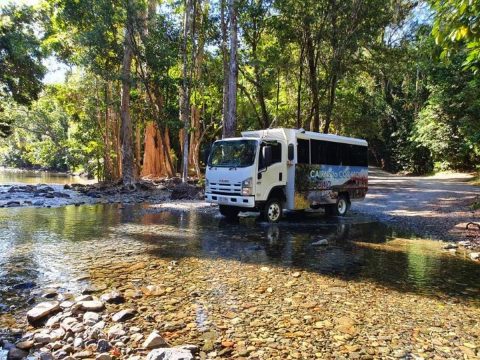
On the 1-Day Cooktown Tour 4WD Drive Adventure, the tour builds in time at the museum as part of a full afternoon in Cooktown – arriving with the context of the Bloomfield Track and the river crossing already behind you makes the exhibits land differently.
On the 3-Day Cape Tribulation and Cooktown Wanderer, Day 2 gives you a full day in town. The museum is a centrepiece stop alongside Grassy Hill, the foreshore, Finch Bay, and the Botanic Gardens. Going with a guide who knows this country, the Guugu Yimithiir history, the gold rush routes, the families who settled here, adds a dimension to the exhibits that reading the plaques alone cannot replicate.
Explore Cairns
Cooktown
Venture into Far North Queensland on a small-group 4WD adventure to historic Cooktown. Traverse the legendary Bloomfield Track and discover fascinating Indigenous and colonial history on 1-day or 3-day tours.
See Cooktown toursFrequently asked questions
Is it called the James Cook Museum or the Cooktown Museum?
Both names refer to the same place. The museum was originally opened as the James Cook Historical Museum in 1970 and is still widely known by that name. It is now officially the Cooktown Museum, managed by the National Trust of Queensland. The collection and focus remain unchanged.
Do I need to book in advance?
Walk-in visitors are welcome during opening hours. Groups of 10 or more can arrange discounted bookings in advance by contacting the museum directly. If you are visiting on a guided tour, entry is often included and pre arranged.
Is the museum suitable for kids?
Yes – the anchor and cannon are genuinely impressive for younger visitors, and the story of how they ended up on the reef in 1770 holds most kids’ attention well. The youth entry fee applies to ages 3-17, and children under 3 enter free.
Can you visit independently if you are not on a tour?
Yes. The museum is open to independent visitors during its published opening hours. Bear in mind it is closed Wednesdays, Sundays, and all public holidays, and hours differ between high and low season – check before you go.
Ready to explore Cooktown?
The Cooktown Museum is the kind of place that makes the drive worthwhile. It puts everything else you will see in this town – the river, Grassy Hill, the foreshore – into a context that sticks with you long after you have left.
Cooktown is a place that holds a special appeal, and the team at Cairns Discovery Tours has years of experience helping visitors explore this part of Far North Queensland, so that local insight goes into every recommendation. Browse all Cooktown tours from Cairns or get in touch with our team if you want help choosing the right option for your group.