Skip to main content Skip to footer

If you want to experience the Great Barrier Reef at its most pristine, Agincourt Reef is the place to go. Located on the very edge of the continental shelf off the coast of Port Douglas, this remarkable ribbon reef system is widely regarded as one of the best-preserved sections of the entire reef. It’s a firm favourite among divers, snorkellers, and anyone chasing that bucket-list outer reef experience.
What distinguishes Agincourt from other reef destinations is its position on the continental shelf edge, where incoming tides sweep clear oceanic water straight in from the Coral Sea. This water exchange creates exceptional clarity year-round and supports vibrant, healthy coral growth and an unusually rich diversity of marine life.
What to know before you go
- Agincourt Reef sits on the outer Great Barrier Reef, about 90 minutes by catamaran from Port Douglas with exceptional water clarity and pristine coral
- The ribbon reef system features 35+ dive sites with depths ranging from 5-metre coral gardens to dramatic walls beyond 40 metres
- Visibility often reaches 20-30 metres, especially during dry season (May-October)
- You don’t need to be an experienced diver – snorkelling in shallow coral gardens is excellent for beginners
- Marine life is consistent – reef sharks, turtles, giant clams, and colourful reef fish are regular sightings
- Agincourt is accessed via Port Douglas, not Cairns – factor this into your travel time
Quick facts about Agincourt Reef
| Fact | Detail |
| Location | Outer Great Barrier Reef, continental shelf edge, ~90 km offshore from Port Douglas |
| Travel time from Port Douglas | Approximately 90 minutes by high-speed catamaran |
| Travel time from Cairns | Approximately 2.5-3 hours (includes travel to Port Douglas) |
| Depth range | 5-40+ metres across multiple dive sites |
| Reef type | Ribbon reef system (parallel to continental shelf) |
| Best for | Experienced divers, confident snorkellers, underwater photographers |
| Key feature | Ribbon reef formations with exceptional water clarity and pristine coral |
| Stinger season | November to May – stinger suits recommended |
| Number of dive sites | 35+ exclusive sites accessible to permitted operators |
Where is Agincourt Reef?
Agincourt Reef sits on the outer edge of Australia’s continental shelf, approximately 90 kilometres offshore from Port Douglas. This position is what makes the reef so special – it’s at the boundary where the continental shelf drops away into the Coral Sea trench.
The reef is part of the Great Barrier Reef Marine Park and operates under strict environmental management guidelines. That level of protection shows in the exceptional condition of the coral and the abundance of marine life you encounter.
Being accessed from Port Douglas rather than Cairns means Agincourt attracts fewer day-trippers than some other outer reef sites. The result is a more intimate reef experience with smaller group sizes and less crowding on the dive sites themselves.
What makes Agincourt Reef different from other reef sites?
Agincourt’s ribbon reef structure is its defining feature. Unlike typical reef formations, ribbon reefs run parallel to the continental shelf edge, creating long, narrow reef systems that stretch kilometres in length. This unique topology creates several advantages for visitors.
First, the incoming Coral Sea water delivers exceptional clarity. Visibility regularly reaches 20-30 metres during dry season months, which is outstanding for the Great Barrier Reef. You can see coral formations and marine life from significant distances underwater.
Second, the ribbon formation creates remarkable topography variation. Within a single dive site, you might encounter shallow coral gardens, dramatic vertical walls, swim-throughs, coral pinnacles (bommies), and deep drop-offs. This variety keeps diving fresh and rewards exploration.
Third, fewer permit restrictions in Agincourt than in some reef areas mean operators have more flexibility in where they position boats, creating a more varied experience across different visit days.
Finally, the water quality supports genuinely healthy coral and a rich marine community. You’re not just looking at the reef – you’re witnessing the reef at its best.
Snorkelling at Agincourt Reef
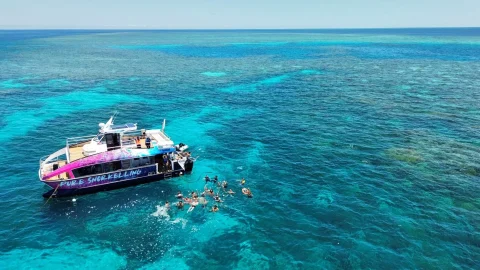
Agincourt’s shallow coral gardens are among the best snorkelling environments on the outer reef. The water is calm and clear close to the boat moorings, visibility is typically outstanding, and the swimming zones are carefully managed.
For first-time snorkellers, the shallow reef sections deliver everything you’d hope for – colourful corals at eye level, tropical fish moving through the gardens, and the ability to explore at your own pace. If you’re confident in the water, the deeper sections reveal more dramatic coral structures and larger fish species.
Most operators offer guided snorkel tours led by marine naturalists. Having someone who genuinely knows the reef point out what you’re looking at – identifying coral species, explaining fish behaviour, or spotting a camouflaged creature you’d have swum straight past – adds substantial depth to the experience.
For nervous snorkellers, the shallow entry zones and operator support make Agincourt accessible. You can ease yourself in at your own pace and have guides in the water nearby. There’s no pressure and no rushing.
Diving at Agincourt Reef
Agincourt offers exceptional diving variety. The 35+ named dive sites span everything from shallow coral gardens to dramatic wall dives. The ribbon reef structure creates natural variations in depth, coral type, and marine life communities across different sections.
Certified divers will find the topography genuinely rewarding. Sites include coral walls that plunge dramatically into deep water, sheltered “garden” areas famous for their dense schools of reef fish, and pinnacle bommies (isolated coral formations) rising from the seafloor covered in soft corals and sea fans.
Deeper sections regularly encounter large, friendly grouper, while shallower sites suit snorkellers and less experienced divers. The range of terrain means skilled divers won’t repeat the same dive experience across different sites – there’s genuine structural and ecological variety.
Night dives at Agincourt are also worth considering. Nocturnal species including crayfish and nudibranchs become active after dark in ways you simply don’t see during daylight hours. The reef takes on a completely different character.

For those who have never dived before, introductory dives are available through most tour operators at Agincourt. A brief in-water orientation is followed by a supervised dive with a guide alongside you the entire time. No certification required.
Related reading: 5 reasons to visit the Great Barrier Reef
Reef viewing without getting wet
Not everyone wants to get in the water, and Agincourt caters well for that too. Glass-bottom boats run regular circuits around the reef, giving you an unobstructed view of the coral and fish from above. Underwater observatories let you descend below the waterline while staying completely dry – you watch the reef through large viewing windows as fish move past at eye level.
Semi-submersible vessels offer a similar experience with a bit more movement through the reef. All of these options are genuinely worthwhile – the reef at Agincourt is healthy enough that dry-deck viewing is not a consolation prize. You see substantial marine life and vibrant coral from these platforms.
Marine life at Agincourt Reef
Thanks to its position at the edge of the continental shelf, Agincourt supports a particularly rich mix of marine species. On any given day in the water, you’re likely to encounter a solid cross-section of Great Barrier Reef species.
- Colourful reef fish, including parrotfish, clownfish, butterflyfish, and angelfish, move through the coral gardens
- Giant clams in vivid blues and greens, often metre-long specimens
- Maori wrasse and large grouper – distinctive fish that often cruise near diving areas with impressive confidence
- Reef sharks and rays in the deeper sections and wall dives
- Sea turtles which appear regularly and tend to be unbothered by snorkellers nearby
- Soft corals and sea fans cover the deeper pinnacles and bommies
- Occasional sightings of manta rays and minke whales (July-September season in some areas)
Fish-feeding sessions run at several of the sites throughout the day. These draw large schools of fish up close to the viewing areas and are a highlight for both kids and adults.

Is Agincourt Reef suitable for families?
Agincourt can work for families, though it’s best suited to families with older children or teenagers comfortable in open water. The boat journey is longer than some reef options, and the deeper dive sites require more confidence in the water than family-friendly lagoon reefs with pontoon platforms.
That said, families do visit Agincourt successfully. The shallow coral garden zones work well for confident young snorkellers, and the exceptional water clarity means even nervous swimmers can see marine life clearly without needing to venture into deep water. Dry-deck options including glass-bottom boats and underwater observatories mean non-swimmers can still experience the reef meaningfully.
For families considering Agincourt versus other reef options: if your children are confident ocean swimmers aged 10+, Agincourt is worthwhile. For younger children or less confident swimmers, pontoon-based reefs like Moore Reef or island options like Fitzroy Island often deliver a more relaxed family experience.
You may also like: 3 best islands to visit at the Great Barrier Reef
Agincourt Reef tours and pricing
Several tours visit Agincourt Reef from Port Douglas. All depart from Port Douglas Marina. A fuel levy applies to most departures and is payable on the day of travel.
Return Scenic Great Barrier Reef Heli Flight
Adult: From $1,189
Depart Port Douglas 11:10 am – 3:30 pm
Experience the reef from the air on a 35-minute scenic helicopter flight, then spend 2 hours 15 minutes at Quicksilver’s pontoon. Enjoy snorkelling, semi-submersible coral viewing, underwater observatory and buffet lunch. Your pilot will share local knowledge while spotting turtles, dolphins, manta rays and humpback whales (July–September).
Cruise-Fly or Fly-Cruise Great Barrier Reef with Quicksilver Cruises
Adult and children 3yrs+: From $746
Departs Port Douglas daily
Choose to fly out and cruise back (or vice versa) with Quicksilver’s friendly crew to the renowned Agincourt Reef ribbon system. The 35-minute scenic flight delivers stunning panoramic views extending from the rainforest coastline across the Coral Sea. Includes access to the spacious activity platform with all reef activities, marine life viewing and meals with drinks.
Browse our Great Barrier Reef tours to compare options from both Cairns and Port Douglas and find what suits your group best.

Explore Cairns
Reef Helicopter Tours
See the Great Barrier Reef from breathtaking altitude on a scenic helicopter flight from Cairns. Combine aerial views with snorkelling and reef pontoon visits for the ultimate reef experience.
See helicopter toursGetting to Agincourt Reef
Agincourt Reef is only accessible by boat or helicopter, with Port Douglas serving as the main departure point. The journey takes around 90 minutes each way aboard a high-speed wave-piercing catamaran, cruising out to the edge of the continental shelf. Some operators also offer scenic helicopter flights to or from the reef for those who want an aerial view of the ribbon reef formations – a genuinely spectacular sight from above.
Port Douglas is approximately 1 hour north of Cairns by car. If you’re staying in Cairns, you’ll need to factor in travel time to Port Douglas (approximately 1 hour) before your reef departure time. Most tours depart early morning, so an overnight stay in Port Douglas or very early departure from Cairns works best.
Most tours include time at permanently moored activity platforms, where boats tie up directly so guests can move easily between the vessel and the platform throughout the day.
Tips for visiting Agincourt Reef
A few practical things worth knowing before you go:
- Book ahead – Agincourt tours are popular and operators have limited permit numbers. Peak season (July-August and school holidays) books out quickly. Wet season availability is generally better but not guaranteed.
- Use reef-safe sunscreen – most operators require it, and the coral health at Agincourt is a direct result of visitors taking this seriously. Bring reef-safe mineral-based sunscreen from home if possible – it’s expensive locally.
- Pack a stinger suit or rash vest if visiting between November and May – stinger season is real on the outer reef, and the suit doesn’t affect your underwater experience.
- Take seasickness tablets before boarding if you’re prone to motion sickness – the 90-minute catamaran crossing can have swell, particularly in winter months when south-easterly winds pick up.
- Arrive at the marina early – check-in queues move faster when you’re not rushing, and an early start means more time in the water.
- Bring a light layer or windbreaker – the boat ride has wind exposure, and the upper deck can be cooler than expected even in tropical weather.
- Consider diving medical requirements – if you plan to dive, review diving medical clearance before the day of travel.
Frequently asked questions
How far is Agincourt Reef from Port Douglas?
Agincourt Reef sits approximately 90 kilometres offshore from Port Douglas on the outer Great Barrier Reef, within the Great Barrier Reef Marine Park. The catamaran journey takes around 90 minutes each way.
Do I need to be an experienced diver to visit Agincourt Reef?
Not at all. Snorkelling is the main activity for many visitors, and the shallow coral gardens make it accessible even for people with limited ocean experience. Dry-deck options including glass-bottom boats and underwater observatories mean you can experience the reef without getting wet at all. Introductory dives are available for those who want to try diving without certification.
How far is Agincourt Reef from Cairns?
Agincourt Reef is approximately 90 kilometres offshore from Port Douglas. From Cairns, it’s roughly 1 hour drive to Port Douglas, then 90 minutes by boat to the reef – so total travel time from central Cairns is approximately 2.5-3 hours depending on traffic and your starting accommodation.
What marine life can I expect to see at Agincourt Reef?
Tropical reef fish including parrotfish, clownfish, and butterflyfish are consistent sightings. Maori wrasse, giant clams, reef sharks, rays, and sea turtles are regularly encountered. The ribbon reef structure and deep water access mean you also see larger pelagic fish. Fish-feeding sessions at the platforms bring large schools right up close to viewing areas.
When is the best time to visit Agincourt Reef?
The dry season (May-October) offers the calmest seas, best visibility, and most reliable weather. The outer reef is accessible year-round, but winter months (June-August) can bring choppier conditions on the crossing. Stinger suits are recommended from November to May.
Can I combine Agincourt Reef with visits to other destinations?
Agincourt is typically a full-day commitment due to travel time. However, fly-cruise combinations allow you to save time on the crossing and potentially extend your day. Some operators offer multi-day packages that combine reef experiences with Port Douglas town time or nearby rainforest experiences.
Is there an age limit for visiting Agincourt Reef?
There’s no strict age limit, but the boat journey and open water environment mean younger children need to be confident in water and comfortable on boats. Most operators accommodate families but advise checking specific requirements when booking.
Plan your Agincourt Reef day
Agincourt Reef is one of those experiences that tends to exceed expectations. The combination of a genuinely pristine ribbon reef system, exceptional water clarity, and activities for every comfort level makes it a standout day on the outer reef – whether you’re travelling solo, as a couple, or with older children in tow.
Cairns Discovery Tours has been booking reef experiences for visitors to Tropical North Queensland for over 30 years. Our team knows the Agincourt operators, understands which reef sites suit different interests, and can help you decide whether to add a helicopter transfer or combine Agincourt with other experiences in the region.
Give us a call on (07) 4028 3567 or send us an email, and we will help you put together the right day on the reef. Browse our full range of Great Barrier Reef tours to see what is available and what suits your group best.