Skip to main content Skip to footer

Can you swim at Cairns beaches? Yes – but at the right beaches, with the right precautions, and with clear awareness of stinger season (November to May). The Cairns city foreshore isn’t suitable for swimming due to tidal mudflats. The best swimming beaches are the Northern Beaches – Palm Cove, Trinity Beach, Ellis Beach – 15-30 minutes north of Cairns, all with stinger nets during the wet season and lifeguards on duty.
Where NOT to swim: Cairns city foreshore (tidal mudflats, not suitable for swimming)
Where TO swim: Northern Beaches – Palm Cove (25 min north), Trinity Beach (20 min), Ellis Beach (30 min), Holloways Beach (15 min)
City alternative: Cairns Esplanade Lagoon – free, lifeguarded, safe year-round, no stingers or crocodiles
Stinger season: November to May – box jellyfish and Irukandji present in coastal waters
Required protection: Swim inside stinger nets + wear stinger suit during November-May
Best swimming months: June to October – outside stinger season, clear water, excellent conditions
Crocodile awareness: Never swim near river mouths, creek mouths, or murky water. Wait for lifeguard morning checks before entering nets.
Emergency: If stung – flood the area with vinegar for 30+ seconds, seek medical attention immediately
Why you can’t swim at Cairns city beaches
The Cairns city foreshore along the Esplanade is characterised by tidal mudflats – not the sandy shoreline many visitors expect. The ocean at Cairns CBD is not suitable for swimming, and the nearest swimmable beaches are a short drive north.
Cairns compensates with the Cairns Esplanade Lagoon – a 4,800-square-metre saltwater swimming facility that offers safe, year-round swimming free from stingers and crocodiles. It’s lifeguarded, completely free to use, and sits right in the heart of the city.
Understanding stinger season in Cairns
Stinger season runs from November through May. During this time, tropical jellyfish – including dangerous species like box jellyfish (Chironex fleckeri) and the tiny but venomous Irukandji – can be present in coastal waters.
Box jellyfish have long tentacles loaded with potent venom that can cause severe pain or, in rare cases, be fatal within minutes.
Irukandji jellyfish are barely the size of a fingernail, making them almost invisible in the water. A sting can cause Irukandji syndrome – severe pain, muscle cramps, and potentially life-threatening complications.
Marine stingers are predominantly a problem along the coast and not usually a concern on Great Barrier Reef tours, where operators provide stinger suits as standard.
Outside stinger season (June through October), beaches are generally clear of dangerous jellyfish, and swimming conditions are excellent.
How stinger nets work
Stinger-resistant swimming enclosures at local beaches give a high degree of protection against box jellyfish, but are not 100% stinger-proof. Beaches may be closed when stingers are present, and closures remain in place until weather patterns change and drive stingers away from the coastline.
Irukandji are tiny enough to potentially pass through the mesh of a stinger net, which is why wearing a stinger suit inside the net is strongly recommended during stinger season, not just outside it.
Stinger nets are managed by local councils and checked daily. Lifeguards drag the net, usually every day, to check for unwanted visitors – including jellyfish and, occasionally, crocodiles that have wandered in overnight. Mornings after the daily drag tend to be the safest time to swim.
Important: Do not touch the nets themselves – stingers can become caught in the mesh and still sting you on contact.
Crocodile awareness at Cairns beaches
Saltwater crocodiles are part of life in Far North Queensland and deserve respect at all times of the year. Saltwater crocodiles tend to congregate near river mouths and streams where fish are plentiful, and the water is murky – so any northern Queensland beach situated near a river mouth may be a crocodile hotspot.

The good news is that beaches close to Cairns city centre have low crocodile risk, and the well-known Northern Beaches swimming spots are considered safe. That said, always be aware of crocodile warning signs at beaches, and note that crocodiles can occasionally enter stinger net enclosures – so wait until lifeguards have completed their morning check before getting in the water.
Never swim in estuaries, near creek mouths, or in murky water anywhere in the Cairns region.
Best beaches for swimming near Cairns
The Cairns Northern Beaches offer excellent swimming conditions with stinger nets during the wet season. Here’s where to go for the safest and most enjoyable ocean swimming near Cairns.
Palm Cove
Palm Cove is consistently rated the standout swimming beach closest to Cairns. Between November and May, the beach has stinger nets and lifesavers on duty. The foreshore is shaded with benches, a walking path, a bike path, BBQs, and a playground.
The village is lined with boutique accommodation, excellent restaurants, and cafes – making it an easy full day out. Located approximately 25 minutes north of Cairns by car.
Trinity Beach
Trinity Beach is just as beautiful as Palm Cove, but without as many tourists. The beach is lined with palm trees and has a stinger-proof swimming net, exercise equipment, barbecues, and a family-friendly tropical vibe. Great choice if you want good facilities without the crowds.
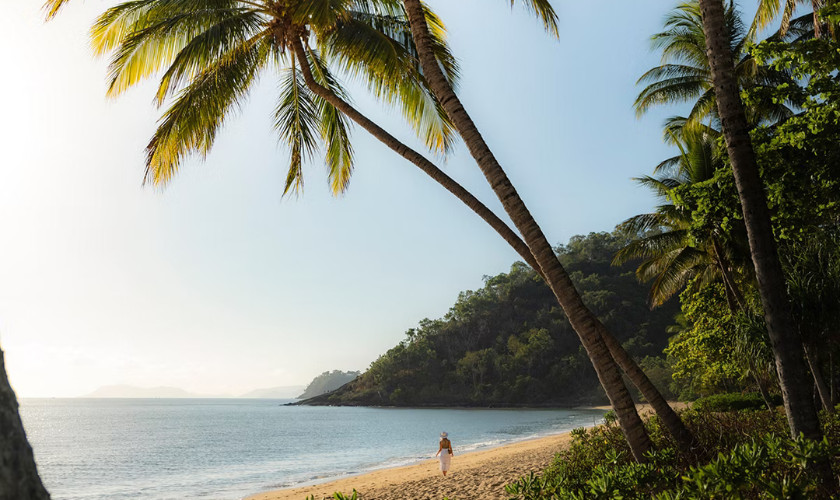
Ellis Beach
A one-kilometre stretch of sand backdropped by palm trees, Ellis Beach is perfectly suited to a quiet swim. The water is calm and well sheltered by Double Island, and stinger nets are in place between November and May.
This is a local favourite – less polished than Palm Cove, but all the better for it. The Ellis Beach Bar & Grill, right on the sand, is a bonus.
Yorkeys Knob
Yorkeys Knob sits between Cairns and Palm Cove and is one of the few beaches without heavy crowds. It’s popular with kite surfers, and lifesavers are on duty during stinger season from November to May.
Holloways Beach
Holloways Beach is roughly 15 minutes’ drive from Cairns and one of the closest beaches to the city with stinger net protection during the summer months. It’s wheelchair accessible and has a playground, covered picnic area, and BBQs at the foreshore.
Kewarra Beach and Clifton Beach
Both beaches offer a quieter, more residential feel. If you’re after a low-key beach with a local vibe, Kewarra Beach or Clifton Beach are worth considering. Both have stinger nets installed during the season.
Swimming in Cairns city: the Esplanade Lagoon
If you’re staying in the Cairns CBD and don’t want to drive north, the Esplanade Lagoon is your answer. The filtered saltwater pool has a maximum depth of 1.5 metres, creating a perfect environment for swimmers of all abilities. During lagoon opening hours, there is always a lifeguard on duty.
Opening hours: 6 am to 9 pm daily (except Wednesday mornings when it closes for maintenance until noon). The lagoon is fully lit at night, and entry is completely free.
Beach wheelchairs and all-access mats are available for free hire at Palm Cove and Ellis Beach, courtesy of Cairns Regional Council.
Related reading: Cairns Lagoon guide
Swimming safety tips for Cairns beaches
Whether it’s stinger season or not, these rules apply every time you head to the water near Cairns.
Always follow these safety guidelines:
- Swim at patrolled beaches between the red and yellow flags
- Use the stinger net during stinger season (November to May) and wear a stinger suit for best protection
- Enter the water slowly – this gives marine stingers time to move away
- Never swim when a beach is closed, regardless of how calm the water looks
- Heed all crocodile warning signs and never swim near river mouths, estuaries, or in murky water
- Avoid swimming after heavy rainfall – runoff can reduce visibility and affect water quality
- Swim with a buddy, especially with children in the water
If stung by a jellyfish:
- Immediately flood the area with vinegar for at least 30 seconds
- Seek medical attention as soon as possible
- Do not rub the sting or apply ice – this can worsen the reaction
For up-to-date beach and stinger conditions, check North Queensland Surf Life Saving or call 07 4049 1200 during working hours.
Best time of year for swimming at Cairns beaches
Swimming conditions at Cairns beaches vary significantly throughout the year, shaped primarily by stinger season and weather patterns. Understanding when to visit makes a genuine difference to your experience and safety.
Dry season (June to October): This is the best time for swimming at Cairns beaches. Stinger season has ended, water visibility is excellent, humidity is lower, and daily temperatures sit comfortably in the mid-20s. The Northern Beaches are at their most appealing during this window – calm water, clear skies, and minimal marine hazards. This is peak tourist season for good reason.
Wet season (November to May): Swimming is still possible during the wet season, but stinger suits and stinger nets become essential. Afternoon thunderstorms are common (usually clearing within an hour), humidity is high, and marine stinger presence peaks between December and March. If you’re visiting during the wet season, always swim inside stinger nets and wear a stinger suit regardless of conditions.
Shoulder months (May and November): These transitional months offer reasonable beach conditions with fewer crowds than the peak dry season. Stinger presence can vary – May sees stingers tapering off as the season ends, while November sees them returning as the wet season begins. Check current conditions before swimming and err on the side of caution.
Beyond the beach: other swimming options near Cairns
If you’d rather avoid the ocean entirely – especially during stinger season – Cairns has some wonderful alternatives for safe, enjoyable swimming.
Cairns Esplanade Lagoon: Free, central, lifeguarded, open year-round. The easy choice for city-based swimming without ocean hazards.
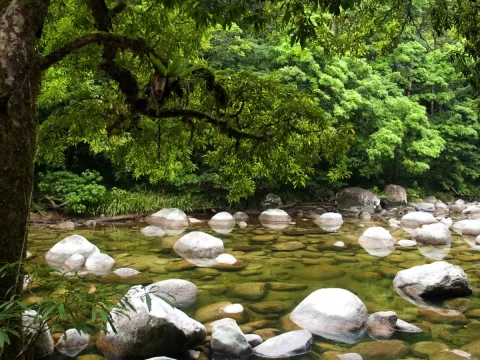
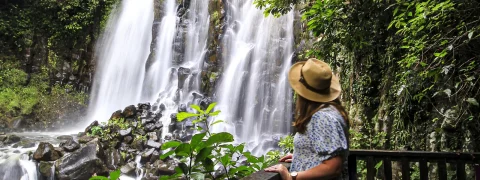
Atherton Tablelands swimming holes: Natural waterfalls and freshwater pools throughout the Atherton Tablelands, including Millaa Millaa Falls, Lake Barrine, and Lake Eacham on the Waterfalls and Rainforest Tour. These sit roughly 90 minutes inland from Cairns and offer genuinely beautiful swimming in rainforest settings with no marine stingers.
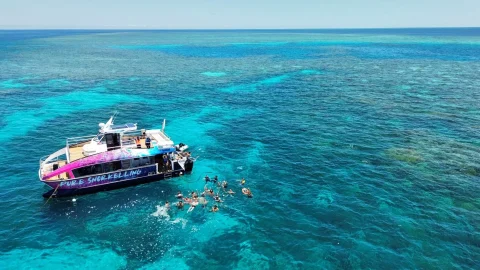
Great Barrier Reef tours: Reef operators provide stinger suits and guided snorkelling in open water, with marine safety built into the experience. Reef tours from Cairns operate year-round regardless of stinger season.
You may also like: Best time to travel to Cairns

Explore Cairns
Reef Helicopter Tours
See the Great Barrier Reef from breathtaking altitude on a scenic helicopter flight from Cairns. Combine aerial views with snorkelling and reef pontoon visits for the ultimate reef experience.
See helicopter toursQuick reference: where to swim near Cairns
Choosing the right swimming location depends on where you’re staying, how far you’re willing to travel, and whether you prefer ocean swimming or pool facilities. Here’s how your options compare across the key factors that matter – safety, facilities, travel time, and seasonal considerations.
| Location | Distance from Cairns | Stinger protection | Lifeguards | Best for |
| Cairns Esplanade Lagoon | City centre | Year-round safe (no stingers) | Yes, daily 6 am – 9 pm | City-based visitors, families, budget travellers |
| Palm Cove | 25 min north | Stinger nets Nov-May | Yes, during stinger season | Best facilities, restaurants, full day out |
| Trinity Beach | 20 min north | Stinger nets Nov-May | Yes, during stinger season | Family-friendly, less crowded than Palm Cove |
| Ellis Beach | 30 min north | Stinger nets Nov-May | Yes, during stinger season | Quiet, local atmosphere, beachfront bar |
| Holloways Beach | 15 min north | Stinger nets Nov-May | Yes, during stinger season | Closest Northern Beach to Cairns CBD |
| Yorkeys Knob | 20 min north | Stinger nets Nov-May | Yes, during stinger season | Kite surfing, fewer crowds |
Frequently asked questions
Can you swim at Cairns beaches?
Yes, you can swim at Cairns beaches – but not directly off the Cairns city foreshore, which has tidal mudflats. The best swimming beaches are the Northern Beaches (Palm Cove, Trinity Beach, Ellis Beach), 15-30 minutes north of Cairns. These beaches have stinger nets during stinger season (November-May) and are patrolled by lifeguards.
When is it safe to swim at Cairns beaches?
The safest time to swim at Cairns beaches is June through October (dry season) when stinger season has ended. During November through May (stinger season), swimming is still possible inside stinger nets while wearing a stinger suit. Always swim at patrolled beaches between the red and yellow flags.
What is stinger season in Cairns?
Stinger season in Cairns runs from November through May. During this time, dangerous jellyfish, including box jellyfish and Irukandji, can be present in coastal waters. Stinger nets and stinger suits provide protection, but the safest swimming conditions occur outside stinger season (June-October).
Are there crocodiles at Cairns beaches?
Saltwater crocodiles are present in Far North Queensland, but beaches close to Cairns city and the well-known Northern Beaches have low crocodile risk. Never swim near river mouths, creek mouths, estuaries, or in murky water. Always heed crocodile warning signs and wait for lifeguards to complete morning checks before entering stinger net enclosures.
What should I do if stung by a jellyfish in Cairns?
Immediately flood the sting area with vinegar for at least 30 seconds and seek medical attention as soon as possible. Do not rub the sting or apply ice, as this can worsen the reaction. Call 000 for emergency services if the person shows severe symptoms.
Where is the best beach for swimming near Cairns?
Palm Cove is consistently rated the best swimming beach near Cairns, with excellent facilities, stinger nets during season, lifeguards, restaurants, and a beautiful village atmosphere. Trinity Beach offers a similar quality with fewer crowds. For city-based swimming without ocean hazards, the Cairns Esplanade Lagoon is the best option.
Do I need a stinger suit to swim at Cairns beaches?
During stinger season (November-May), wearing a stinger suit is strongly recommended even when swimming inside stinger nets. Stinger suits provide the best protection against jellyfish stings, particularly from tiny Irukandji jellyfish that can potentially pass through net mesh. Outside stinger season (June-October), stinger suits are not required.
Plan your Cairns water adventures safely
Cairns beaches are absolutely worth visiting – they’re stunning, calm, and far more accessible than many travellers expect. You just need to know where to go and what precautions to take. The Northern Beaches deliver excellent ocean swimming with proper safety measures in place, and the Esplanade Lagoon offers convenient, safe swimming right in the city centre.
The best days in Cairns often start on the water – whether that’s swimming at Palm Cove, snorkelling the Great Barrier Reef, or exploring the Daintree Rainforest. The team at Cairns Discovery Tours has been helping visitors safely explore Tropical North Queensland for over 30 years and knows which experiences deliver and which conditions to watch for.
Browse Great Barrier Reef tours, island day trips, Daintree experiences, and Kuranda adventures, or call (07) 4028 3567 to talk through your Cairns itinerary and water safety questions.