Skip to main content Skip to footer

If you’ve been paying attention to the news, you know the Great Barrier Reef has been through some rough patches lately. Bleaching events, falling coral cover, stress from heat waves – it’s enough to make you wonder if there’s still anything worth seeing out there. You may be asking: is the reef still alive? Is it worth visiting? What am I actually going to see?
So let’s cut through the noise and talk honestly about what coral bleaching actually is, what the latest data shows about reef health right now, and what it really means for your experience. The truth is more nuanced than the headlines suggest. Yes, bleaching is real and it’s accelerating – that’s not debatable. But bleached coral isn’t dead coral, and understanding the difference completely changes the picture. This guide walks through the biology, the current status of the reef, what recovery looks like in practice, and why visiting responsibly remains one of the most meaningful things you can do.
What coral bleaching actually is – the biology explained
Coral gets its vibrant colours from microscopic algae called zooxanthellae that live inside the coral’s tissue. It’s a genuine biological partnership – the algae receive shelter and access to sunlight, and in return they photosynthesise and transfer energy directly to the coral host. This symbiotic relationship is so vital that most reef-building corals can’t survive without it.
When ocean temperatures rise and stay elevated for extended periods, this partnership breaks down. The heat stress causes the coral to expel the zooxanthellae from its tissue, exposing the white calcium carbonate skeleton underneath. That white appearance is what we call “bleaching.”
Here’s the critical distinction that headlines often skip: bleached coral is not dead coral. It’s a stressed organism that has lost its energy source. If water temperatures drop and conditions normalise relatively quickly – typically within a few weeks to months – the coral can reabsorb zooxanthellae and recover its colour and health. If the heat stress persists or returns repeatedly before recovery is complete, the coral dies.
Multiple stressors, not just heat
While rising ocean temperatures are the primary driver of bleaching, researchers have identified several compounding factors that increase vulnerability:
- Agricultural and urban runoff that boosts nutrient levels, favouring algae growth over coral
- Sediment plumes that reduce light penetration and smother coral
- Freshwater plumes from extreme rainfall that dilute the salt content corals depend on
- Photoinhibition – overexposure to intense sunlight during extreme low tides, which damages the coral’s photosynthetic machinery
These stressors don’t operate independently. A coral already weakened by heat stress becomes far more vulnerable to sediment or freshwater impacts. This cascading effect is why reef recovery depends not just on temperature relief, but on overall ecosystem health.
Understanding the scale and diversity of the Great Barrier Reef
Before diving into what’s happening, it’s essential to grasp the sheer size and complexity of the system. The Great Barrier Reef stretches approximately 2,300 kilometres along Queensland’s coast and covers roughly 344,400 square kilometres – an area larger than New Zealand. Within that vast system, you’ll find:
- Over 450 species of hard coral (the reef-building kind)
- At least 1,000 species of soft coral
- More than 1,500 fish species
- Hundreds of mollusc, crustacean, and other invertebrate species
This enormous biodiversity across diverse habitats means bleaching impacts vary dramatically by location. A severe event in the far north near Cooktown doesn’t necessarily reflect conditions hundreds of kilometres south. Water temperature, depth, local currents, species composition, and management practices all create a patchwork of varying vulnerability and recovery rates.
How scientists measure and classify bleaching
Rather than simply labelling bleaching events as “good” or “bad,” reef scientists have developed a five-category framework to quantify severity. Scientists from the Great Barrier Reef Marine Park Authority, Australian Institute of Marine Science (AIMS), and James Cook University assess events based on:
- Intensity and duration of heat exposure
- Individual coral colony response – which species bleached and how severely
- Geographic extent – how widespread across the Reef
- Mortality rates – percentage of coral that died versus recovered
The five categories range from Category 1 (limited bleaching of heat-sensitive species, no mortality) through to Category 5 (extensive bleaching across nearly all coral types with widespread mortality). This nuance explains why blanket statements like “the Reef is dying” miss the reality – bleaching impact is highly variable across regions and species.
What’s happening right now – the data
The timeline of recent events
AIMS has documented major mass bleaching events from 1998 to the present. What stands out is the frequency. The period from 2016 onwards shows bleaching events occurring every 1-2 years on average. Historically, the Reef experienced bleaching roughly once per decade. This acceleration is directly linked to rising global ocean temperatures.
2024: The largest bleaching on record
Between August 2024 and May 2025, surveys documented the most extensive bleaching event since monitoring began in 1986. It was significant across the board:
- Coral cover in the southern third of the Reef dropped to 26.9% – a decline of nearly one-third in a single year
- Southern reefs recorded their highest heat stress levels in 39 years of records
- It marked the largest single-year coral loss in the entire monitoring program
At One Tree Island on the southern Reef, researchers tracked 462 individual coral colonies through the 2024 heatwave. Here’s how the bleaching progressed:
| Timeline | Bleaching Rate | Mortality Rate |
| February 2024 | 66% | – |
| April 2024 | 80% | – |
| July 2024 | – | 44% of bleached colonies |
| – | – | 95% mortality for Acropora corals |
What’s particularly significant is that One Tree Island had largely avoided severe bleaching in previous events and sits within a protected marine park – yet neither its isolation nor its protected status prevented the heat stress from causing substantial damage. This demonstrates that even well-managed, remote reefs aren’t immune to global climate patterns.
2025: A secondary event with lessons
The 2025 bleaching event was less extensive than 2024, with the heaviest impacts concentrated in the far north between Cooktown and Cape York. Importantly, the southern third of the Reef wasn’t under sufficient heat stress to trigger serious concern – suggesting some regional variation in temperature patterns. However, this back-to-back bleaching in consecutive years marks only the second time in recorded history this has occurred (the previous instance was 2016-17), indicating sustained pressure on the system.
Global context – we’re in the fourth mass bleaching event
The Great Barrier Reef’s recent struggles aren’t isolated. In 2024, NOAA confirmed that the world is experiencing its fourth recorded global coral bleaching event – and it’s the largest ever documented.
Since January 2023, roughly 84% of the world’s coral reef area across more than 80 countries and territories has experienced bleaching-level heat stress. To understand how significant that is: it surpasses the previous record set between 2014 and 2017. The cause is consistent everywhere – rising ocean temperatures driven by greenhouse gas emissions. What’s happening to the Great Barrier Reef isn’t unique to Australian waters. It’s part of a global pattern affecting reefs from the Caribbean to Southeast Asia to the Pacific Islands.
Why does this matter for the future?
Here’s where the science gets sobering, but it’s important to understand. Even under optimistic emissions-reduction scenarios, researchers project that bleaching will continue outpacing recovery rates. The core issue is timing: the reef needs recovery windows between bleaching events.
Right now, we’re seeing bleaching roughly every 1-2 years. Coral reproduction and growth cycles take longer than that. A typical hard coral might take 5-10 years to fully recover from severe bleaching and return to pre-stress growth rates. If bleaching strikes again before that recovery completes, the coral’s resilience gets progressively weaker. That’s the real challenge facing reef managers – not individual bleaching events themselves, but the shrinking time between them.
How corals recover – and why timing matters
Coral recovery is biologically possible, but success depends on several interconnected factors working together. The speed of temperature recovery matters, but so does the overall health of the surrounding ecosystem and the resilience of the coral species involved. Understanding these factors explains why some reefs bounce back quickly after bleaching while others struggle for years.
Speed of temperature recovery
If heat stress eases within weeks, corals can often reabsorb their zooxanthellae and resume normal metabolic function. The algae rebuild their populations inside the coral tissue, and the symbiosis restarts. However, prolonged heat exposure or repeated stress cycles before recovery completes dramatically reduces survival rates. A coral that bleaches, starts to recover, then gets hit with another heat spike before fully rebounding, is far more likely to die than one experiencing a single bleaching event.
Ecosystem health
Corals in healthier overall ecosystems recover significantly faster. That means several things working together: lower nutrient pollution (which prevents algae from overgrowing bleached corals), healthy populations of herbivorous fish (which control algae competition), and intact reef structure that provides shelter and substrate for recovery. Damaged or degraded reefs struggle to recover even after temperatures ease, because the supporting ecosystem is already compromised.
Species resilience
Different coral species have fundamentally different heat tolerance thresholds. Porites corals (massive, slow-growing boulder corals) can survive temperatures 1-2 degrees Celsius higher than more sensitive species. Acropora (branching corals) bleach and die more readily when heat stress hits. A reef dominated by heat-sensitive species is inherently more vulnerable than one with genetic diversity. This is why reef diversity matters beyond just aesthetics – it’s about resilience.
Active restoration efforts
Beyond hoping for natural recovery, reef managers are actively intervening with several strategies:
- Coral breeding programs – Scientists are identifying and breeding heat-tolerant coral strains in laboratories, then transplanting them onto degraded reef sections to increase genetic diversity and heat tolerance
- Reef shading – Experimental structures that reduce light intensity and temperature in vulnerable areas are being tested, though this is still in early stages
- Water quality improvements – Reducing sediment and nutrient runoff from agriculture and urban development to strengthen overall coral resilience
- Strategic fisheries management – Protecting herbivorous fish populations that control algae, preventing it from smothering recovering corals
Recovery is demonstrably happening. Some reefs have bounced back remarkably after previous bleaching events – the southern Great Barrier Reef recovered substantially between 2017 and 2020 before the 2024 event hit. The challenge now is that recovery windows are shrinking as bleaching frequency increases, making it harder for reefs to rebuild their resilience.

What a healthy versus a stressed reef actually looks like
Understanding what you’re seeing when you visit a reef means knowing what to look for at different stages of bleaching and recovery. Each stage tells you something different about the reef’s health and resilience. Being able to recognise these conditions will make your visit far more educational and meaningful.
Healthy reef ecosystem
A healthy reef explodes with colour. Vibrant reds, blues, yellows, and greens come from the zooxanthellae living inside the coral tissue. This colour is your first visual clue that the reef is thriving.
You’ll see fish in every size range – tiny juveniles darting between branches for shelter, mid-sized species feeding on polyps and algae, and large predatory fish cruising the reef edge. The coral itself shows incredible diversity: branching corals reach upward competing for light, massive boulders dominate the slope, and plates create overhangs for shelter.
Look carefully and you’ll spot larger marine life too. Sea turtles graze on seagrass patches, rays glide across the sandy bottom, and sharks patrol the deeper edges. The water is typically clear with 15-30 metres of visibility, depending on location and season.
Bleached reef
A bleached reef hits you visually in a completely different way. White and pale coral skeletons are visible where colour used to be, giving the reef an eerie, ghostly appearance. You’ll immediately notice fewer fish, especially the smaller species that depended on coral structure for shelter and food.
Algae overgrows the exposed substrate where corals are dying back. The overall abundance of feeding fish and invertebrates has dropped noticeably because food sources are disappearing. The reef structure is still physically there, but it’s lost its living, productive layer.
Water clarity often decreases because algae blooms are triggered by nutrients leaking from stressed corals as they break down. This is when you really understand the reef as an interconnected system – one stress triggers cascading problems throughout.
Recovering reef
A recovering reef is where you see hope in action. Colour gradually returns to previously white coral as zooxanthellae slowly repopulate the tissue. The recovery is patchy and slow – some corals might show normal colour while others nearby are still pale.
Fish populations begin rebuilding as food sources and shelter gradually return. Algae coverage starts declining as corals regain energy to produce chemical compounds that suppress growth. You’re watching an ecosystem actively heal.
The entire process takes months to years, depending on bleaching severity. A mildly stressed coral might recover in 6 months, but severely bleached corals that survived may take 2-3 years to fully restore health and reproductive capacity.
What this means for visiting the reef
Can you still experience a vibrant Great Barrier Reef? The answer is absolutely yes, and understanding why matters just as much as the answer itself. The reef system is absolutely massive – 344,400 square kilometres. Even with significant bleaching in some regions, vast areas remain healthy and vibrant.
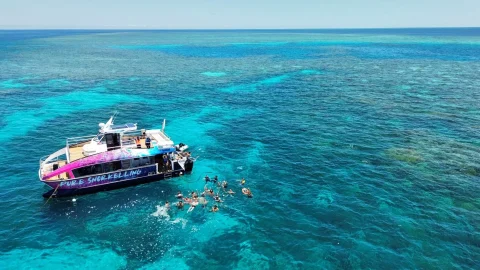
The reef isn’t a single entity where one bad event affects everything equally. Tour operators choose dive and snorkel sites strategically based on current health monitoring data. This means you’re deliberately taken to reef sections in the best condition right now.
You won’t be visiting the worst-affected areas. Instead, you’ll experience thriving coral gardens, abundant fish life, and the extraordinary biodiversity the Reef is known for. You’ll see the kind of marine life that makes the Great Barrier Reef one of the three best islands to visit on the reef.

That experience might also include recovering reef zones, which actually provide valuable educational context. You’ll see real reef resilience in action and understand the real-world challenges the ecosystem faces.

Explore Cairns
Reef Helicopter Tours
See the Great Barrier Reef from breathtaking altitude on a scenic helicopter flight from Cairns. Combine aerial views with snorkelling and reef pontoon visits for the ultimate reef experience.
See helicopter toursFrequently asked questions
Is the Great Barrier Reef dying?
No. Sections are under serious stress, and recovery rates vary dramatically by location, but the Reef remains a living, functioning ecosystem supporting thousands of species. Coral bleaching is a stress response, not a death sentence. Recovery is demonstrably happening in several areas right now.
How long does it take for bleached coral to recover?
Recovery timelines vary significantly based on severity. If temperatures return to normal within a few weeks, some corals recover their colour in 2-4 weeks. Severely bleached corals that survived the heat stress may take months to years to fully restore health, growth rates, and reproductive capacity. A coral’s recovery also depends on whether it bleached once or repeatedly.
What causes coral bleaching besides heat?
Rising ocean temperatures account for roughly 85% of recent bleaching events globally. But several other stressors contribute: sediment runoff that reduces light penetration, nutrient pollution that favours algae over coral, freshwater plumes from extreme rainfall that dilute the salt balance corals depend on, and photoinhibition – intense sunlight exposure during extreme low tides that damages photosynthetic machinery. These stressors often compound each other – a heat-stressed coral is far more vulnerable to sediment or freshwater impacts than a healthy one.
Can I still see healthy coral on a reef tour?
Absolutely. Tour operators select sites based on current health monitoring data, so you’ll encounter thriving reefs with vibrant coral and abundant marine life. The Great Barrier Reef system is vast, and operators know where the best conditions are at any given time. You’ll experience genuine reef biodiversity, not compromised sites.
Is visiting the reef during bleaching harmful?
No. Responsible reef tourism with sustainable practices actually supports conservation efforts. Low-impact mooring systems that don’t damage coral, limited group sizes, and education about reef health all contribute to conservation. When visitors understand what’s at stake through direct experience, they become advocates for reef protection. The operators we recommend all follow strict environmental protocols and monitoring practices.
What will the reef look like in 10 years?
That depends substantially on global climate action and greenhouse gas emission reductions. Recovery is happening now in some areas, but scientists warn that bleaching will continue outpacing recovery unless global emissions are reduced significantly. Visiting responsibly today and supporting reef-focused conservation helps ensure there’s a thriving, resilient ecosystem for future generations.
Are some corals more heat-resistant than others?
Yes. Some species like Porites (massive boulder corals) can tolerate higher temperatures than branching corals like Acropora. Scientists are actively studying these heat-tolerant species to understand what genetic and physiological traits make them more resilient. The goal is to potentially breed and transplant more heat-tolerant strains onto degraded reefs to increase overall genetic diversity and heat tolerance across the system.
Ready to explore the reef responsibly
The Great Barrier Reef is still one of the most extraordinary natural wonders on Earth. Visiting it responsibly isn’t just a holiday – it’s an opportunity to witness one of the world’s most complex ecosystems and understand firsthand what’s at stake in the climate crisis.
When you book through Cairns Discovery Tours, you’re choosing operators who actively monitor reef health, select sites based on current conditions, and prioritise sustainable practices. You’ll see thriving coral and abundant marine life while gaining a genuine understanding of why this reef matters.
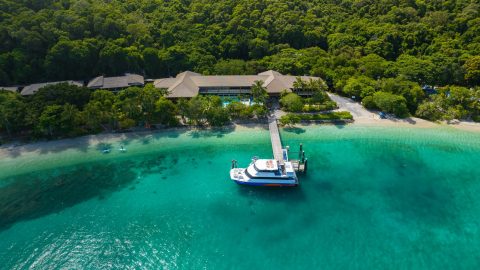
Browse Great Barrier Reef tours from Cairns, or explore island options like Green Island or Fitzroy Island for a different reef experience. You can also give us a call on (07) 4028 3567 to chat through which reef experience suits you best, or send us an email and we’ll help you plan an adventure that’s both unforgettable and truly educational.