Skip to main content Skip to footer
Cooktown sits at the end of the road in more ways than one. It is the last sizeable town before the Cape York Peninsula stretches north toward the tip of Australia, and it carries a sense of being apart from the rest of the world in a way that is hard to manufacture – quieter, older, and more layered than most places of its size.
What draws people here is history. Captain James Cook’s Endeavour limped into the Endeavour River in 1770 after striking a reef further south, and the crew spent 48 days here making repairs – the longest Cook spent anywhere on the Australian coast – setting in motion everything that followed: the gold rush, the town, the cultural collision between European settlers and the Guugu Yimithirr people whose country this had been for thousands of years. You feel all of it when you walk the streets here.
But Cooktown is not a museum piece. The surrounding country, including gorges, waterfalls, national parks, and remote beaches, makes it a destination worth spending real time in. Here is a full rundown of what to see and do on your next Cooktown adventure.
You may also like: Cairns to Cooktown: How to Get There
Cooktown Museum
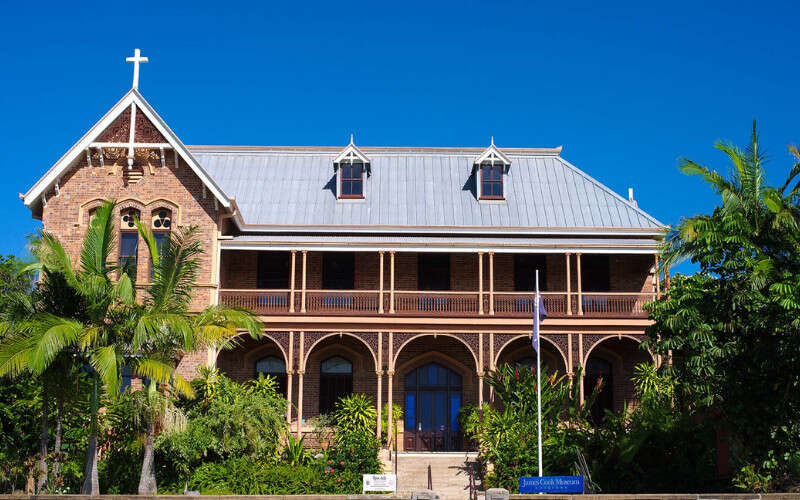
The Cooktown Museum is the centrepiece of any visit, and it earns that status. Housed in a beautifully restored nineteenth-century convent building on Helen Street, it holds one of the most significant collections of colonial and Indigenous history in Far North Queensland.
The headline exhibits are the original anchor and a cannon from HMS Endeavour, salvaged from the reef where Cook struck ground in 1770. These are not replicas, and seeing them in person carries real weight. Beyond that, the museum traces the town’s extraordinary arc: Cook’s arrival and his first contact with the Guugu Yimithirr people, the Palmer River gold rush that briefly made Cooktown the second-largest town in Queensland, the role of Chinese immigrants in the goldfields, and the convent’s own history as home to the Sisters of Mercy and the children in their care until the 1940s.
The gardens surrounding the building contain plant specimens connected to Joseph Banks’ botanical work during the 1770 visit, worth a slow wander before or after you go inside.
Cooktown History Centre
A short walk from the museum on Charlotte Street, the Cooktown History Centre sits alongside the Waalmbal Birri Heritage & Culture Centre. Where the museum goes deep on artefacts and colonial history, the History Centre is strong on photographs and storytelling – particularly around Cook’s landing and the town’s development through the late 1800s.
The two centres complement each other well. If you have the time, visit both. The History Centre also serves as a natural starting point for a walk along Charlotte Street, where you will pass:
- The town’s two original pubs, both dating to the 1870s
- ANZAC Park and its memorial
- The Old Railway Station, now home to the local arts and crafts association
- The Old Bank, which has a worthwhile Cooktown history display inside
All of it is within easy walking distance, and all of it is free.
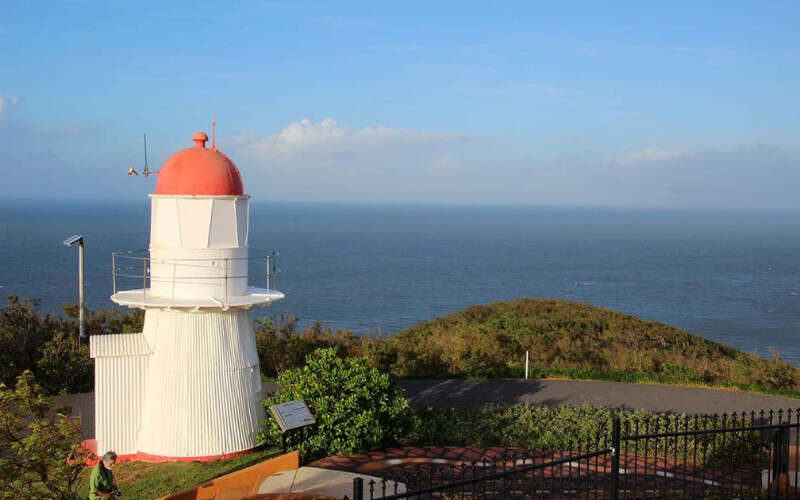
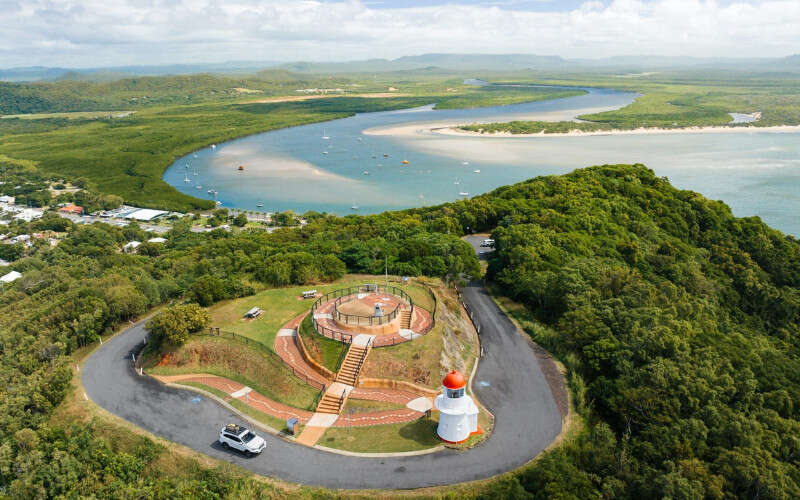
Grassy Hill Lookout
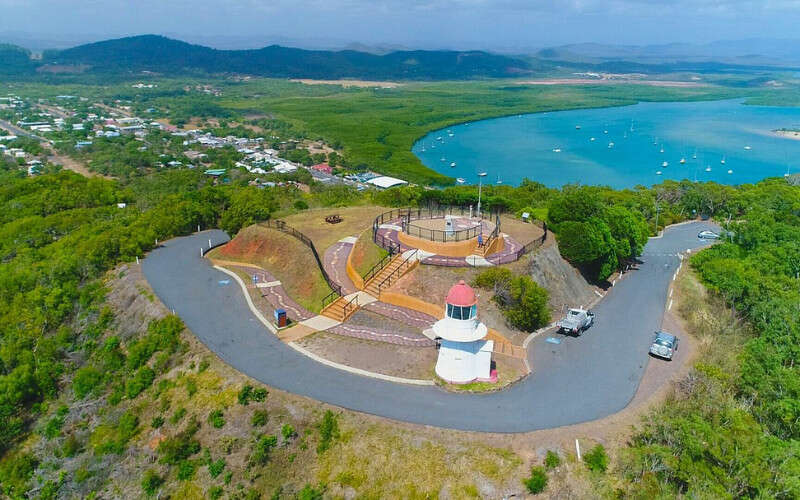
Grassy Hill is not tall by any objective measure, but the view from the top earns its reputation. From the lookout platform, you take in the full sweep of Cooktown below, the Endeavour River snaking toward the coast, and the Coral Sea beyond – the same view Cook climbed here to find in 1770, scanning for a safe passage through the reefs after repairing his ship.
The historic lighthouse, built in 1886, still operates today, and on a clear morning, the light quality up here is exceptional.
You can drive to the top or walk up from the Botanic Gardens via Cherry Tree Bay – the walking route adds a proper sense of arrival. The climb on foot is steep in places, so wear shoes with grip.
Related reading: Grassy Hill Lookout Cooktown: views, history & what to expect
William Daku Park & the Cooktown Waterfront
The waterfront is where Cooktown’s history is most visible in everyday life. William Daku Park runs along the Sherrin Esplanade and is a proper community space, with BBQ facilities, fishing pontoons, a water park, and benches that look out over the Endeavour River.
Walk it slowly, and you will pass through several distinct layers of the town’s past. The Milbi Wall near the river tells creation stories through mosaic and marks Cook’s visit and the 1967 Referendum through pictorial art. Further along, Bicentennial Park holds a Captain Cook statue, a cairn marking the exact location of Cook’s landing, and a cannon. From there, Fisherman’s Wharf is a natural stop – still a working spot for locals fishing for barramundi, mangrove jack, and trevally.
Continue south along the esplanade, and you will reach the Cooktown Powder Magazine at the end of Webber Esplanade. This is where gunpowder destined for the Palmer River goldfields was stored in the 1870s. It’s a short detour from the main waterfront walk, but one of those small details that make Cooktown feel different from every other Queensland town.
Botanic Gardens, Nature’s Powerhouse & the Old Quarry Walk
The Cooktown Botanic Gardens were established in 1878, making them one of the oldest regional botanic gardens in Queensland. They were neglected for decades before being revived in the 1980s, and today they are well worth an hour of your time.
Inside, you will find a section devoted to plants collected by Joseph Banks and Daniel Solander during the 1770 voyage, an orchid house, a bush tucker garden, and a rainforest garden. The setting is quiet and beautifully kept, a contrast to the town’s gold rush energy.
Nature’s Powerhouse, at the garden entrance, houses the Vera Scarth-Johnson Gallery, an extraordinary collection of over 1,000 botanical watercolour paintings of the region’s flora and fauna. There is also a café, a visitor information centre, and a gift shop. The café is a good spot for lunch before heading out on one of the walking tracks.
From the gardens, a network of walking tracks connects to the Old Quarry (where granite was once quarried for Cooktown’s street kerbing), Finch Bay (the most accessible beach near town, about 800 metres from the gardens), and Cherry Tree Bay (a quieter cove further along the headland, not accessible by car). These tracks wind through coastal scrub and paperbarks with good shade coverage. The full walk from the gardens to Cherry Tree Bay and back is a solid half-day outing.
The Historical Cemetery & Chinese Shrine
Cooktown’s historical cemetery is one of those places that stops you in your tracks. It holds the graves of gold rush prospectors, Chinese immigrants, early European settlers, and those who died in cyclones and conflict – the full, complicated population of a boom town at the edge of the known world in the 1870s and 1880s.
The Chinese section of the cemetery is particularly significant. At its height, Cooktown’s Chinese population numbered in the thousands, drawn by the gold rush and the shipping route from Hong Kong. The Chinese shrine here is one of the few remaining physical links to that community – a quiet and moving place worth taking time with.
From the waterfront, follow Adelaide Street south and take the marked track through the mangroves. It is part of the Cooktown Scenic Rim Walk route.
Black Mountain (Kalkajaka)
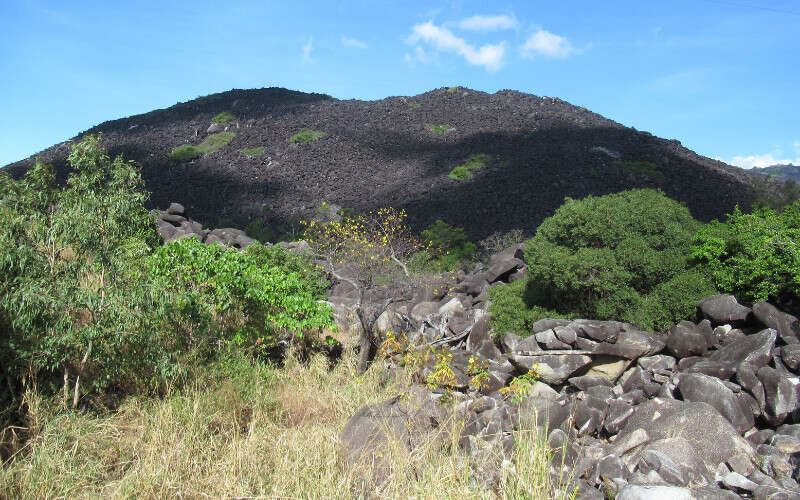
About 25 kilometres south of Cooktown on the Mulligan Highway, Black Mountain is impossible to miss. The mountain is a mass of dark granite boulders stacked improbably on top of each other, rising out of the surrounding scrub with an otherness that makes you want to pull over immediately.
Known to the Eastern Kuku Yalanji people as Kalkajaka – meaning ‘place of spear’ – the mountain is an important meeting place and the source of many Dreaming stories. It holds a unique variety of flora and fauna found almost nowhere else, and its cave systems have swallowed enough animals and people over the years to generate a deep well of local legend.
There is a small lookout area where you can stop and take it all in.
Annan Gorge
The Annan Gorge sits right beside the Mulligan Highway as you approach Cooktown from the south – and it is very easy to miss. There is no formal car park, just a rough pull-off on the right-hand side before you cross the small bridge over the Annan River.
From there, it is a short, careful scramble across large broken rocks to reach a set of cascades tumbling into a compact gorge. It is not a destination in itself, but as a stop on the drive in or out of Cooktown, it is well worth fifteen minutes. Wear proper shoes – thongs are not suitable for the rock crossing.
Isabella Falls
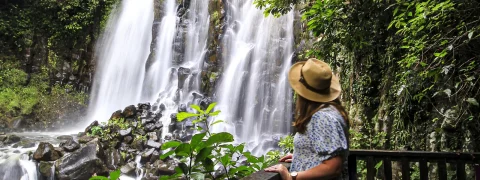
About 30 minutes northwest of Cooktown on Endeavour Battlecamp Road, Isabella Falls is the kind of spot that makes you glad you took the detour. The falls cascade directly alongside the road and into a swimming hole, and the water usually flows year-round. It is safe to swim here – crocodile risk is low at this location, though as with any Far North Queensland waterway, check local conditions before entering.
The road to the falls is sealed most of the way, but you will cross a shallow creek at the falls themselves. A 4WD is recommended, particularly after rain. This is a good half-day outing from Cooktown town centre if you want to see some of the surrounding country beyond the main historical sites.
Endeavour River National Park
The Endeavour River National Park wraps around the area where Cook’s crew spent their 48-day stay in 1770, and it remains a remarkable piece of country – wetlands, mangrove systems, sand dunes, and the river itself running down to the Coral Sea. It is also an exceptional birdwatching territory.
The river is worth exploring by boat if you get the chance. Fishing here is popular with locals – barramundi, mangrove jack, andfinger marksk are all in the river. There is also a crocodile population, so swimming in the river itself is not advised.
Cedar Bay National Park
Cedar Bay – or Mangkalba, as it is known to the Eastern Kuku Yalanji people whose traditional country this is – is about 40 kilometres south of Cooktown and as remote as it gets. The park is part of the Wet Tropics World Heritage Area and contains some of the northernmost tropical rainforest in Australia, along with a three-kilometre palm-fringed beach on the Coral Sea.
Getting there is not straightforward. The park is inaccessible by road – the only ways in are by boat or on foot via two demanding bushwalking tracks, both of which are long, steep, and rated for experienced walkers only. The Home Rule track is approximately 17 kilometres return; the gap between planning a trip to Cedar Bay and actually doing it is significant.
If you are a serious bushwalker, this is a remarkable destination. For most day visitors to Cooktown, it is better filed under future ambitions – and worth knowing for the next trip.
How much time do you need in Cooktown?
A full day covers the town’s main attractions comfortably – the museum, History Centre, Grassy Hill, the waterfront walk, and a lunch stop at the Botanic Gardens café. That is roughly what the 1-Day Cooktown Tour 4WD Drive Adventure fits in from Cairns.
Two to three nights let you breathe. Add Isabella Falls, the Old Quarry Walk to Finch Bay and Cherry Tree Bay, a morning at the cemetery, and time to simply sit on the waterfront and watch the river. Cooktown rewards slow travel.
For the Annan Gorge, Black Mountain, and Endeavour River National Park, you are looking at a second full day of exploring beyond the town centre.
Explore Cairns
Cooktown
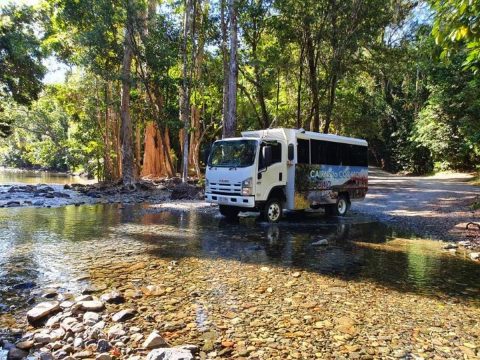
Venture into Far North Queensland on a small-group 4WD adventure to historic Cooktown. Traverse the legendary Bloomfield Track and discover fascinating Indigenous and colonial history on 1-day or 3-day tours.
See Cooktown toursSee Cooktown with Cairns Discovery Tours
Cooktown tours have been operating for many years, and experienced local operators know this stretch of Far North Queensland well. Most Cooktown tour itineraries include the museum, Grassy Hill, the waterfront, and Black Mountain as standard stops. Here is how they differ:
- 1-day Cooktown 4WD tour from Cairns – the full-day trip covering Cooktown’s headline historical sites and Black Mountain on the return. A big day out and well worth every kilometre.
- 3-day Cape Tribulation and Cooktown Wanderer – adds the Bloomfield Track coastal drive, Cape Tribulation, and overnight stays in the region. The best option if you want time to explore at a slower pace.
- 3-day Cooktown, Cape Tribulation and Atherton Tablelands tour – combines Cooktown with Cape Tribulation and the Atherton Tablelands for a broader Far North Queensland adventure.
Not sure which suits you? Browse all Cooktown tours from Cairns or get in touch with our team – we are happy to help you find the right fit.
Frequently asked questions
Is Cooktown worth visiting from Cairns?
Cooktown is one of the most historically significant towns in Australia, and the surrounding country – gorges, waterfalls, remote beaches, and national parks – makes it well worth the journey. The drive alone via the Bloomfield Track or the sealed Mulligan Highway offers remarkable scenery.
How far is Cooktown from Cairns?
Cooktown is roughly 330 kilometres north of Cairns by the sealed Mulligan Highway route, which takes about four hours. The coastal Bloomfield Track is shorter in distance but longer in time, requires a 4WD, and is only open in the dry season.
What is the best time to visit Cooktown?
The dry season – May to October – is the most practical time to visit. Roads are reliable, the weather is cooler, and the Bloomfield Track is open for 4WD travel. The wet season brings impressive green scenery but can make some roads impassable.
Is the Cooktown Museum worth visiting?
The museum is one of the best regional museums in Queensland. The original Endeavour anchor and cannon alone justify the entry fee. Allow at least 90 minutes.
Do I need a 4WD to visit Cooktown?
Not necessarily. The Mulligan Highway to Cooktown is fully sealed and accessible in a 2WD vehicle year-round. A 4WD is needed for the Bloomfield Track, Isabella Falls (creek crossing), and some of the more remote surrounding areas.
Ready to visit Cooktown?
The 1-day Cooktown 4WD tour from Cairns is the easiest way to experience Cooktown without the logistics of an overnight trip. If you want more time to soak it all in, browse all Cooktown tours from Cairns to find the right fit, call our team on (07) 4028 3567 or drop us a line if you have any questions about which tour suits your group best.