Skip to main content Skip to footer
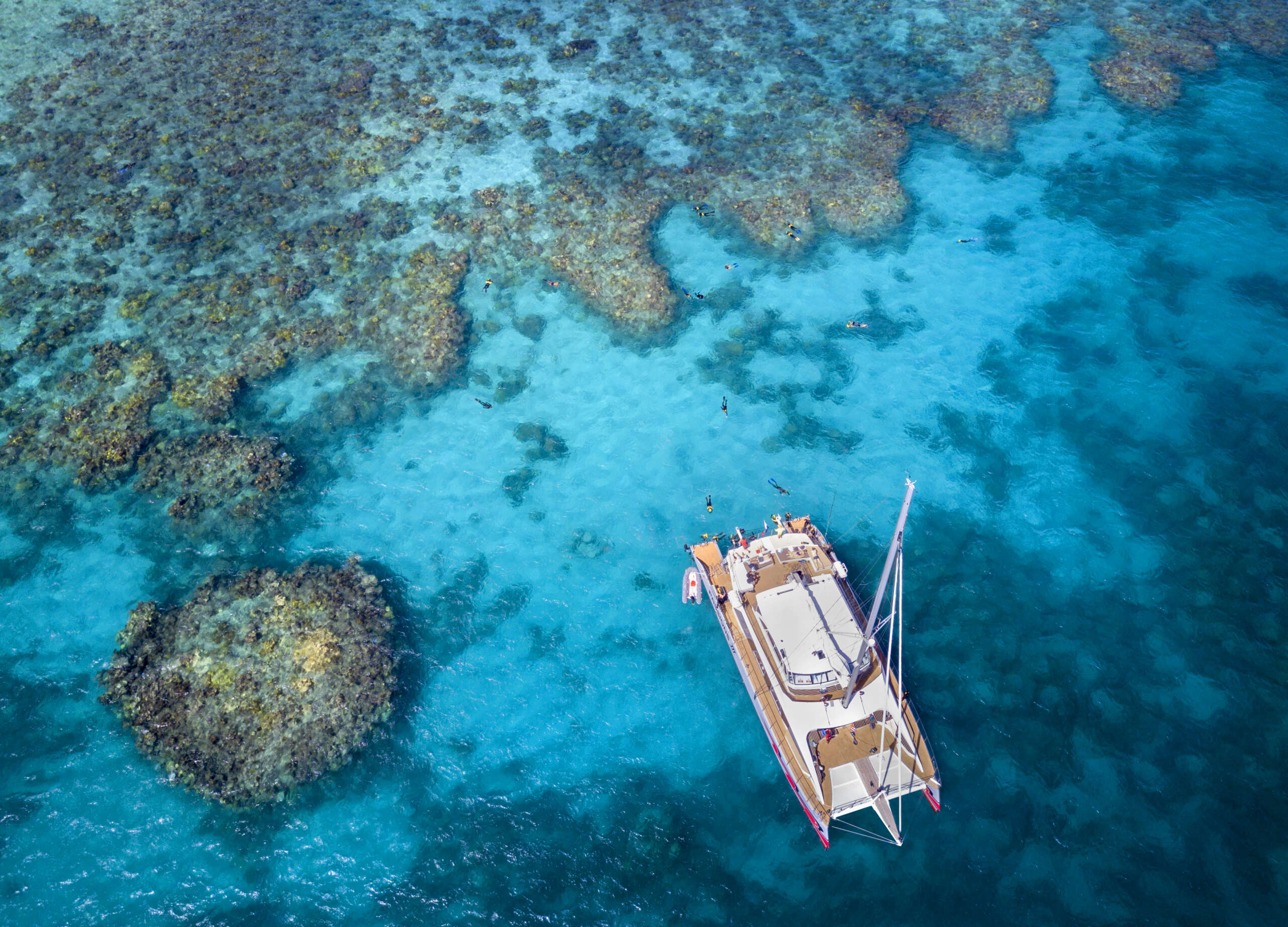
The Great Barrier Reef is one of those destinations that looks spectacular in photos taken in every month of the year, and the reality lives up to it. But the experience you’ll have in July is genuinely different from the one you’d have in January, and understanding those differences is worth a few minutes before you book. Water temperatures, visibility, marine life, and crowd levels all shift with the seasons.
If you’re trying to nail down the best window for your trip, this guide breaks it down month by month so you can match your visit to what matters most to you.
Does it matter when you visit the Great Barrier Reef?
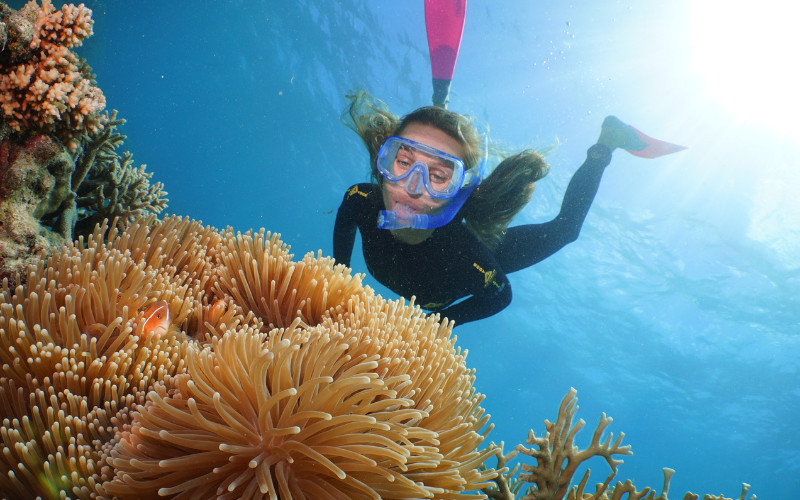
Yes, though perhaps not in the way most people expect. The reef doesn’t close in any season, and tours run year-round from Cairns. But the conditions above and below the water vary significantly between the dry season (May to October) and the wet season (November to April).
The key differences come down to four things:
- Visibility – clearer in the dry season, warmer-water plankton blooms can reduce it in summer
- Sea conditions – calmer and more predictable in the winter months
- Marine life – different species appear in different seasons
- Crowds and prices – peak season runs from June to October; shoulder seasons offer better value
The dry season: May to October
The dry season is peak reef season for good reason. Trade winds keep humidity low, skies are typically clear, and the sea is at its calmest. May to October is generally a great time to visit the reef as the water is still warm enough for a swim and the underwater visibility is at its best.
Here’s what to expect month by month:
| Month | Conditions | Highlights |
| May | Transition into dry, mild temps | Quieter crowds, good value |
| June | Dry season begins, excellent visibility | Minke whale season starts |
| July | Peak dry season, calm seas | Minke and humpback whales |
| August | Clear skies, visibility up to 20-30m | Best month for diving |
| September | Warm days returning, light winds | Whale season tail end, great snorkelling |
| October | Warming up, still dry | Quieter than peak, marine life is very active |
Water temperature: 23-24°C – cool enough to be refreshing, warm enough to snorkel comfortably without a wetsuit for most people.
Visibility: Regularly 20 metres and beyond on the outer reef. On a good day, you can see the coral formations from the boat before you even get in.
One thing to factor in: June to August is also the school holiday season in Australia and a popular travel window for international visitors. Popular tours book out weeks in advance, so if you’re visiting during this window, secure your spot early.
Related reading: 5 reasons to visit the Great Barrier Reef
The wet season: November to April
The wet season gets an unfair reputation. Yes, there are more rain showers, but in Tropical North Queensland, rain usually means a short afternoon downpour, not a grey week of miserable weather. When it’s raining on the coast, it’s often sunny and clear on the Great Barrier Reef, as the mountain ranges surrounding Tropical North Queensland draw the rain inland.
What you gain in the wet season:
- Warmer water – up to 29°C, perfect for extended snorkelling
- Lush scenery – the rainforest is at its most vivid green
- Fewer crowds – tour boats are quieter, prices are often lower
- Marine life activity – coral spawning, turtle nesting, and more
| Month | Conditions | Highlights |
| November | Warming up, stinger season begins | Coral spawning event |
| December | Warm and tropical, afternoon storms | Sea turtle nesting begins |
| January | Hottest month, stinger season peak | Baby turtles hatching |
| February | Warm and humid | Turtle activity continues |
| March | Seas are calming, still warm | Quieter reef, good value |
| April | Transition month, warm seas | Calm conditions returning |
Stinger season: Box jellyfish and Irukandji are present in near-shore waters from November to May. All reputable reef tour operators provide full-length Lycra stinger suits – wearing one is standard practice. The outer reef is generally considered lower risk than beaches and near-shore areas. For a full breakdown, see our Great Barrier Reef safety tips.
Wildlife highlights by season
One of the best reasons to think carefully about timing is the marine life calendar. Certain encounters are only possible in specific windows.
| Wildlife | When to See It |
| Dwarf minke whales | June – July (Ribbon Reefs, north of Cairns) |
| Humpback whales | June – September |
| Green turtle nesting | November – February |
| Baby turtles hatching | January – April |
| Coral spawning | November – December |
| Manta rays | Year-round, more active July – November |
| Whale sharks | Variable – occasional sightings year-round |
The minke whale season is worth singling out. June and July bring the only known aggregation of dwarf minke whales in the world to the Ribbon Reefs north of Port Douglas, an encounter found nowhere else on earth. If this is on your bucket list, plan around it.
For a closer look at what you might encounter below the surface, our Great Barrier Reef marine life guide covers the full cast of species you’re likely to spot.
Best time to visit for specific activities
Snorkelling
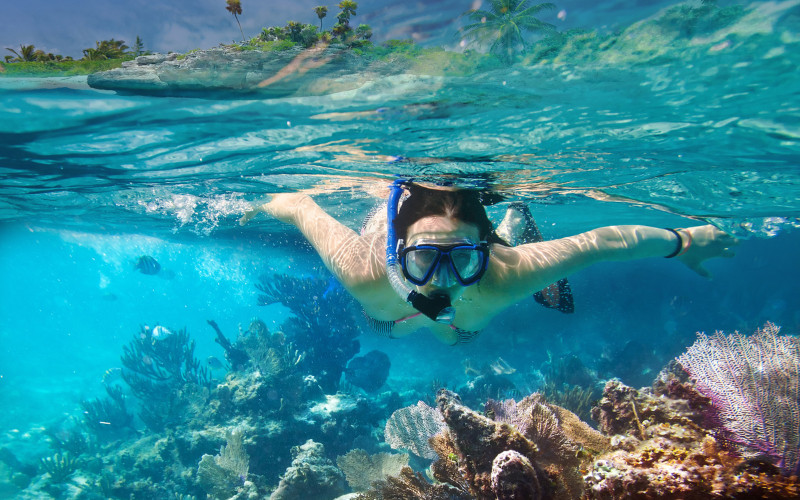
June to November offers the best combination of calm seas and excellent visibility. The dry season months of July and August are the peak window. Not sure whether to snorkel or dive? Our snorkelling vs diving guide breaks down the differences.
Scuba diving
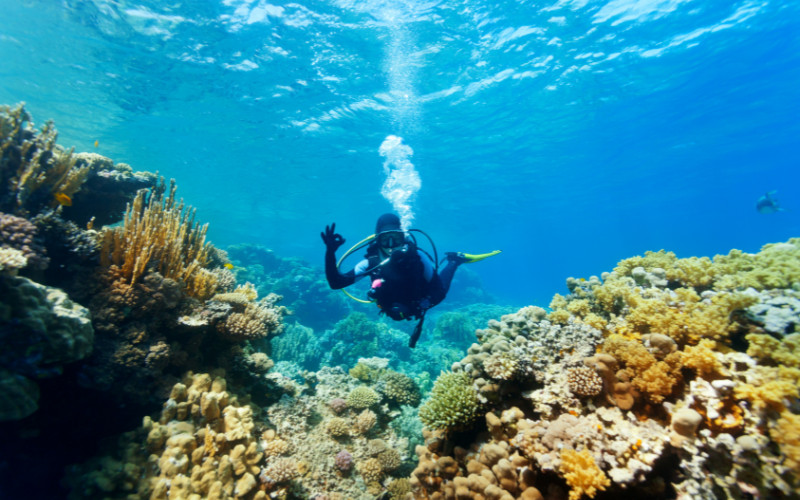
August and September consistently deliver the best conditions – calm water, maximum visibility, and active marine life. Certified divers visiting in June or July may also catch the minke whale aggregation on liveaboard trips.
Scenic helicopter flights
July to October is ideal – clear skies and low cloud cover mean you’ll see the reef in full colour from above.
Families with kids
June to August school holidays are the most popular, but the shoulder months of May and September offer similar conditions with fewer crowds and better pricing. Stinger suits are provided year-round, so families visiting in the wet season are well catered for.
Budget travellers
November to March offers the best pricing on tours and accommodation. Conditions are still excellent on the outer reef – you’re simply trading peak visibility for warmer water and lower prices.
What about the stinger season?
Stinger season is real, but it shouldn’t put you off visiting. A few things worth knowing:
- Stingers are primarily a near-shore issue. The outer reef – where tours operate – carries significantly lower risk than beaches and shallow coastal areas
- All reputable operators provide stinger suits as standard. Wearing one eliminates virtually all risk
- Tours operate year-round, and operators have managed stinger season safely for decades
- If you’re swimming at beaches rather than on a tour, use patrolled beaches with stinger nets during peak season (November to May)
For a deeper dive on this topic, our best time to travel to Cairns guide covers the full seasonal picture, including stinger season, weather patterns, and crowd levels across the region.
So, when is the best time to visit?
It genuinely depends on what you want from the experience. Here’s a quick summary:
| Priority | Best Time |
| Best visibility and calm seas | June – October |
| Whale watching (minke) | June – July |
| Whale watching (humpback) | June – September |
| Turtle hatching | January – April |
| Coral spawning | Usually 4-6 nights after the full moon in November or December |
| Fewest crowds | March – May |
| Best value pricing | November – March |
| Families (school holidays) | June – July, September – October |
The Great Barrier Reef is one of those rare destinations where there is no bad time, only different times. The reef spans over 2,300km down Australia’s eastern coastline, and the variety of experiences on offer means something extraordinary is always happening, no matter when you arrive. If it’s your first visit, our first-time Great Barrier Reef visitor guide is worth a read before you book.
Explore Cairns
Great Barrier Reef
Explore one of the world’s greatest natural wonders with daily reef tours from Cairns. Snorkel, dive or cruise the coral with options to suit every age and ability.
See reef toursFrequently asked questions
When is the best time to visit the Great Barrier Reef from Cairns?
June to October is the most popular window – dry weather, calm seas, and excellent underwater visibility. August is widely considered the peak month for diving conditions. That said, the wet season (November to April) offers warmer water, fewer crowds, coral spawning, and turtle nesting activity.
Is the Great Barrier Reef good to visit in winter?
Yes – June to August is actually peak reef season. Visibility is at its best, seas are calm, and humpback and minke whale sightings are possible. It’s the most popular time to visit, so book tours in advance.
Can you visit the Great Barrier Reef in summer?
Absolutely. Summer brings warmer water temperatures, lush tropical scenery, and some of the reef’s most spectacular natural events, including coral spawning and turtle nesting. Stinger suits are provided on all tours, so safety is well managed.
What is stinger season at the Great Barrier Reef?
Stinger season runs from November to May, when box jellyfish and Irukandji are present in near-shore waters. Outer reef tours are generally lower risk, and all reputable operators provide stinger suits as standard.
When can you see whales at the Great Barrier Reef?
Dwarf minke whales gather at the Ribbon Reefs north of Cairns in June and July – a unique seasonal event found nowhere else on earth. Humpback whales migrate along the Queensland coast from June to September and are often seen on the many reef tours
Is the Great Barrier Reef busy during school holidays?
June and July are the busiest months due to Australian school holidays and international visitor peaks. Book popular tours well in advance during this window. May, September, and October offer similar conditions with fewer crowds.
Plan your reef visit with Cairns Discovery Tours
Whatever time of year you’re heading to Cairns, the Great Barrier Reef will deliver. Cairns Discovery Tours has been helping visitors find the right reef experience since 1997, matching tour styles, operators, and timing to what each group actually wants from the day.
Browse Great Barrier Reef tours from Cairns, call the team on (07) 4028 3567, or drop us a line. We’ll point you in the right direction.