Skip to main content Skip to footer
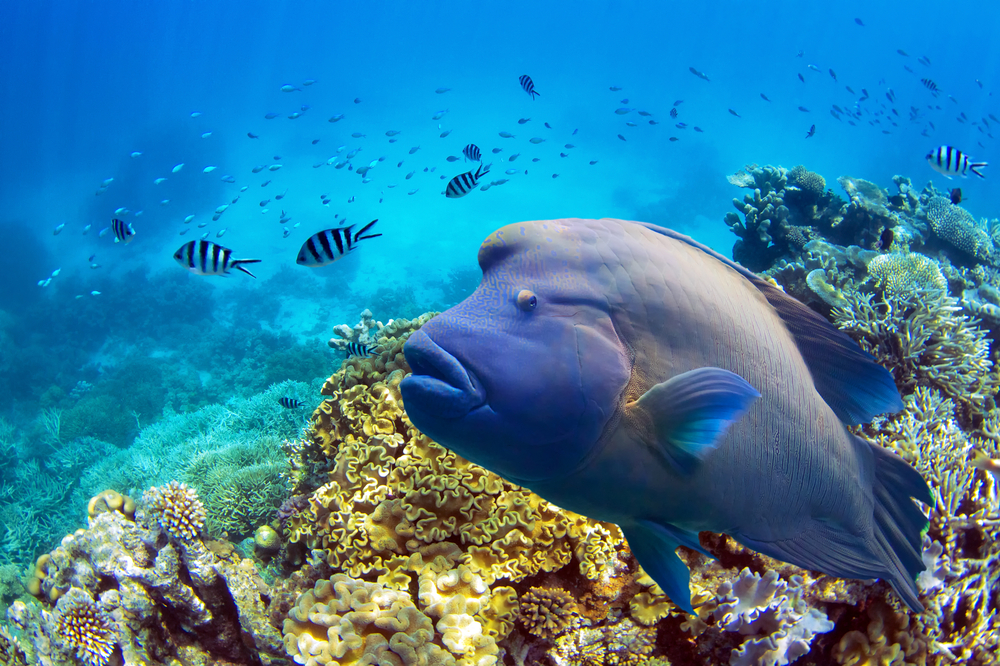
Put your face in the water at the right outer reef site on a clear Cairns morning, and the first thing that hits you is the scale of it. The Great Barrier Reef is home to more than 1,600 species of fish, 600 types of coral, six of the world’s seven marine turtle species, 30-plus species of whales and dolphins, and over 130 species of sharks and rays.
What you’ll actually encounter on a day tour from Cairns depends on the site, the season, and a degree of luck – but this guide covers the realistic picture. Cairns Discovery Tours has been booking visitors onto reef tours for nearly three decades, and we know what people see out there. Here’s what’s commonly spotted, what’s seasonal, and what’s worth knowing before you get in the water.
Coral: the foundation of everything
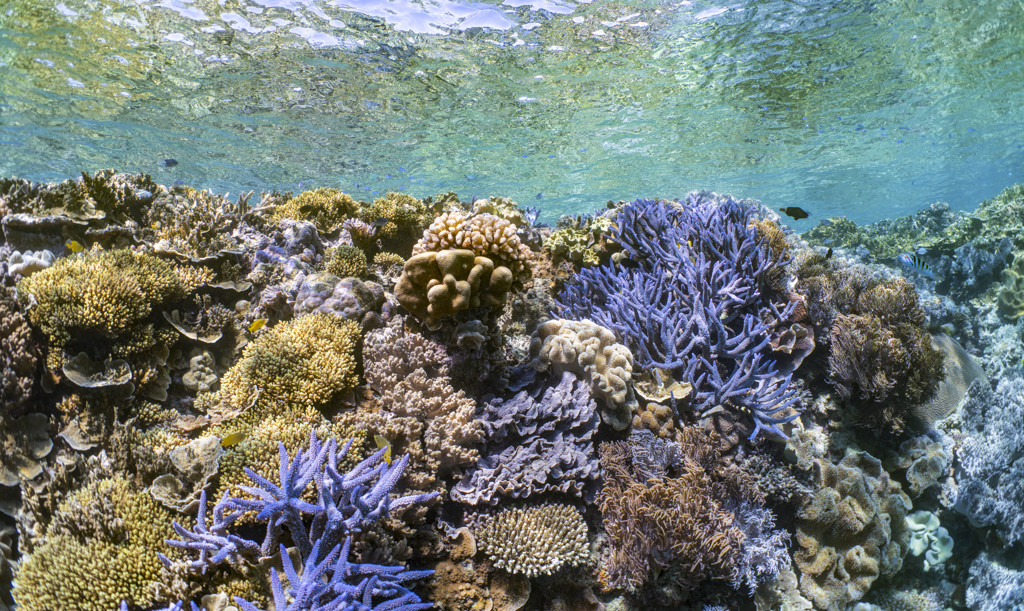
Coral is not a backdrop – it’s the ecosystem itself. Before focusing on the fish, it’s worth understanding what you’re swimming over, because it changes how you see everything else.
The Great Barrier Reef is a World Heritage-listed system built from coral over thousands of years. There are two broad types you’ll encounter on a day tour from Cairns.
Hard coral
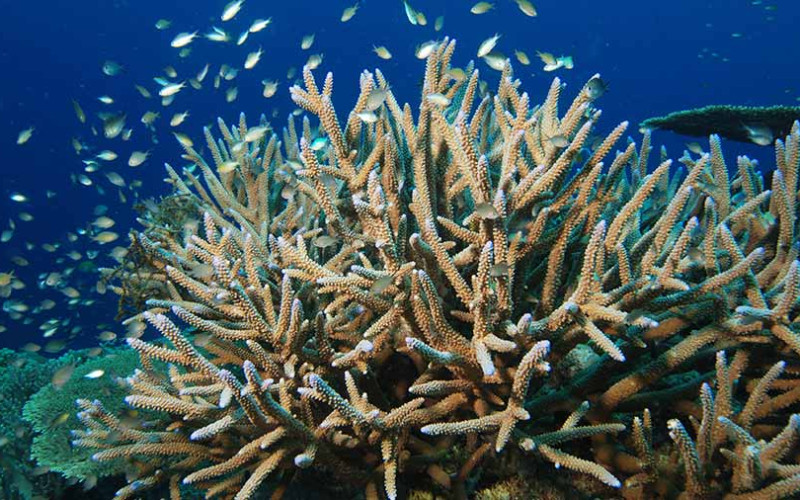
Hard corals are the reef builders – the solid limestone structures that create the formations you snorkel over. Common types include:
- Staghorn coral – branching formations that look exactly as described; fish use these as cover and shelter
- Brain coral – large, rounded heads with distinctive grooved patterns; can live for hundreds of years
- Plate coral – flat, disc-like formations that stack in layered shelves; often found on deeper slopes
- Massive Porites – dense, dome-shaped boulders that can grow several metres across; some of the oldest living structures on the reef
Coral health varies by site. On the outer reef sites visited from Cairns, you’ll find sections of genuinely vibrant, living coral alongside patches of bleached coral – white, skeletal-looking formations caused by heat stress from warming water. Bleached coral isn’t dead, but it is under pressure. You’ll likely see both on your tour, and that’s a realistic reflection of where the reef is at right now.
Soft coral
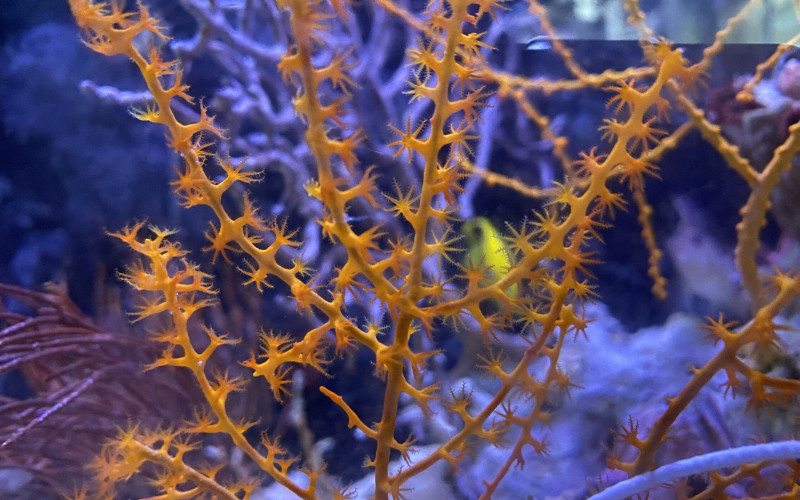
Soft corals don’t build reef structure but add colour and movement, swaying with the current. Common types include:
- Sea fans – flat, fan-shaped colonies that stretch out perpendicular to the current to catch passing plankton
- Sea whips – long, thin, flexible strands that grow upward from rock faces and overhangs
- Gorgonians – branching, tree-like formations often found on deeper walls and ledges
In deeper sections, you’ll often see soft corals dominating the rock faces, adding splashes of purple, orange, and yellow to areas where hard coral thins out.
Fish: who you’ll actually see
The reef from Cairns hosts an enormous variety of fish species. Here’s a quick-reference guide to the most common sightings, followed by a closer look at each.
| Species | What to Look For | How Often Seen |
| Maori Wrasse | Large, blue-green, humped forehead | Almost every tour |
| Parrotfish | Bright colours, beak-like mouth, and audible crunching | Every tour |
| Surgeonfish | Schools of blue/black/yellow move in tight formation | Every tour |
| Clownfish | Orange-white stripes, inside anemones | Most tours (look carefully) |
| Coral Trout | Red-orange with blue spots | Most tours |
| Giant Trevally | Large, silver, fast-moving reef edges | Common |
| Barracuda | Long, silver, near surface | Common |
| Potato Cod | Large spotted grouper, up to 2m | Rare on day tours |
The regulars – species seen on almost every tour
Maori Wrasse (Humphead Wrasse)
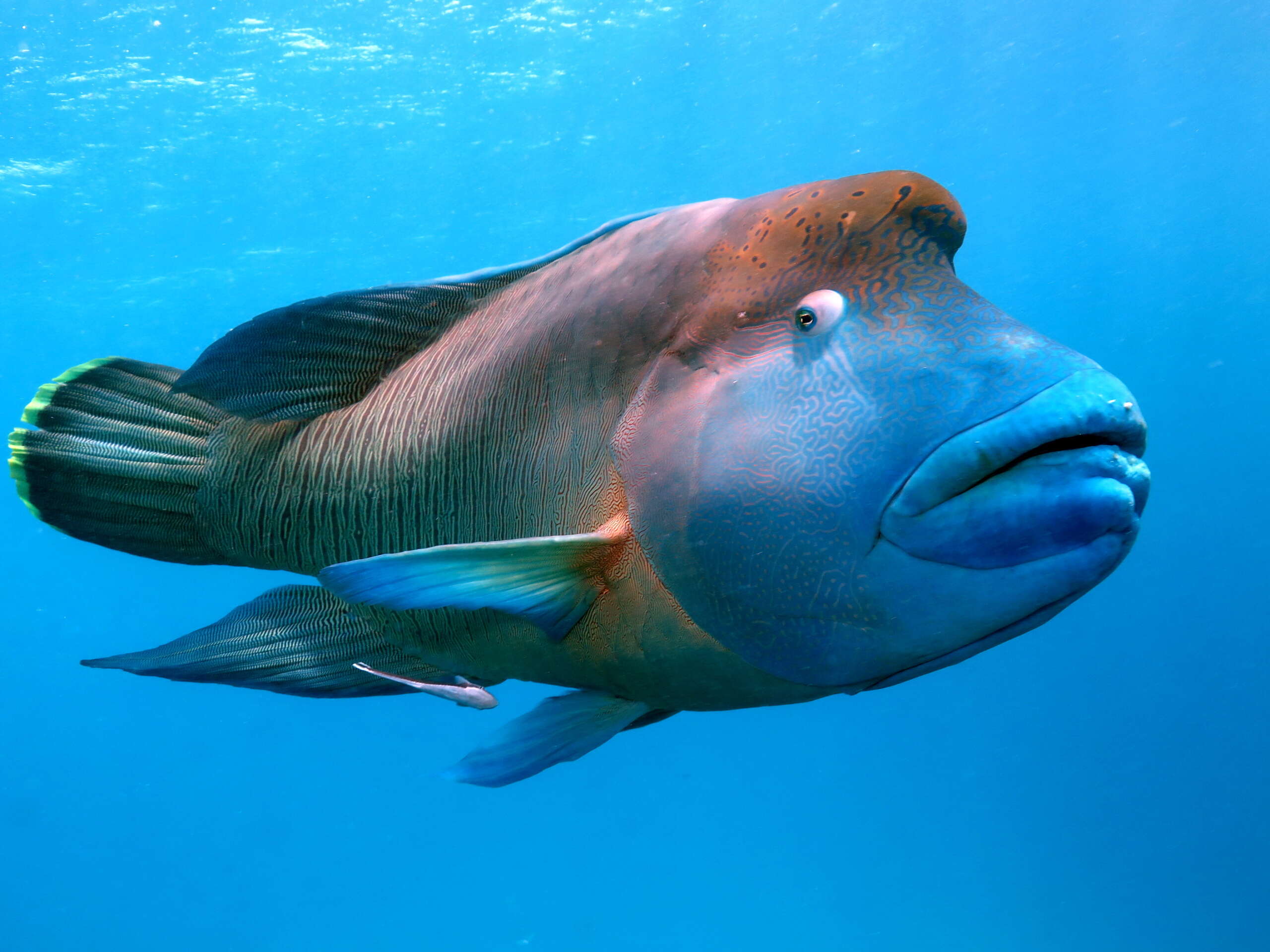
One of the reef’s most recognisable residents is a large, blue-green fish with a distinctive humped forehead that can grow over a metre long. They’re curious, unhurried, and genuinely unbothered by snorkellers.
Moore Reef, accessible from Cairns, is well known for regular Maori wrasse sightings. If one starts following you, it’s not threatening – it’s just nosy.
Parrotfish
Parrotfish are responsible for much of the white sand on reef beaches. They bite chunks of coral, digest the organic matter, and pass the calcium as fine sand. You’ll hear them before you see them at shallow sites – the crunching is surprisingly loud.
They range from plain brown to vivid turquoise and pink, depending on species and life stage.
Surgeonfish and unicornfish
Schools of surgeonfish – blue, black, and yellow depending on species – are a constant presence at most outer reef sites. They move in tight formation, shifting direction as a single unit.
Triggerfish
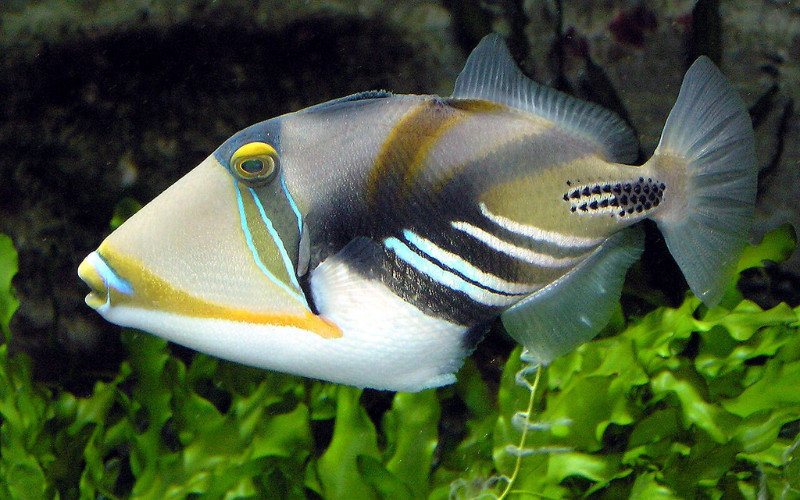
Triggerfish are reef personalities. Rectangular, boldly patterned, and territorial around nesting sites. Give them space near the coral bottom.
Wrasse (various species)
Beyond the Maori wrasse, the reef hosts dozens of wrasse species. The small, jewel-bright cleaner wrasse sets up cleaning stations where larger fish queue to have parasites removed. Watching a cleaning station in action is one of those reef moments that reward patience.
Angelfish and butterflyfish
Flattened, disc-shaped, and often paired, these are the fish that look exactly like they belong in an aquarium. In real life, they move fast and tend to stay close to coral structures.
Clownfish
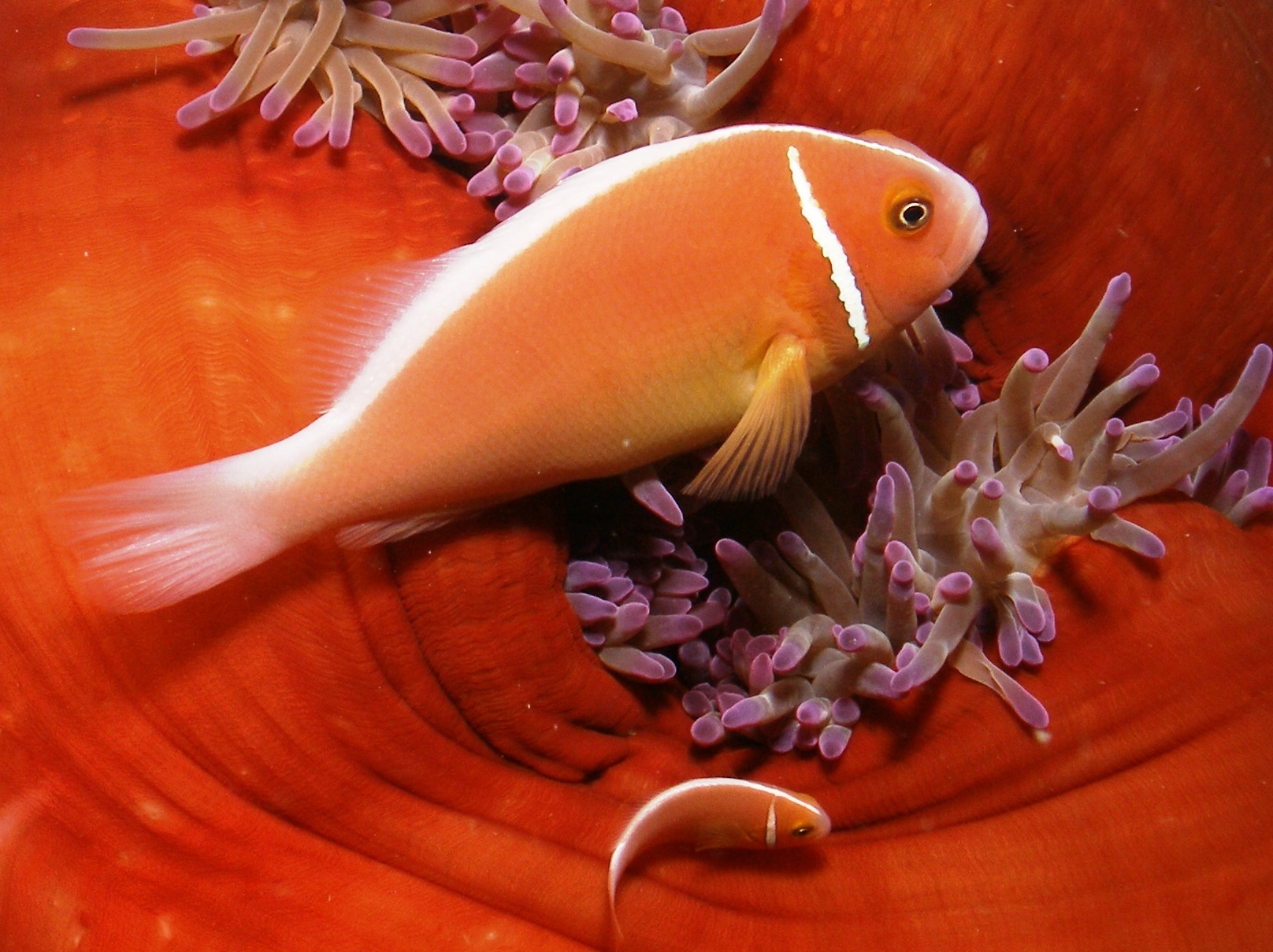
Found inside anemones, which are worth actively looking for rather than just swimming past. Different anemone species host different clownfish species. Some sites have several anemones within a short swim of each other – ask the crew which areas to check.
Larger and more impressive residents
Giant trevally
Solid, silver, fast-moving fish that patrol the outer edges of reef structures. Often seen in small groups. They can reach over a metre in length and have a presence that makes you take notice.
Potato cod
A large, spotted grouper that can grow to around two metres. Not commonly encountered on standard day tours from Cairns – they’re more reliably found at sites like Cod Hole on the Ribbon Reefs further north, accessible via liveaboard. But they do appear on outer reef sites and are instantly recognisable when they do.
Barracuda
Often encountered near the surface or at the edges of reef walls, barracuda cruise in formation with an efficiency that’s slightly unsettling until you realise they have no interest in you. They’re attracted to shiny objects – remove jewellery before snorkelling.
Coral trout
Vivid red-orange with blue spots. Common on most outer reef sites and a reliable sighting on almost any tour from Cairns.
Sea turtles: the highlight for most visitors
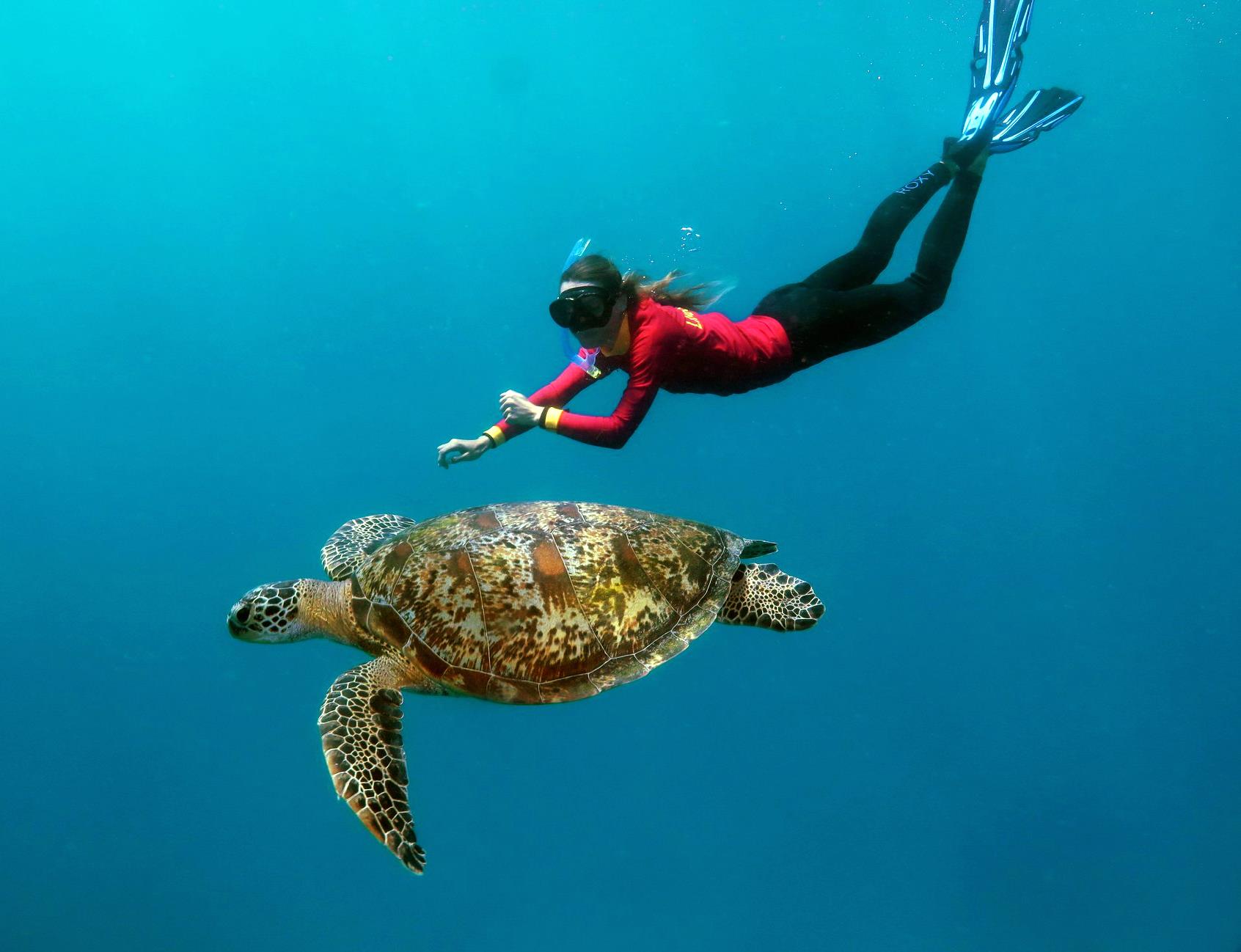
Six of the world’s seven marine turtle species live in the Great Barrier Reef waters. On a day tour from Cairns, green turtles are the most commonly encountered and are seen on the majority of outer reef visits.
Green turtles surface to breathe every few minutes, which means they’re often visible from above the water before you even look below. They graze on seagrass and algae on reef flats and rest under coral ledges.
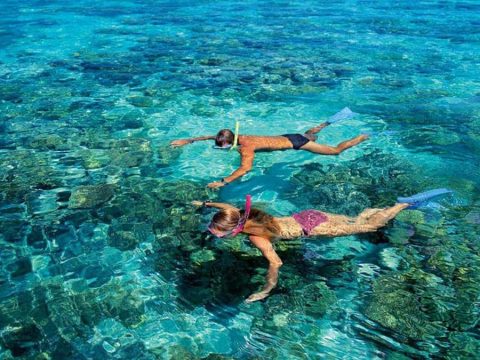
The best part – they’re genuinely unconcerned by snorkellers, as long as you’re equally relaxed around them. Float still, let them approach or pass, and the moment tends to last much longer than if you swim towards them.
Hawksbill turtles – smaller, with a distinctive pointed beak and patterned shell – are also seen regularly on outer reef sites from Cairns, though less frequently than green turtles. They feed on sponges and invertebrates in reef crevices.
A note on turtle interaction: Australian marine park regulations prohibit touching, riding, chasing, or blocking the path of turtles. This is enforced, and for good reason – stressed turtles burn through valuable energy reserves. Keep a respectful distance, and they’ll often come to you.
Rays: graceful and surprisingly common
Manta rays
Manta rays are large – wingspans reach three to four metres on reef mantas – and they only eat plankton, so they pose no danger to snorkellers. A close encounter is one of the most memorable experiences the reef offers.
From Cairns, manta ray sightings are possible year-round but more reliable in the cooler months (May to October) when plankton-rich waters draw them to outer reef sites. They don’t always appear. But when they do – a large dark shape resolving into wings as it glides beneath you – it’s something you don’t forget.
Stingrays
Several stingray species rest on sandy patches between coral formations. Blue-spotted lagoon rays are commonly seen on shallower sites, partially buried in the sand with only their electric-blue spots visible. Give them space – they don’t seek confrontation, but the tail spine is worth respecting.
Eagle rays
Spotted eagle rays cruise above sandy reef flats in open water, often in pairs. Distinctively patterned with a long whip tail and a pointed snout. A sighting is less common than a stingray but more dramatic.
Sharks: what you’ll actually encounter
The Great Barrier Reef is home to more than 50 shark species. On a standard outer reef day tour from Cairns, reef shark encounters are common and completely unremarkable from a safety perspective.
Whitetip reef sharks
The most frequently seen species on outer reef day tours. Slender, grey, with distinctive white-tipped dorsal and tail fins. They typically rest under coral ledges during the day – you’ll often spot one lying motionless on the sand beneath an overhang before it moves off unhurriedly. They are not interested in snorkellers.
Blacktip reef sharks
Similar to whitetips but with black fin tips. More likely to be seen patrolling in open water around the reef edge. Commonly spotted from the surface.
Wobbegong sharks
Flat, camouflaged, and resting on the reef bottom – you can swim directly over a wobbegong and not notice it. Their ornate, fringed appearance is distinctive once you know what to look for. Not aggressive unless provoked or accidentally touched.
Whale sharks
The world’s largest fish, and they only eat plankton. An occasional and spectacular sighting on the outer reef from Cairns, particularly in late autumn and early winter. Not guaranteed, not even common, but possible.
Related reading: What a typical reef day actually looks like
Giant Clams: Unmissable if You Know Where to Look
Giant clams (Tridacna gigas) are the world’s largest mollusc and a genuine Great Barrier Reef icon. They sit open on the reef bottom with their distinctive fleshy mantles exposed – patterned in blues, purples, and greens depending on the individual.
The colours come from tiny algae living inside the mantle. They give the clam energy from sunlight, which is why giant clams always sit in well-lit positions on the reef.
They can grow to over a metre in length and live for more than a century. The idea that they snap shut and trap divers is a myth – they close slowly in response to shadow. Pass your hand over one, and you’ll see the mantle contract gently inward.
On most outer reef sites from Cairns, you’ll encounter multiple giant clams within a single snorkel session – they’re one of the more reliable sightings.
Seasonal and special encounters
Some of the reef’s most extraordinary wildlife is only possible at specific times of the year. Here’s what’s worth knowing if you’re timing your Cairns trip around a particular encounter.
| Species | When | Notes |
| Dwarf minke whales | June – July | Congregate on the northern outer reef; swim-with encounters are possible on some tours |
| Humpback whales | July – September | Pass through reef waters on migration north; surface sightings from boats |
| Manta rays | Peak May – October | Present year-round, but more reliable in cooler months |
| Whale sharks | Late April – June | Occasional sightings on the outer reef; not guaranteed |
| Spawning coral | October – November | Mass coral broadcast spawning: a dramatic and rarely seen event |
| Nesting turtles | November – March | Some island sites have nesting beaches; hatchlings are laid from late December to April |
Dwarf minke whale encounters from Cairns are a genuine seasonal highlight. These small, inquisitive whales actively approach vessels and snorkellers in June and July on the northern outer reef. It’s one of only a handful of places on Earth where in-water encounters with wild whales happen under management protocols.
You may also like: Best time to visit the Great Barrier Reef
How to get the most from your marine life encounters
A few practical points that make a real difference to what you see:
- Go early. Morning sessions tend to have clearer water, less wind chop on the surface, and calmer conditions overall. The reef is most active in the first few hours after the tour arrives.
- Float still. The best encounters happen when you stop moving. Turtles, rays, and curious fish are all more likely to approach a snorkeller hovering quietly than one kicking actively.
- Look into the crevices. Moray eels, lionfish, and nudibranchs hide in coral overhangs and gaps. The surface of the reef tells only part of the story.
- Look out into open water, not just down. Sharks, trevally, and larger species often cruise in the blue beyond the reef structure. Regular horizon scans pay off.
- Listen. Parrotfish biting coral is audible. Snapping shrimp create a constant crackle. The reef is genuinely, unexpectedly loud.
- Ask the crew. The snorkel crew on any good reef tour knows the site. Ask which sections have the best coral cover, where the cleaner stations are, and whether anything unusual has been spotted recently.
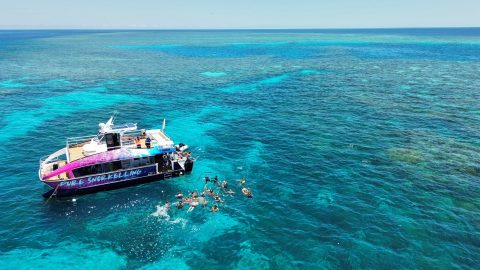
Explore Cairns
Great Barrier Reef
Explore one of the world’s greatest natural wonders with daily reef tours from Cairns. Snorkel, dive or cruise the coral with options to suit every age and ability.
See reef toursFrequently asked questions
What marine life is most commonly seen on a Great Barrier Reef day tour from Cairns?
On a typical outer reef day tour, the most reliable sightings are green sea turtles, various reef fish (parrotfish, surgeonfish, wrasse, butterflyfish, coral trout), giant clams, whitetip and blacktip reef sharks, and the Maori wrasse. Manta ray and stingray sightings are common. What you see varies by site and conditions on the day.
Are sharks dangerous on the Great Barrier Reef?
The species typically encountered on day tours – whitetip reef sharks, blacktip reef sharks, and wobbegong sharks – are not aggressive towards snorkellers. Reef sharks are well-adapted to reef environments and have no interest in people. Don’t chase them, don’t corner them, don’t touch them.
When is the best time to see manta rays at the Great Barrier Reef?
Manta rays are present year-round, but sightings are more reliable from May through to October, when cooler water temperatures bring plankton-rich waters to the outer reef. They’re not guaranteed on any specific tour, but the cooler months offer the best odds.
Can I see dwarf minke whales on a reef tour from Cairns?
Yes – from June to July, dwarf minke whales visit the northern outer reef and are known to actively approach vessels and snorkellers. Some outer reef tours from Cairns include sites where these encounters occur under Great Barrier Reef Marine Park guidelines. Ask our team about which tours visit minke whale sites during this window.
Will I see clownfish on the Great Barrier Reef?
Yes, though they take a bit of looking. Clownfish live exclusively within anemones, which are scattered across the reef rather than everywhere. Ask the crew where the anemones are at your specific site – once you know what to look for, they’re not hard to find.
Is the coral still healthy on the Great Barrier Reef?
The reef’s health is variable. Significant bleaching events have affected large sections of the reef, particularly in the northern and central zones. The good news is that many of the outer reef sites regularly visited on day tours from Cairns have meaningful sections of healthy, living coral, and natural recovery is happening in some areas. The reef is under genuine pressure, but it is not dead – far from it.
Ready to See It for Yourself?
No guide quite prepares you for the moment you drop below the surface and find yourself in the middle of it. The Great Barrier Reef is one of those places where the reality genuinely lives up to – and often exceeds – what you’ve seen in photos.
Cairns Discovery Tours can match you with the right reef tour for your group, your interests, and the time of year you’re visiting – whether you’re after a full outer reef day with the Great Adventures reef tour, a quieter island snorkel, or a specialist seasonal encounter.
Browse our Great Barrier Reef tours from Cairns to find the right fit for your trip. If you need help picking the right tour, call us on (07) 4028 3567 or drop us a line – we’ll walk you through the options.