Skip to main content Skip to footer

Cairns is a safe destination that welcomes millions of visitors every year without incident. The city is welcoming, the locals are relaxed, and serious crime affecting tourists is uncommon. That said, Tropical North Queensland has a natural environment that demands respect – and knowing what to watch for makes all the difference between a great trip and an avoidable one.
Know before you go
- Marine stingers (November to April): Stick to stinger net enclosures, wear a stinger suit, or use the Esplanade Lagoon. Both box jellyfish and Irukandji can cause serious harm.
- Crocodiles (year-round): Never swim in rivers, estuaries or any unmarked waterway. Warning signs should be followed at all times.
- Sun (year-round): The UV here is genuinely extreme. SPF 50+ sunscreen, wide-brimmed hat, UV rash vest on the water – non-negotiable.
- Mosquitoes: Dengue is present and peaks in the wet season. Apply insect repellent in the morning, not just at dusk.
- Cyclones and flooding (November to April): Download the Bureau of Meteorology app before you arrive and check it during the wet season.
- Petty theft: Violent crime is rare. Keep valuables out of sight and don’t leave belongings unattended on the beach or in hire cars.
- Hiking: Carry more water than you think you need and tell someone your route.
- Emergency: Triple Zero (000) for police, fire and ambulance.
Is Cairns safe for tourists?
Yes, Cairns is safe for tourists and is a welcoming gateway to the Great Barrier Reef and Daintree Rainforest. The vast majority of visitors have a completely trouble-free experience.
The risks that do exist fall into two categories: natural hazards and standard urban precautions. Cairns, like any city, has a crime rate, but the tropical wilderness demands respect. Understanding the natural environment is where most of the safety work in Cairns actually lies – it’s not about avoiding the city, it’s about being smart around water, sun, and weather.
Marine stingers
Marine stingers are the most significant safety hazard for visitors who plan to swim at the beach. During Cairns stinger season (November to April), box jellyfish and Irukandji can be present in coastal waters.
Box jellyfish and Irukandji: what you’re facing
Box jellyfish (Chironex fleckeri) carry potent venom in long tentacles. A significant sting can be life-threatening and requires immediate medical attention.
Irukandji jellyfish are tiny – barely the size of a fingernail – and nearly invisible in the water. A sting causes Irukandji syndrome: severe pain, muscle cramps, and potentially dangerous cardiovascular effects. Irukandji are small enough to pass through stinger net mesh, which is why wearing a stinger suit inside the net is recommended during stinger season.
How to swim safely during stinger season
- Swim only within the stinger net enclosures at patrolled Northern Beaches
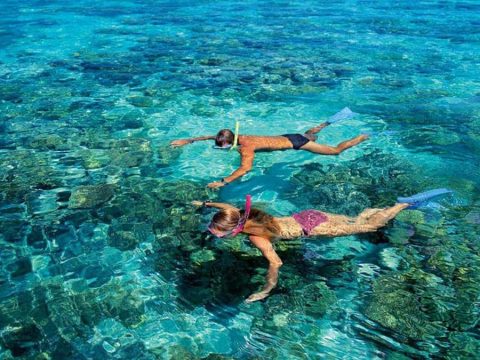
- Wear a full-length lycra stinger suit – inside and outside the net
- Use the Cairns Esplanade Lagoon, which is stinger-free year-round
- Never swim at unpatrolled beaches or in murky water during stinger season
- If stung, apply vinegar for at least 30 seconds and seek immediate medical attention. Do not rub the sting or apply ice
Outside stinger season (May to October), ocean swimming at patrolled beaches is generally safe without a stinger suit.
Related reading: Cairns beaches swimming safety guide
Crocodiles
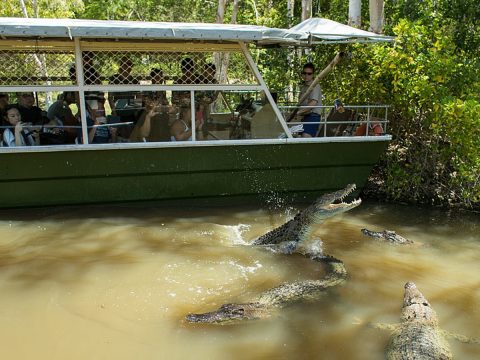
Saltwater crocodiles are apex predators and a genuine risk in the waterways of Far North Queensland. They are present year-round, are excellent swimmers in both salt and freshwater, and are not deterred by people. The rules here are simple and non-negotiable.
Never do this
- Swim in rivers, estuaries, creeks, or any body of water that isn’t a designated swimming area
- Swim in murky or discoloured water anywhere in the region
- Wade near river banks, creek mouths, or mangrove areas
- Ignore crocodile warning signs – they are placed based on confirmed sightings
Be especially cautious
- In the Daintree area and near any river mouth along the Northern Beaches
- Near the banks of tidal creeks and inlets, including in the dark
- After heavy rain, when crocodiles may move into areas they don’t normally frequent
The well-patrolled Northern Beaches (Palm Cove, Trinity Beach, Ellis Beach) and the Esplanade Lagoon carry very low crocodile risk for swimmers. The risk is concentrated in natural waterways and undesignated swimming areas.
For more detail on crocodile awareness in Tropical North Queensland, visit the Queensland Government’s Be Crocwise resources.

Sun safety
The UV index in Cairns is extreme for most of the year. Sunburn happens significantly faster here than in southern Australian cities or most international destinations – particularly on reef trips and beach days where reflection off water amplifies exposure.
Sun safety essentials
- Sunscreen: Apply SPF 50+ broad-spectrum before going outdoors and reapply every two hours
- Protective gear: Wide-brimmed hat (a cap is inadequate for neck and ears), UV-protective sunglasses, long-sleeved UV rash vest for water activities
- Timing: Seek shade between 10 am and 3 pm when UV intensity is highest
- Hydration: Stay hydrated – the tropical climate leads to dehydration quickly, especially when active or outdoors. Carry water at all times
Insects and mosquito-borne illness
Carry mosquito repellent, as there is a risk of Dengue Fever in the region. The key fact most visitors don’t know: the Aedes aegypti mosquito responsible for Dengue transmission bites during the day, not at dusk and dawn. Applying repellent in the morning is as important as applying it in the evening.
Dengue cases spike during the wet season (November to April) when mosquito populations are highest. Ross River virus and Barmah Forest virus are also present in the region. Standard DEET-based repellent (20% or higher) provides protection against all three. Reapply after swimming or heavy sweating.
Bring repellent from home – it’s cheaper and more convenient than buying it locally.
Cyclones and severe weather
Cairns’ cyclone season runs from November to April. During this period, tropical cyclones can form in the Coral Sea and may affect the region. Cyclones directly affecting Cairns are relatively infrequent, but the broader wet season brings real weather risks that visitors should be prepared for.
Real weather risks during wet season
Flash flooding can occur rapidly with little warning during heavy rain events, particularly in low-lying areas and near waterways.
Road closures during and after heavy rainfall can affect access to the Daintree, Atherton Tablelands, and Northern Beaches routes.
“If it’s flooded, forget it” is the Queensland Government’s official advice for flood-affected roads – never attempt to drive through floodwater.
What to do during cyclone season
- Download the Bureau of Meteorology app and set alerts for the Cairns region
- Monitor the Queensland Government Get Ready visitor safety page for severe weather advice and emergency alerts
- Listen to local ABC Far North radio (801 AM, 95.5 FM or 106.7 FM) during severe weather events
- Check the Cairns Disaster Dashboard for real-time local warnings
- Follow all evacuation instructions issued by Queensland Fire and Emergency Services
- Ensure your travel insurance covers cyclone-related disruptions and cancellations
Hiking and outdoor safety
The rainforests and hinterland around Cairns are spectacular but demand basic preparation. Heat, humidity, and distance from help make casual bushwalking more serious than it looks.
- Always carry more water than you think you’ll need – the humidity makes exertion far more dehydrating than it feels.
- Stay on marked trails and tell someone your planned route and expected return time before you leave.
- Check weather forecasts before any full-day hike – conditions can change rapidly in the wet season.
- Be mindful of wildlife, especially snakes and spiders. If bitten, seek immediate medical care. Do not attempt to catch or kill the snake – medical staff can identify venom from symptoms.
- Apply insect repellent before entering rainforest areas.
Most guided day tours to Kuranda,the Daintree, and the Atherton Tablelands handle these risks as part of their operation – experienced guides, appropriate vehicles, and checked conditions are part of what you’re paying for.


Explore Cairns
Daintree Rainforest
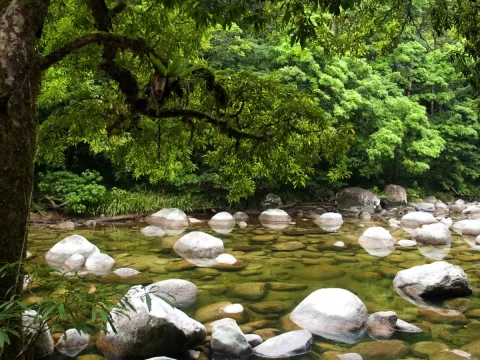
Journey into the world’s oldest tropical rainforest on a guided Daintree tour. Visit Mossman Gorge, cruise the Daintree River and see where the rainforest meets the sea at Cape Tribulation.
See Daintree toursPersonal safety and petty crime
Cairns is a relaxed tourist city and serious violent crime affecting visitors is uncommon. The precautions that apply here are standard travel common sense rather than anything specific to Cairns.
Cairns has a moderate crime rate, with petty crimes like theft being the most common concern for visitors. You can reduce risks by staying aware of your surroundings and securing your belongings.
Practical precautions
- Keep valuables – phones, cameras, wallets – out of sight in crowded areas, particularly at markets and the Esplanade
- Don’t leave belongings unattended on the beach or at cafés
- Lock hire cars and don’t leave anything visible on seats overnight
- Stay in well-lit areas at night. Use registered taxis or rideshare services rather than walking alone late at night
- Only carry the cash you need for the day rather than significant sums
- Purchase tours and attraction entry from licensed and trusted local operators
The Cairns Esplanade and city centre areas are well-frequented by tourists and generally safe during the day and early evening. As with any city, basic awareness is the most effective precaution after dark.
Water safety
Beyond marine stingers and crocodiles, a few additional water safety points are worth knowing.
- Always swim at patrolled beaches between the red and yellow flags.
- The Cairns CBD foreshore is tidal mudflat – it is not a swimming area. The Esplanade Lagoon is the city’s designated swimming facility and is lifeguarded daily.
- At patrolled beaches during stinger season, swim in the netted enclosures or use the Esplanade Lagoon, which is safe and patrolled year-round.
- Never swim alone in isolated locations.
- On reef trips, follow all instructions from crew and dive guides – particularly regarding currents and how far to swim from the vessel.
- If you plan to dive, note that you should not fly within 18 to 24 hours of a dive – factor this into your departure day planning. First-timers should read our guide on intro dive Great Barrier Reef to understand requirements and what to expect.
For more on reef safety, read our Great Barrier Reef safety tips guide.

Explore Cairns
Reef Helicopter Tours
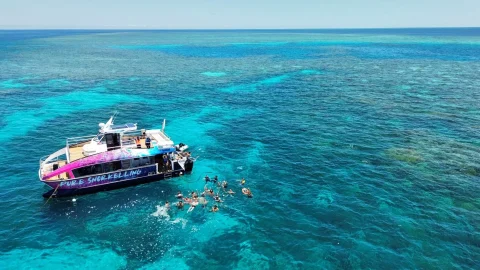
See the Great Barrier Reef from breathtaking altitude on a scenic helicopter flight from Cairns. Combine aerial views with snorkelling and reef pontoon visits for the ultimate reef experience.
See helicopter toursTravel insurance
Comprehensive travel insurance that covers medical emergencies, accidents, and theft is strongly recommended for a Cairns visit. Check that your policy covers specific activities you plan to undertake, such as diving or hiking.
Standard travel policies frequently exclude adventure activities. If you’re planning to do Tully River white water rafting, scuba diving, or any high-altitude activities, confirm your policy covers these specifically before you travel. Medical evacuation from remote areas of Far North Queensland – such as the Daintree – can be expensive without cover.
Emergency contacts and resources
Keep these numbers and resources saved before you arrive. Having them accessible means you can reach help quickly if needed, whether it’s a genuine emergency or just a question about weather conditions.
| Service | Contact |
| Police, Fire, Ambulance (emergency) | 000 |
| Police (non-emergency) | 131 444 |
| Cairns Hospital | (07) 4226 0000 |
| Poisons Information Centre | 13 11 26 |
| Bureau of Meteorology warnings | bom.gov.au |
| Cairns Disaster Dashboard | disaster.cairns.qld.gov.au |
| Get Ready Queensland (visitor safety) | getready.qld.gov.au/visitor-safety-tips |
Cairns tap water is safe to drink and considered among the best quality in Australia – sourced from rainforest catchments and treated before supply. There is no need to purchase bottled water.
Frequently Asked Questions
Is Cairns safe for solo travellers?
Yes. Cairns is generally a secure place for solo travellers. It has a laid-back atmosphere and local people are friendly and willing to assist tourists. Basic precautions apply, particularly in the evenings – stay in well-lit areas and avoid empty streets late at night. For comprehensive advice tailored to solo travel, see our guide on Cairns solo travelers.
Is Cairns safe for solo female travellers?
Cairns tends to be quite safe even at night, although it is always necessary for solo female travellers to remain vigilant and aware of their surroundings. As a popular tourist city, there is typically a crowd until late hours, especially near the Lagoon and the Esplanade. Standard precautions apply: don’t walk home alone late at night after drinking, don’t leave drinks unattended, and use taxis or rideshare rather than walking in poorly lit areas.
Are there sharks at Cairns beaches?
Shark attacks at Cairns beaches are extremely rare. The Northern Beaches and reef areas are patrolled, and most reef operators monitor conditions. Standard water safety precautions apply – swim at patrolled beaches, between the flags, and follow any advice from lifeguards.
Is it safe to swim in rivers near Cairns?
No. Saltwater crocodiles are present in rivers, estuaries and coastal waterways throughout Far North Queensland. Never swim in any natural waterway that is not a designated swimming area. This applies year-round, not only during any specific season.
What should I do if there is a cyclone warning during my visit?
Monitor the Bureau of Meteorology website and app, follow all instructions from Queensland Fire and Emergency Services, and stay in your accommodation if advised to do so. Contact your tour operators to confirm any activity cancellations or rescheduling. Follow the Cairns Disaster Dashboard for localised alerts.
Is the tap water in Cairns safe to drink?
Yes. Cairns has some of the best tap water in Australia, sourced from rainforest catchments and treated before supply. There is no need to purchase bottled water.
Stay safe and enjoy Cairns
Cairns is genuinely safe for visitors – thousands arrive every week and have wonderful, incident-free trips. The key is simple: be smart about sun and water, respect the wildlife and weather, and use common sense in the city. That’s it.
The Cairns region offers some of the world’s best natural experiences – reef diving, rainforest walks, island trips, and adventure activities. All of these are safe when approached with respect and good planning.
Call us on (07) 4028 3567 to discuss tour safety, specific activity risks, or any concerns before you travel. You can also send us an email and we’ll help answer any questions about keeping yourself and your family safe in Tropical North Queensland.